DYNA Robotics Launches DYNA 2.1 Physical Agent for Autonomous Workflows
Semi-humanoid robot combines physical dexterity, reasoning and whole-body control to complete continuous commercial tasks with minimal human intervention.
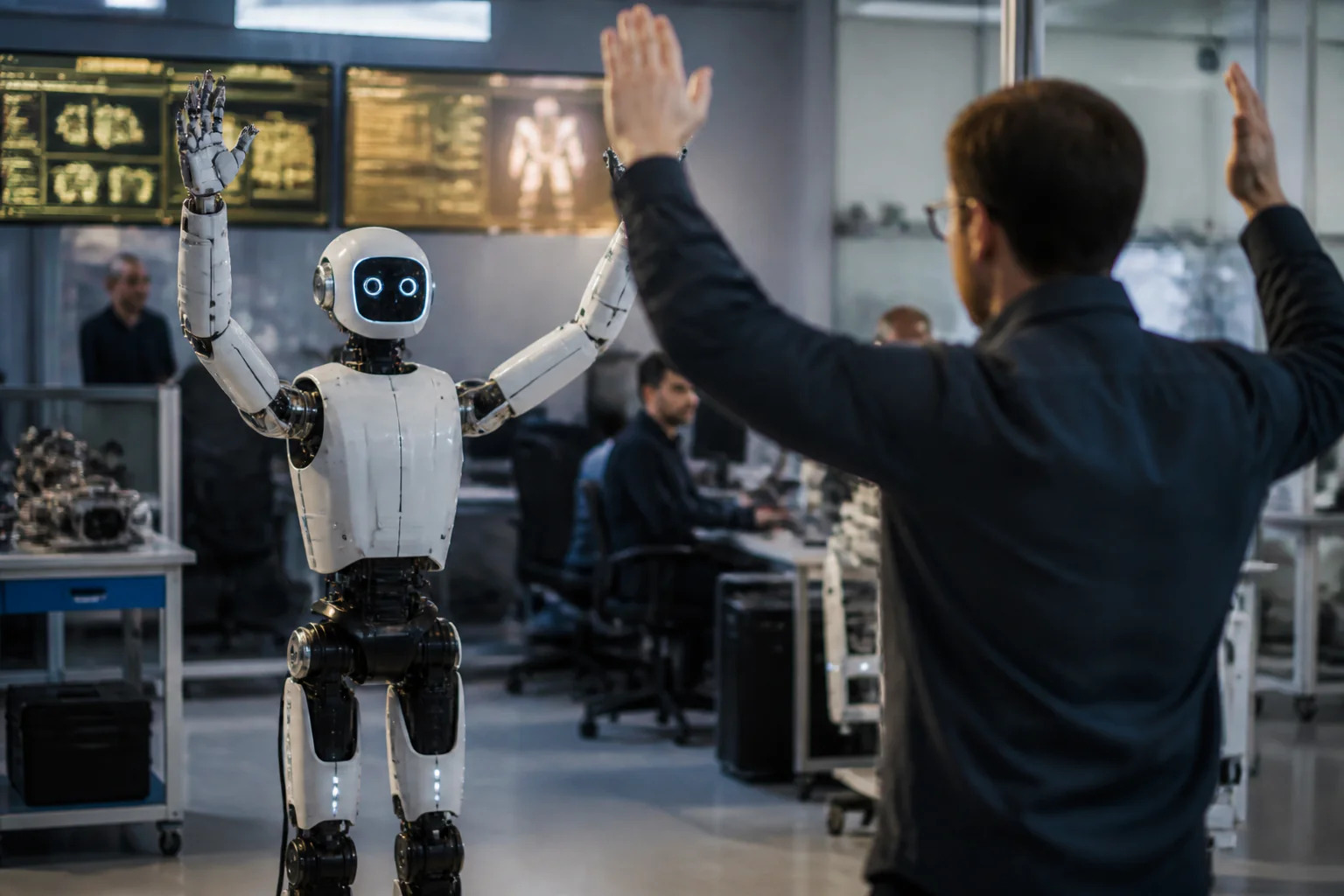
Image Courtesy: Public Domain
DYNA Robotics launched the DYNA 2.1 physical agent, a semi-humanoid robot powered by DYNA's proprietary model that can autonomously complete entire physical workflows – like a commercial laundry shift – without human intervention, performing tasks that demand both physical dexterity and complex reasoning. DYNA 2.1 is being deployed in hotels, laundromats, and restaurants.
DYNA's proprietary semi-humanoid hardware consists of an upper torso with two arms that are compatible with parallel-jaw grippers or dextrous hands to reach and manipulate objects, and four steerable wheels so it can easily move around without risk of toppling over.
To successfully manage continuous, hours-long shifts, the robot is powered by a vision-language orchestrator that reasons through complex workflows and a whole-body controller that coordinates driving, reaching, bending, and lifting into one fluid action. It is underpinned by DYNA's proprietary world action model DYNA 2, trained on a million hours of human and robot data to handle physical skills and steerability.
"Our goal is to make general purpose robots commercially viable for real-world scenarios," said Lindon Gao, co-founder and CEO of Dyna Robotics. "Our customers need robots that complete an entire workflow for a full shift – without human babysitters – not just specific tasks."
Autonomously completing a commercial laundry shift
The DYNA 2.1 physical agent is capable of managing an entire commercial workflow end-to-end such as food preparation, data center management, and commercial laundry.
For example, in a commercial laundry setting, DYNA 2.1 can complete an entire shift, including:
- Loading the washer and dryer, as well as actively turning the machines on.
- Bending to reach the very back of a dryer to unload bulk towels into a basket.
- Snapping towels flat, folding them, and organizing them into specific stacks by size.
- Crouching to place finished stacks on bottom shelves or reaching up to place them on top shelves.
- Autonomously correcting physical errors – such as picking up a dropped towel from the floor or abandoning a bad grasp to try again – without requesting human help.
DYNA 2.1 is optimized for Mean Time Between Interventions (MTBI), or how long the machine operates before a human must step in to assist. The physical agent captures execution data as it operates – from the reasoner's decision traces to the controller's joint loads. This data feeds back into the system, creating a continuous improvement loop designed to steadily increase the minutes of work achieved per intervention.
"This is a far more useful benchmark than per-episode success rates on isolated tasks, which is widely used today but fails to reflect true commercial viability," said co-founder Jason Ma. "Continuous real-world shifts require thousands of sequential steps, which is why we measure MTBI to ensure our robots are commercially viable and can operate without human babysitters."