Siemens and NVIDIA Advance AI-Powered Manufacturing at Erlangen Smart Factory
26 November 2026 | News
The companies are using digital twins, generative AI and autonomous planning agents to transform production, accelerate quality inspections and improve factory efficiency at Siemens' Erlangen facility.
Image Courtesy: Public Domain
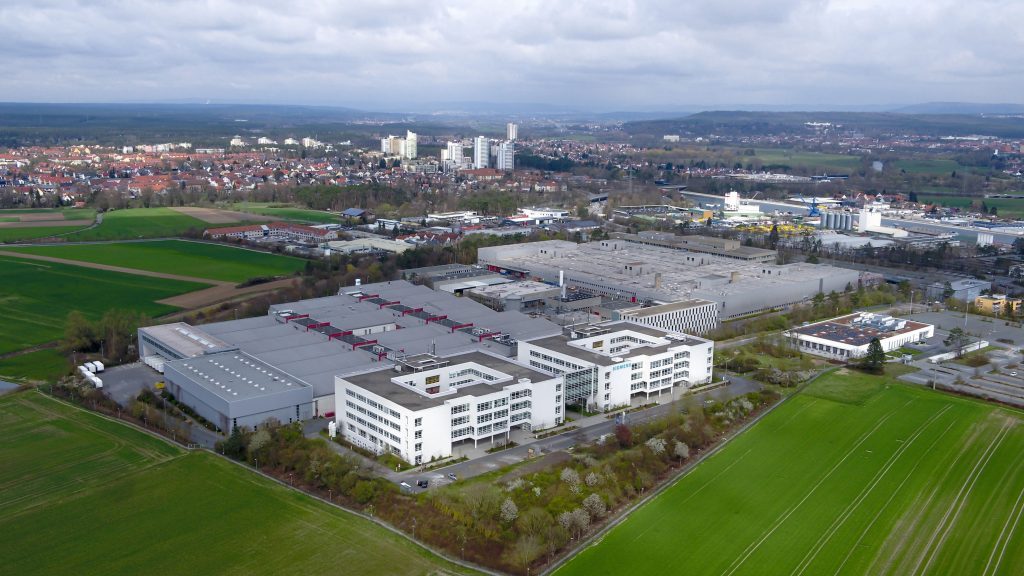
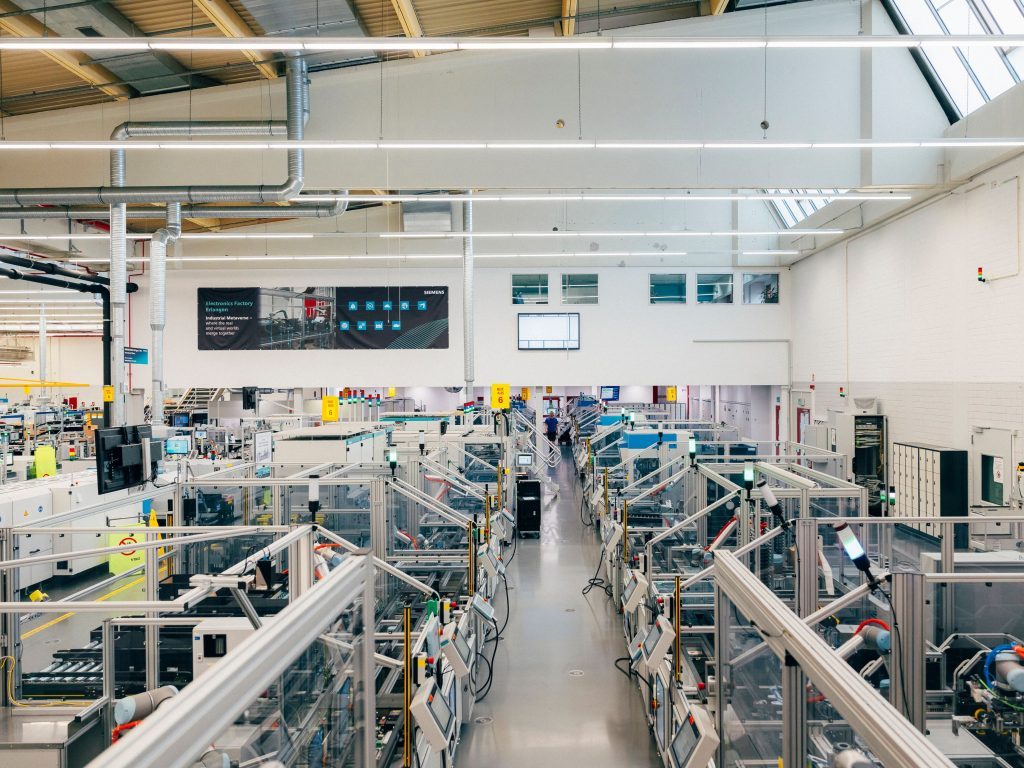
In Erlangen, the production of every new product began with the same sense of anticipation. Siemens' smart factory in Erlangen manufactures drives and frequency converters—that is, equipment used to control the speed of industrial electric motors. The “heart” of these devices is the printed circuit board, onto which the components are soldered, and which can be found in nearly every electronic device, from washing machines to cell phones.
When a new sheet went into production, the quality-control camera system had to learn what a flawless sheet looked like. However, this required waiting for the first physical prototype, which is why, according to Siemens, the preparations for quality control used to take several weeks.
We had to manually show the machine what a good sheet looked like, which took several hours each time, and production came to a standstill in the meantime. What's more, this has to be done frequently at the factory because the panels change over and over again depending on the exact configuration.
Now the machine learns its task even before the first page is completed.
The gold plate that no one had soldered
In manufacturing, a flawless sample is called a "gold standard," and the camera compares all the others to it:
This gold certificate is now virtual.
Siemens' engineering software uses the design drawings, bill of materials, and manufacturing data to create a digital twin of the circuit board—that is, a precise virtual replica that corresponds to the physical board in every detail on the computer.
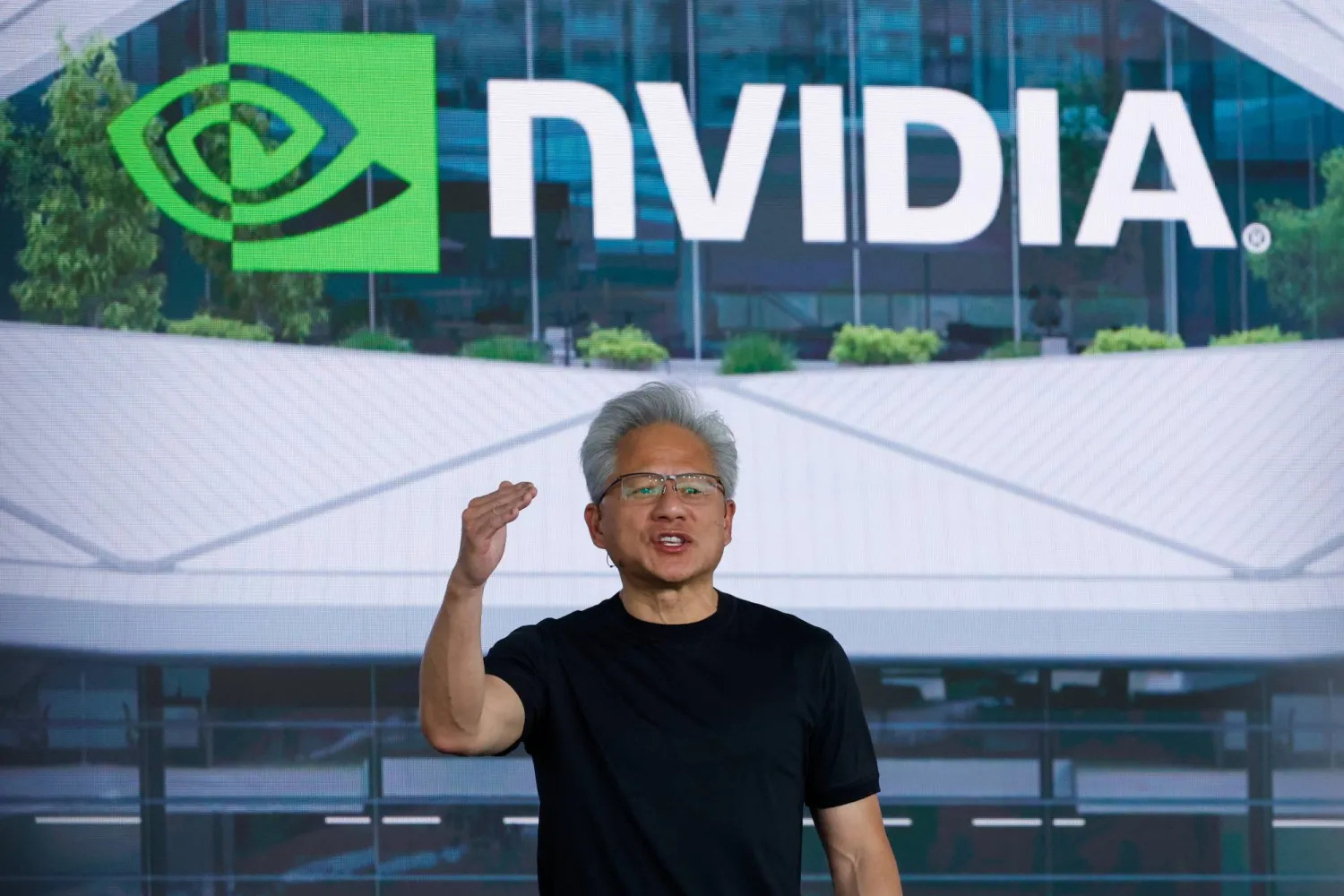
Nvidia's AI model, called Cosmos, uses this to generate photorealistic images of both flawless and defective cards. This way, the quality-control machine can be ready to do its job even before a single piece has been produced from the actual sheet.
With the help of the “virtual gold sheet,” electronics manufacturers can make changes to production much more quickly without having to shut down the production line
The expected results are also significant. The engineering work required to bring new circuit boards into production could be reduced by 85 percent, and the products could reach the market 40 percent faster in the best-case scenario.
A Time Machine on the Drawing Board
Another new development concerns production planning. When a new order came in, designers had to rely on their past experience to strike a balance between machine capacity, material supply, delivery deadlines, and production lines.
An AI agent—that is, a program that performs complex tasks on its own—is helping with this. Based on the incoming order, the agent prepares several production scenarios and shows how each one would affect the factory’s key performance indicators.
They test the proposals on a digital twin of the entire plant before making any changes in the actual facility.
According to Siemens, this could result in a 20 percent cost savings, and the factory could respond more quickly to material shortages or changing customer demands.
The final say rests with the human: the designer decides, through dialogue with AI agents, how the plan will be carried out.
Rev Lebaredian, Nvidia’s vice president in charge of physical AI simulation (the virtual testing of AI that controls machines moving in real space), compared the digital twin to a time machine during the presentation, because the simulations show different possible futures:
“And who wouldn’t want a time machine?”
Why Erlangen, of all places? The two companies announced in January of this year at the CES technology trade show in Las Vegas that they would jointly build the world's first fully AI-controlled, adaptive manufacturing facilities. The Erlangen plant was chosen as the first such smart factory.
According to the announcement, an “AI brain” at the factory continuously analyzes the plant’s digital twin, virtually tests potential improvements, and implements proven solutions into actual operations. Siemens has assigned several hundred industrial AI experts to the project.
The joint team developed the first solutions, which were unveiled in October, in less than ten months and tested them in a live environment while production was underway. According to Siemens, more applications will be released in the coming months. Operating since 1971,
At the factory, which employs roughly 1,000 people, more than 100 AI algorithms are already being used in manufacturing, logistics, quality control, and maintenance.
The plant's productivity is growing by 7 percent annually, and about 3,000 customers visit it each year to see how it operates.
This is one of the most advanced factories in the world. It will be further expanded by 2030, and Siemens is investing 500 million euros in its renovation.
Erlangen serves as a testing ground even within Siemens: new solutions are first tested here before being rolled out to customers. AI Radar reported back in October on how artificial intelligence filters out false alarms in quality control at the factory.
The World Economic Forum awards the “Lighthouse” designation to factories that are at the forefront of digital technologies, and in 2024, the Erlangen plant became the third Siemens factory to receive it.
A crate-carrying humanoid in the warehouse
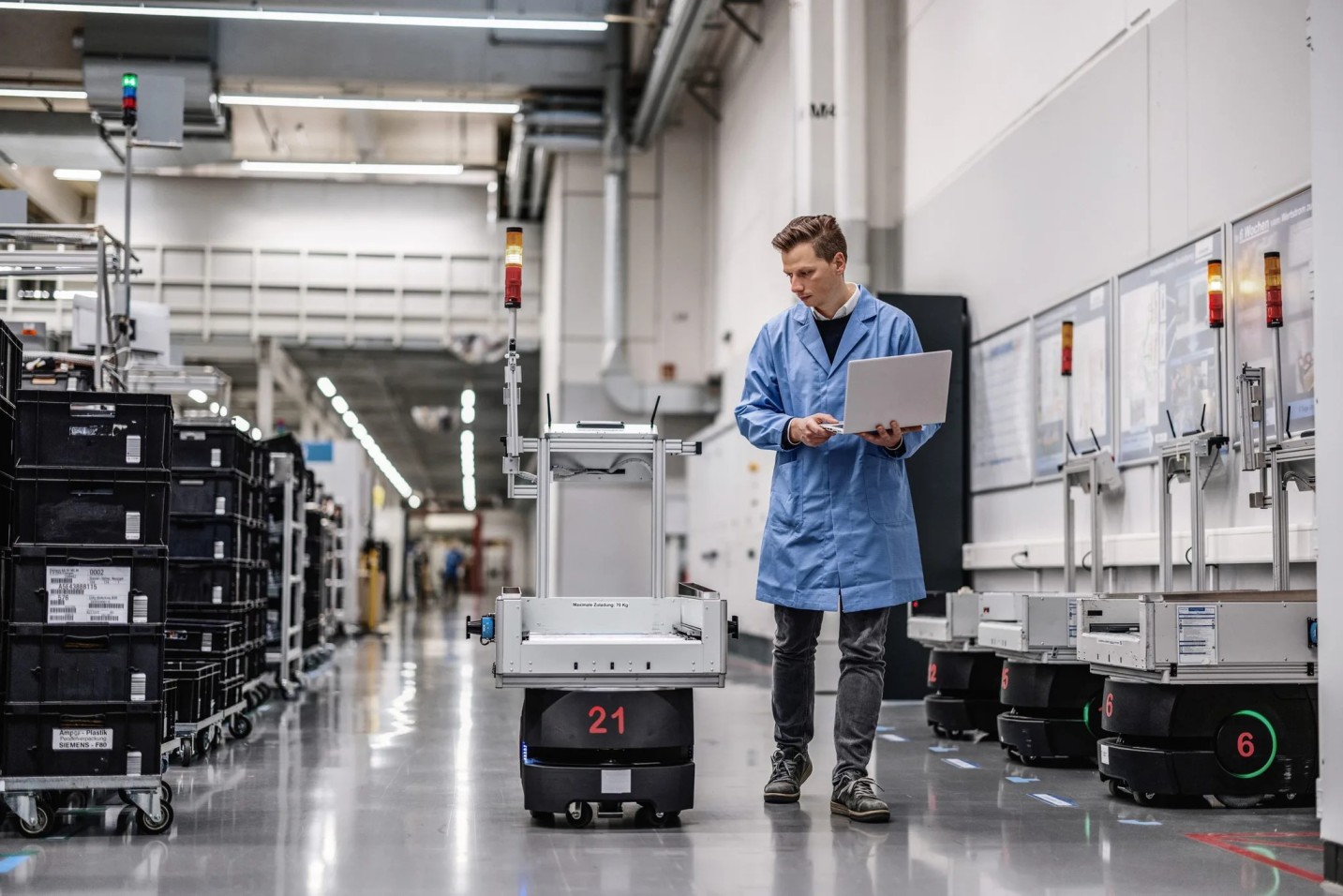
In addition to software, smart factories also include robots. This past spring, Siemens tested the HMND 01 robot, developed by the British company Humanoid, in Erlangen in a live manufacturing environment. The machine's humanoid upper body sits on a wheeled chassis that can move in all directions. It worked in logistics: it independently lifted, transported, and placed crates in position for the workers. It handled 60 crates per hour, operated for more than eight hours, and successfully picked up and set down the load in more than 90 percent of cases. According to Siemens, it has met all of its performance targets.
The robot's development also began in a virtual environment: because it was first designed using simulation, the prototype was completed in seven months instead of the usual 18–24 months.
What has worked in Erlangen will spread to other places as well
However, the industry is not interested in the success of a single smart factory, but rather in whether the solutions that have proven effective in Erlangen can be scaled—that is, whether they can be applied to other factories, other machine fleets, and other products. According to an analyst at Interact Analysis, a market research firm,
It matters a great deal that Siemens uses the technology it sells in its own factories, because this could encourage others to adopt industrial AI as well.
According to a Gartner expert, isolated, standalone AI solutions cannot be scaled; this requires a common industry-wide AI platform on which a wide variety of applications can be built. According to him, Siemens and Nvidia are developing just such a platform.
The developments in Erlangen have already been released as products. According to Siemens' announcement in October, virtual quality control preparation and production planning based on AI agents are now being introduced to the market. For the first, unnamed customer, the factory was able to produce 20 percent more in the same amount of time.
According to Cedrik Neike, a member of the Siemens Executive Board and head of the Digital Industries division, this is a historic opportunity for Germany and Europe, because it is the only way to further increase productivity and keep manufacturing in countries with high wage levels. During the presentation, he also said that factories can currently be automated at a rate of 30–40 percent, but with artificial intelligence, that figure can reach 70–80 percent.