Valkryn Emerges from Stealth with $17 Million Funding to Advance Robotic Warfare Testing
Led by Andreessen Horowitz's American Dynamism fund, the $15 million seed round will support Valkryn's independent Battle Lab technology, helping the U.S. military evaluate and validate robotic and autonomous systems before deployment.
Image Courtesy: Public Domain
- Testing for the Robotic Age: Valkryn builds realistic test environments and software that show how drones, robots and other autonomous weapons actually perform before they go to war.
- Standardized Evaluation: Many military programs still record how robotic systems perform in handwritten reports, and Valkryn builds a common, commercial alternative so evidence is captured and scored the same way.
- Proven Trust: Valkryn was deployed with the U.S. military in the Middle East within three weeks of first demonstrating its technology. The company now has multiple funded contracts with Department of War test organizations.
- Structural Neutrality: Valkryn does not build the systems that go into combat; structurally designed to serve as an unbiased, third-party evaluation partner.
Valkryn, a company which builds and operates Battle Lab technology to evaluate robotic and autonomous warfare, emerged from stealth. Founded by defense technologists who have built autonomous systems and joined by military veterans who have operated them, Valkryn is advancing a new model of independent evaluation, testing how these software-defined systems perform before they are deployed in combat, separate from the companies that build them. In less than 12 months, the company has secured multiple funded contracts with Department of War test organizations.
The company also announced $17 million in total funding, including a $15 million seed round led by Andreessen Horowitz’s (a16z) American Dynamism fund, with participation from Cantos Ventures, Ambition Capital and Caffeinated Capital. Valkryn will use the funding to scale its technology and grow its team across Washington, D.C., New York City, and Los Angeles.
The Department of War is investing in robotic and autonomous warfare faster than ever, as reflected in requests for funding by the Pentagon of $53.6 billion for autonomy and drone platforms and another $21 billion for counter-drone systems in fiscal year 2027, up from $13.4 billion and $3.1 billion the year before. Venture investment in defense tech hit a record $35.4 billion in the first half of 2026, and autonomous systems represent 42% of second-quarter funding.
That investment has not reached the infrastructure used to prove these systems work. Many evaluation events still rely on handwritten notes to capture the behavior of complex software systems, and procurement decisions worth billions often rest on PowerPoint briefings instead of rigorous data analysis. Meanwhile, the organizations responsible for testing have faced decades of underinvestment, even as the systems they evaluate multiply. The result is a growing gap between how fast the military can buy robotic and autonomous systems and how well it can verify them.
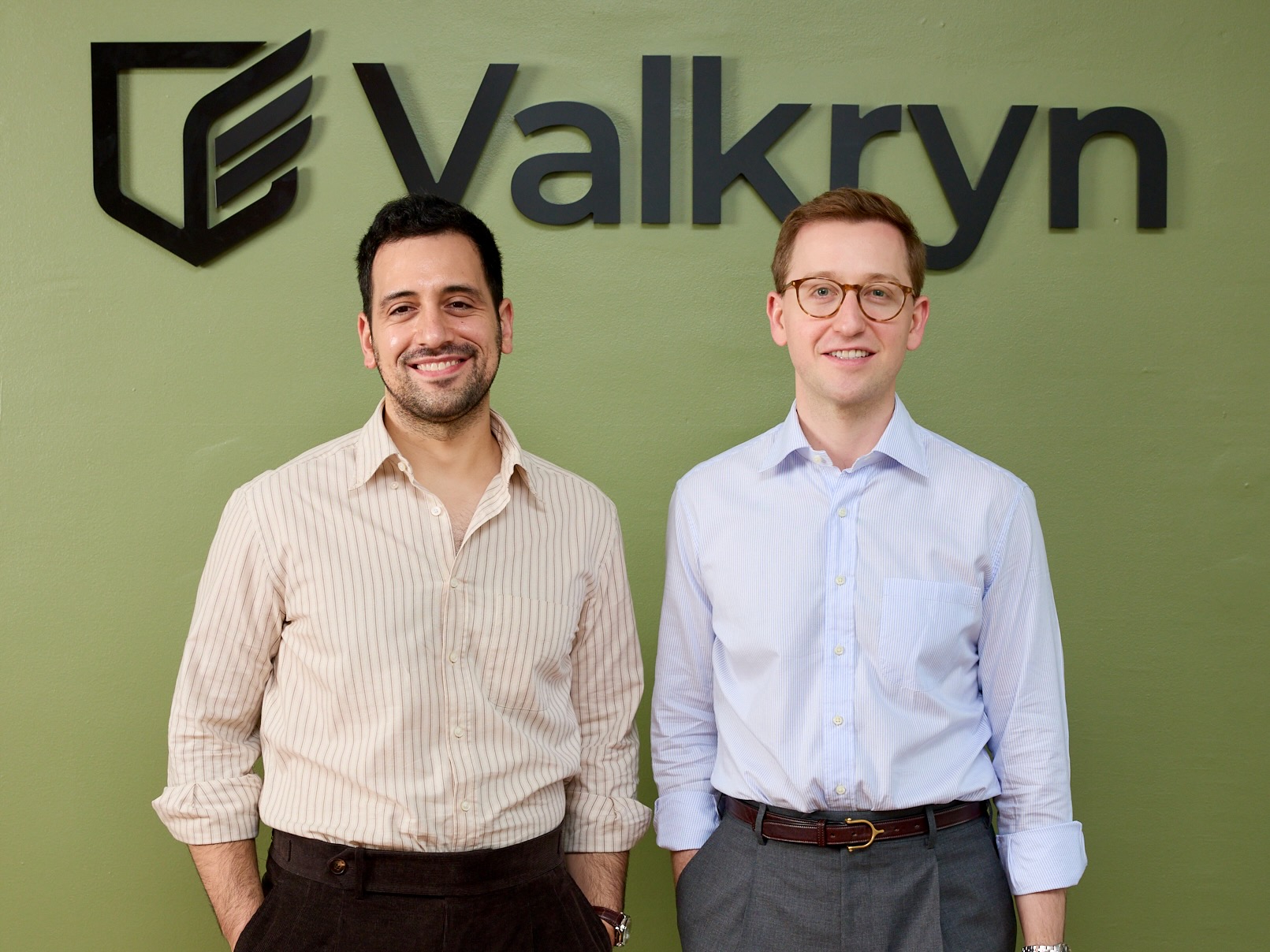
“Warfighters need to trust that their systems have been proven before the fight,” said Hugh Zabriskie, co-founder and CEO of Valkryn. “But software-defined systems and threats now change faster than today’s test enterprise can keep up. Leading software and robotics companies solved this long ago by investing in rapid, realistic evaluation as a core advantage, and we founded Valkryn to bring that advantage to the military.”
Valkryn’s Battle Lab technology instruments physical test environments to replicate combat conditions and records how systems and operators perform. Its proprietary software produces an auditable record of each test event and automatically scores results against government-defined criteria. Because every event is measured the same way, results from different programs, test sites and exercises can be compared directly, giving military leaders a clearer picture of how their autonomous forces perform.
Unlike traditional defense contractors, Valkryn does not build or sell the systems tested in battle labs, allowing them to serve as an independent evaluation partner to industry and government. That role has historically been filled by federally funded research centers and university labs, which are not designed to build and scale commercial technology. Valkryn’s founders bring that commercial experience from building autonomous systems, simulation tools and mission-critical hardware across Palantir, Anduril, SpaceX and Applied Intuition.
Valkryn’s launch comes as both the Pentagon and the technology industry rethink how they test AI and autonomous systems before deploying them. Secretary of War Pete Hegseth’s Project Agincourt memo, issued Sept. 30, establishes an Autonomous Warfare Command that will “test equipment and force designs with realistic opposition in demanding exercises and rugged environments, modify rapidly, and field what works.” Policymakers are grappling with a similar question in the commercial AI sector, where the federal government has moved to require or encourage independent evaluation of frontier models before release.
“Measuring robotic warfare is one of the hardest but most important technical problems in defense,” said Andrew Hoff, co-founder and CTO of Valkryn. “You’re not testing a single piece of hardware. You’re testing sensors, vehicles, software and operators all interacting in real time. Getting a trustworthy answer starts with designing the right test, then measuring every sensor feed, every decision and every action to reconstruct what happened. Without that rigor, you don’t really know what will happen.”
“The software industry learned years ago that embracing continuous testing produces better products, faster,” said Erin Price-Wright, General Partner at a16z. “As autonomy spreads across the military, it will have to make the same shift. Valkryn is building the infrastructure to make that possible, and we believe it will become foundational to how America prepares to fight.”
“Hugh and Andrew have built autonomous systems and the tools to test them, and they’ve seen firsthand what’s broken,” said Grant Gregory, General Partner at Cantos Ventures. “What stood out to us was how deliberately they designed the company, from pioneering an independent commercial model to building alongside the people who run test events every day. Every decision comes back to what’s right for the warfighter. The traction they’ve built in less than a year shows the Services see it too.”