Chef Robotics Advances Food Automation with NVIDIA Physical AI Robotics Stack
Chef Robotics uses NVIDIA Isaac Sim, Omniverse libraries and cuMotion to accelerate simulation, motion planning and food-manipulation robot deployment.
Image Courtesy: Public Domain
Chef Robotics, the first company to commercialize a scalable physical AI food robotics solution, announced it is building on NVIDIA's robotics development stack — including NVIDIA Isaac Sim, built on NVIDIA Omniverse libraries, and NVIDIA cuMotion — to accelerate the development and deployment of its food-manipulation robotic systems.
Food is one of the most demanding manipulation environments in the physical world. Ingredients are deformable, wet, and highly variable, and production lines run at high throughput in cold, harsh conditions, all against the backdrop of a chronic labor shortage across food manufacturing. Engineering robotic systems that perform reliably in these environments — and bringing new deployments online quickly — requires industrial-grade simulation and high-performance motion planning. That is where NVIDIA technologies come in.
Designing and validating robotic systems with NVIDIA Isaac Sim and NVIDIA Omniverse Libraries
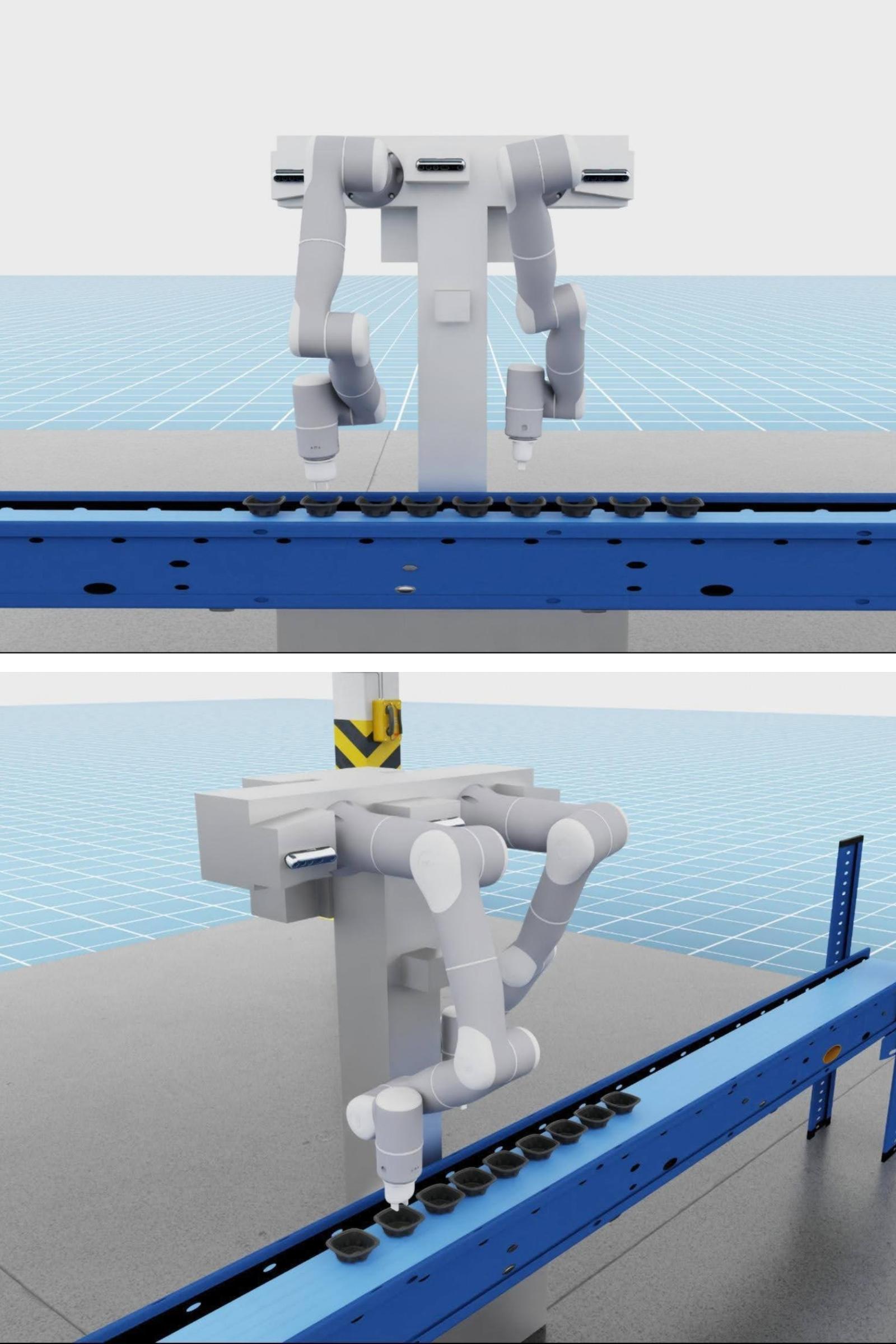
Chef Robotics uses the open Isaac Sim robotic simulation framework, built on Omniverse libraries, to build physically accurate digital twins of its robotic work cells and customer production lines. By designing, simulating, and validating new configurations in a virtual environment before deployment, Chef can engineer and stress-test robotic cells against the wide variety of ingredients, containers, utensils, and line layouts found across its customers' facilities — shortening the path from design to a working deployment on the plant floor.
Accelerating motion planning with NVIDIA cuMotion
Chef Robotics uses cuMotion, a GPU-accelerated motion-planning library, to generate fast, collision-free trajectories for its robots operating in cluttered, high-mix food production environments. This allows Chef's systems to plan and adapt motion efficiently across the enormous range of tasks its robots perform in production today — from piece-picking and multi-deposit assembly to coordinated multi-robot lines.
"Food is one of the hardest manipulation problems in the physical world, and solving it requires both world-class AI and world-class engineering tools," said Rajat Bhageria, Founder and CEO of Chef Robotics. "Building on NVIDIA's robotics stack lets our team move faster — designing, simulating, and validating systems in a virtual environment, then deploying them with confidence into real production facilities. It's a key part of how we scale physical AI across the food industry."
Isaac Sim and Omniverse libraries give Chef a physically accurate environment to design and validate our robotic cells before they ever reach the plant floor, and cuMotion lets Chef robots plan fast, collision-free motion in some of the most cluttered, high-variance environments in manufacturing. Together, these tools compress our development cycle and help Chef bring new deployments online faster, without compromising the reliability our customers depend on.