Panasonic Connect Expands Arcova Robotic Welding Solutions to Advance Manufacturing Automation
16 November 2026 | Interaction | By Editor Robotics Business NEWS <editor@rbnpress.com>
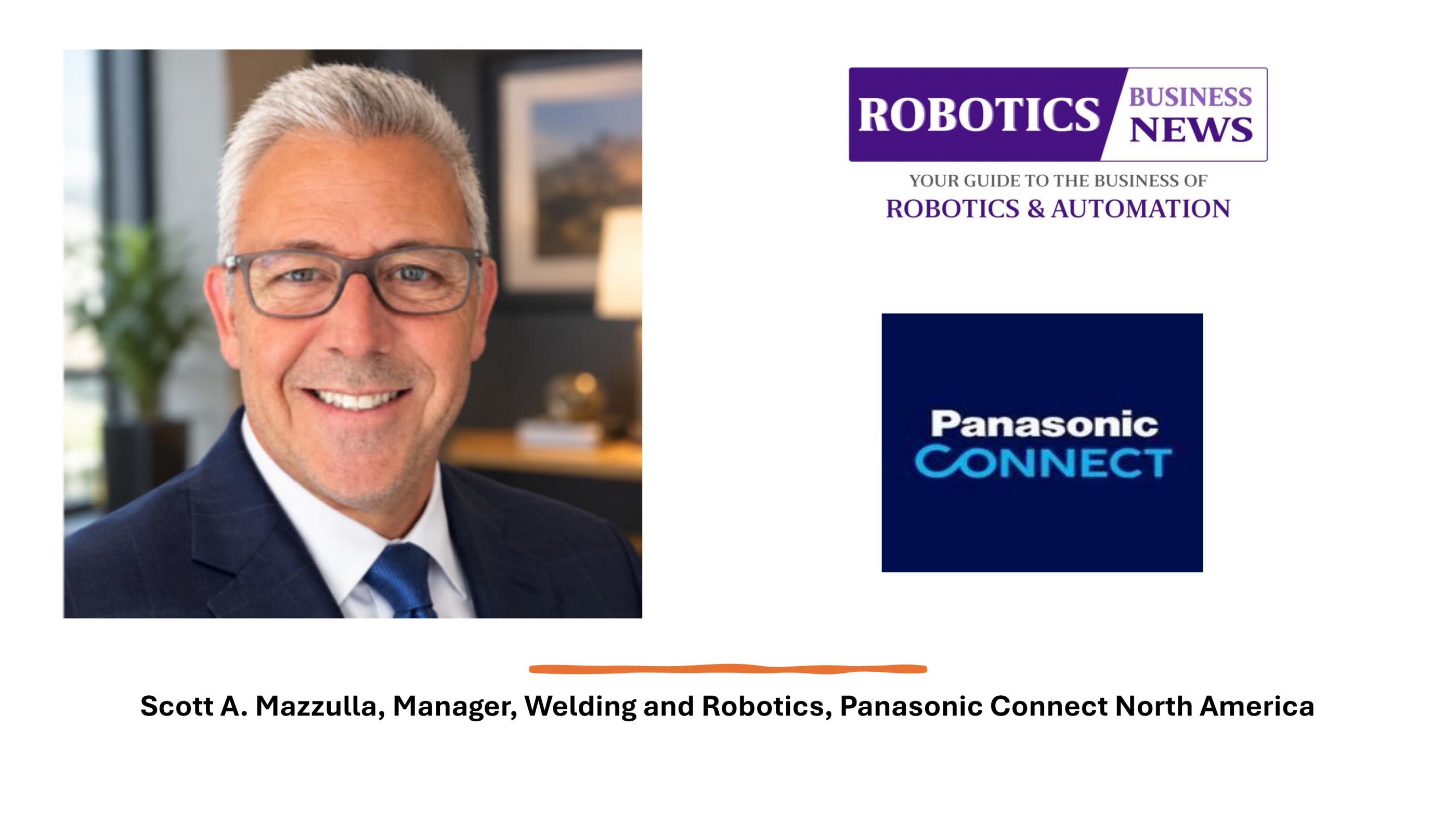
In conversation with Robotics Business News, Scott A. Mazzulla, Manager, Welding and Robotics at Panasonic Connect North America, discusses Arcova’s integrated welding solutions, robotic automation, workforce challenges, AI-driven inspection, and the future of connected manufacturing.
Panasonic Connect is expanding access to robotic welding automation through its Arcova portfolio of integrated welding cells, precision power sources and intelligent control systems. The solutions aim to help manufacturers improve weld quality, productivity and operational flexibility while addressing skilled labor shortages. In conversation with Robotics Business News, Scott A. Mazzulla, Manager, Welding and Robotics at Panasonic Connect North America, discusses Arcova’s expanded sales model, automation deployment, software integration, AI-driven inspection and how connected technologies are shaping the future of industrial welding.
What strategic goals are driving Panasonic Connect’s expansion of its Arcova welding solutions, and how will the new sales model improve access to robotic welding automation for manufacturers?
Manufacturers around the world are being asked to produce more, maintain quality, and stay competitive, all while dealing with persistent workforce shortages and more complex production. Automation can help, but only if it’s accessible and practical for the operation it supports.
With Arcova, the focus is making Panasonic Connect’s integrated welding technology easier for more manufacturers to adopt, whether they’re installing their first robotic welding cell or expanding an automated operation they already run.
A big part of that is how customers buy. Our new sales model makes the Arcova portfolio available through multiple distributors and directly from Panasonic Connect, so manufacturers have more ways to evaluate and purchase the equipment that fits their needs.
No two manufacturing operations run the same way. A high-volume automotive supplier welding the same bracket thousands of times a week focuses on repeatability and throughput. A small fabrication shop with a new part on the table every few days needs a system it can reprogram quickly and get running without a long ramp-up. Robotic welding works for both. How each one gets there is completely different.
The Arcova portfolio combines robotic welding cells, precision power sources, and integrated controls, backed by software and ongoing technical support. That lets each kind of manufacturer set up the system for the work it actually does, with room to adjust as the business changes.
How do Arcova’s integrated robotic welding cells, precision power sources, and control systems help manufacturers improve weld quality, productivity, and operational consistency?
Panasonic Connect’s welding systems pair the robot and the welding power source from one manufacturer, running on a common control system. Robot motion and the welding output are coordinated with each other rather than managed separately. That coordination improves weld quality and cycle time together, so manufacturers don’t have to trade one for the other.
Weld quality starts with control. Small drifts in welding parameters are enough to throw off a weld, so precise control matters. Take Panasonic Connect’s TAWERS WG4 system. With the MTS-CO₂ process, it cuts spatter by about 60% in the 260 A range compared with the previous generation. Less spatter means less grinding and cleanup after the weld.
Those quality gains feed straight into productivity. A weld that misses spec costs time in rework and inspection, and it ties up equipment that should be running. With fewer bad welds, parts move through the line faster, and people spend their time building parts instead of fixing them. High-volume plants see this most, because the same weld runs over and over across shifts, and every interruption adds up.
The integrated cells also hold the same results from part to part and shift to shift. When the work changes, high-mix shops can reprogram them without losing consistency.
As production demands grow, manufacturers can’t afford to choose between quality and throughput. With the robot, power sources, and controls working from the same system, they don’t have to.
How are Arcova welding solutions designed to address labor shortages and increasing production complexity across North American manufacturing industries?
One of the biggest challenges facing manufacturers across North America is finding and developing enough skilled people to keep up with production. Meanwhile, products keep getting more complex, and manufacturers are expected to do more with the resources they already have.
That’s changing how companies think about robotic welding. Automation used to be pitched mostly as a way to cut labor costs. Now, more manufacturers use it to support the people they have and get more out of their expertise.
Arcova systems take on repetitive welding tasks while keeping tight control over the process. Skilled welders can then step away from the routine work and spend more time on the jobs that need their experience and judgment. Their experience is hard to replace. It takes years to learn how materials behave and to spot when a process is going wrong, and that knowledge matters even more as plants bring in more advanced technology.
Complexity creates its own problems. Manufacturers have to handle different part geometries and order volumes that shift from month to month, so the equipment must be flexible. With Arcova’s robotic welding, they can adapt welding programs to new applications without giving up consistent quality.
As automation spreads, training becomes more important. Welders need the chance to build on what they know and learn the technical skills to run robotic systems. Panasonic Connect supports that with robot operation and maintenance training. Manufacturers who invest in that get more value from their equipment and a workforce that’s ready for what’s coming.
For us, the value of welding automation is helping manufacturers make the most of their people and equipment, especially the ones under the most pressure to produce more.
What advantages do Panasonic Connect’s integrated welding automation systems offer manufacturers operating in both high-volume and high-mix production environments?
High-volume and high-mix manufacturers deal with different problems, but both need welding systems that uphold quality without slowing down the line. Integrated automation lets them fit the technology to how they produce and keeps them in control of the welding process.
In high-volume production, consistency is everything. When the same parts are welded repeatedly on every shift, even small interruptions cut into output. Panasonic Connect’s integrated welding systems keep welding conditions repeatable, so fewer defects make it to rework. Production teams spend less time fixing problems and more time running the line on schedule.
High-mix production brings its own challenges. Fabricators may be running smaller batches or switching between parts several times a day, so what matters most is how quickly welding programs can be adjusted. Panasonic Connect’s offline programming and simulation software lets manufacturers build and check programs for new parts ahead of time, reducing the need to take production equipment offline during changeovers.
Even with good welds and quick changeovers, a robotic welding cell can still underperform if it spends too much time on setup or sitting idle waiting for parts. Looking at the whole operation, not just the weld, shows manufacturers where small changes can raise throughput.
The right setup depends on how a plant runs. A shop making one part at scale and a shop handling a steady mix of smaller orders need the same things: reliable welding performance and more out of every hour of production time.
How does Panasonic Connect simplify the deployment and integration of robotic welding systems for manufacturers transitioning from manual welding to automation?
For a manufacturer buying its first robotic welding system, the most important step comes before any equipment is chosen: being clear about the problem automation needs to solve. Whether it’s weld quality or a labor gap, the investment should be tied to a specific business goal from the start.
With that goal set, the next question is how automation will fit into the existing operation. There’s more to it than picking a robot. The cell has to work with everything around it, and operators need the training to run it safely.
Panasonic Connect’s integrated approach simplifies that planning. Because the robot and power source come from one manufacturer and are designed to work together, customers don’t have to match equipment from different suppliers.
Software helps, too. With Panasonic Connect’s offline programming and simulation software, teams can build and test welding programs on a PC before anything changes on the production floor. Problems show up earlier, and there’s less trial and error getting a new system up and running.
It also pays to think about where automation will go next. Many manufacturers start with one robotic welding cell to clear a bottleneck, then add more shifts, lines, or facilities as the business grows. Knowing those long-term plans up front leads to better decisions about equipment, integration, and training from day one.
Finally, the support behind the technology matters as much as the technology itself. Application help, training and ongoing service are what hold a system’s performance year after year.
A good automation investment pays off long after installation. Over time, manufacturers should have the skills and confidence to expand automation at their own pace.
What role do software integration, robotics, and lifecycle support play in improving the reliability, safety, and long-term performance of Arcova welding solutions?
A robotic welding system must earn its keep for years, not just on the day it’s installed. That means holding quality, avoiding unplanned stops, and keeping up as production demands change. Robotics and integrated welding controls are the foundation for repeatable performance. Software adds the ability to see how those systems are running.
Today’s welding equipment tracks things like cycle times, process performance, equipment condition, and consumable use. When manufacturers feed that information into monitoring software, they get a clear view of where production is running well and where problems are starting to build.
Say a cell’s welds still pass inspection, but its output current starts to drift down. That can point to a worn contact tip that’s no longer transferring current cleanly. Maintenance can swap it during a planned break instead of waiting for bad welds or a burnback that stops the line.
The same data helps with the bigger picture. Error history shows which stoppages come back most often, and cycle-time and operating data show where a cell is losing time. Teams can go after the real cause without waiting for the next scheduled inspection.
Safety benefits too. Robotic welding moves workers farther from heat and sparks and cuts down on repetitive physical strain. On Panasonic Connect’s G4 controller, safety circuits that once had to be built from separate hardware can be configured in software, which makes changes simpler. Proper safeguarding and training are still essential.
Lifecycle support is what protects those gains. Preventive maintenance, training, and access to technical experts keep an automated welding operation reliable over the long run.
Each piece depends on the others. Reliable equipment keeps production steady, connected software shows what’s happening on the floor, and ongoing support helps manufacturers perform as their operations change.
How will Panasonic Connect’s expanded distributor network and direct sales channels help small and midsize manufacturers overcome barriers to adopting robotic welding automation?
Many small and midsize manufacturers already see the value of automation. Their question is where to start, and how to invest in a way that fits their operation.
Smaller companies may not have a dedicated automation engineering team or much experience evaluating robotic systems. Yet they face the same pressures as larger manufacturers: skilled labor shortages, shifting production demands, and the need to maintain quality while keeping costs in check.
Our expanded sales model is meant to make Panasonic Connect’s welding technology easier for these companies to get. With Arcova solutions available through multiple distributors and through direct sales, manufacturers have more ways to evaluate and buy equipment based on what they need. Some customers would rather work with a distributor they already know and trust. Others want to deal directly with Panasonic Connect. Offering both means each manufacturer can buy the way that works best for them.
Being accessible also means helping manufacturers take a practical approach to automation. A small fabrication shop probably doesn’t need to automate its whole floor. It might start with one welding job that’s repetitive, hard to staff, or holding up production.
Starting with one well-defined application lets a manufacturer see how robotic welding fits into its workflow and find where it makes sense to expand later.
Integrated solutions also make the evaluation simpler. When the equipment, software, and support are planned together, manufacturers can look at the full investment at once, not piece by piece.
A system’s long-term success depends on much more than the purchase. Companies also have to plan for training, maintenance, future production needs, and the support they’ll have as they grow.
Whether a company is buying its first robot or adding to the ones it has, the next step should match the work the shop does, not a sales target.
Looking ahead, how does Panasonic Connect envision the evolution of robotic welding, and what role will AI, intelligent automation, and connected manufacturing technologies play in the next generation of welding solutions?
The next generation of welding automation will be smarter, more flexible, and built around people and technology working together. At Panasonic Connect, we describe the goal as an autonomous factory, one that brings together software, IoT, and AI so operations can adapt and keep improving. Manufacturers now expect more from robotic systems than consistent welds. They want to use the information those systems generate to improve production as a whole.
Today’s welding operations produce a steady stream of useful data on process conditions, equipment use, consumables, and cycle times. As manufacturers get better at connecting and analyzing it, they can find inefficiencies and fix problems before those problems disrupt production.
This is where AI comes in. A person can track a few signals from one cell. AI can look across every connected system, learn what normal looks like, and flag patterns that are easy to miss day to day. That gives manufacturers a chance to plan maintenance and catch quality issues early rather than reacting after the fact. Panasonic Connect already uses AI in its Bead Eye weld inspection system, which is trained to spot surface defects like pits, undercuts, and spatter.
Connectivity across the factory floor opens up more. Open standards like OPC UA, which Panasonic Connect’s G4 controller supports, make it easier to share welding data with other production systems. With that data side by side, manufacturers can see how each process affects throughput and the efficiency of the entire operation.
Technology alone won’t make any of this work, though. People will stay at the center. Manufacturers need skilled employees who can read the data, understand welding processes, solve complex problems, and act on what the information shows.
The best move manufacturers can make today is to build a strong foundation. For most, the work starts with investing in their workforce, tightening their current processes, and choosing technologies that fit their long-term production goals.
More advanced robots are only part of the story. The bigger opportunity is connecting people, equipment, and information, so operations become more efficient, more adaptable, and better able to handle whatever comes next.
Ultimately, the future of welding isn’t just about building smarter robots. It’s about creating connected manufacturing environments where equipment, software and skilled people work together to make better decisions, improve performance and adapt to changing production needs.