Viabot Scales Outdoor Robotics with AI, RaaS and Autonomous Property Management
07 October 2026 | Interaction | By Editor Robotics Business NEWS <editor@rbnpress.com>
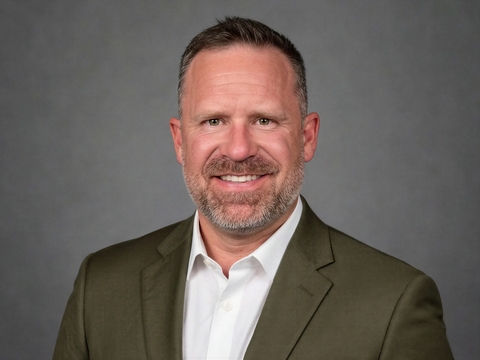
Viabot CEO & Co-Founder Gregg Ratanaphanyarat discusses real-world autonomy, AI-powered property intelligence and the company’s strategy for scaling commercial outdoor robotics.
Robotics Business News spoke with Gregg Ratanaphanyarat, CEO & Co-Founder at Viabot, about the company’s approach to scaling autonomous outdoor robotics. With Viabot One operating across 25 million square feet of commercial property, Ratanaphanyarat discusses lessons from real-world deployments and the challenges of navigating constantly changing outdoor environments. Pasted markdown
The conversation explores how Viabot is expanding beyond autonomous sweeping toward property intelligence, soft security and asset monitoring. Ratanaphanyarat also explains how more than 5 billion square feet of multimodal real-world data, human-in-the-loop monitoring and a robotics-as-a-service model are helping improve autonomy, operational reliability and commercial scalability. Pasted markdown
Scaling Outdoor Autonomy: Viabot One is already operating across 25 million square feet of commercial property. What have real-world deployments taught you about the challenges of autonomous robotics in unpredictable outdoor environments?
The biggest lesson is that outdoor autonomy is not simply indoor autonomy moved outside. The environment changes constantly, and the robot still has to deliver a reliable service every day.
A parking lot can look completely different from one night to the next. There may be shopping carts in new locations, construction zones, parked vehicles, temporary fencing, standing water, snow, dust, fog, changing lighting, or people moving through the property. GPS can work perfectly in one area and become confused near a building, under a structure or between parked vehicles. The robot needs to understand what has changed, determine what is safe and continue doing useful work.
Precision has also turned out to be just as important as broad-area coverage. A traditional sweeping truck can cover a large parking lot, but there is often a person who gets out of the truck to collect debris near curbs, islands, walkways and other areas the vehicle cannot reach. To truly replace that service, an autonomous system has to do both. It also needs to cover a large footprint efficiently, while still navigating close enough to curbs, corners and tight pedestrian areas to deliver the level of cleanliness people expect.
We also learned that autonomy is only one part of the product. Manufacturing quality, remote monitoring, field service, debris handling and the customer experience all have to work together. A customer does not care whether an interruption came from software, hardware, construction or a shopping cart blocking the dock. They care whether the property was serviced and whether or not their employees had to get involved.
That is why we have always prioritized putting robots into real environments to do real work. You uncover issues in the field that no simulation or controlled test can show you. Those experiences have shaped everything from our navigation and recovery systems to how the robot docks, empties debris and communicates its status.
Ultimately, a commercial robot has to feel like dependable infrastructure, not an experiment. Real-world deployment taught us that reliability is not a single feature. It is the result of the entire system working together.
From Cleaning to Property Intelligence: Viabot One combines autonomous sweeping with capabilities such as loitering detection and asset monitoring. How do you see the platform evolving from a cleaning robot into a broader intelligent property-management system?
Sweeping is the anchor job, but it was never intended to be the limit of the platform.
We started with sweeping because it is essential, repetitive and already has a customer budget. That gives every robot a real job from day one. Once the platform is operating across a property every day, it is also continuously observing the environment, building a three-dimensional understanding of the site and learning what normal operation looks like.
That creates opportunities well beyond cleaning. The same cameras, depth sensors, lidar, localization and communications systems used for autonomous navigation can also help identify unusual activity, monitor the status of assets, detect changes to a property and report conditions that deserve attention.
For example, a facilities team may want to know about a pothole, damaged curb, faded paint line or a blocked access area. A security team may care about loitering, trespassing, an open gate or unusual activity in a restricted area. The robot is already present, already moving through the property and already connected to the customer’s portal, so those capabilities can increasingly be delivered through software rather than a completely separate system.
We describe this as soft security because the robot is not replacing human judgment or acting as law enforcement. It is an additional set of eyes that can identify and report exceptions, provide live visual context and allow a human team to decide what to do next. The function of that technology is operational awareness, not consumer surveillance.
This also creates a natural land-and-expand model. We may initially work with a facilities organization because they need sweeping. Over time, the same platform can become useful to property management, security, risk, maintenance and sustainability teams. Our customers receive more value from the Viabot One system without having to install a new robot for every department.
Long term, we see Viabot as a physical and digital layer for the property. It can perform work, observe conditions, report changes and help teams make better decisions. The most important part is that each new capability remains grounded in something genuinely useful to the customer.
AI & Real-World Data: Viabot says its robotic intelligence is trained on more than 5 billion square feet of real-world multimodal data. How does this scale of operational data improve navigation, perception and decision-making in new environments?
The value is not just the size of the dataset. It is that the data captures the full chain: what the robot sensed, what it decided to do, what happened next and how the system recovered.
Our dataset combines cameras, LiDAR, depth sensing, GPS, wheel odometry and inertial measurements. No single sensor works perfectly in every outdoor condition. GPS may be strong in an open lot and less reliable beside a building or under a structure. Cameras may face glare, darkness, rain or dust. LiDAR and depth sensors have their own forms of noise. By seeing how those signals behave together, the system can maintain precise navigation as conditions change.
That matters because outdoor autonomy is defined by the messy cases, not the happy path. Our data includes worn asphalt, paint lines, curbs, puddles, sprinklers, high-dust environments, snow, construction, heavy vehicle traffic and transitions between GPS-rich and GPS-confused areas. Those situations are difficult to buy, simulate or recreate in a controlled test. We capture them because the robots are doing real work, day after day, across diverse customer properties.
We also use a human-in-the-loop process. Since July 2024, we have accumulated roughly 140,000 hours of live fleet monitoring. MyViabot is our fleet-management and customer portal, giving our operations team and customers visibility into robot status, service performance, alerts and reporting at both the individual-property and enterprise-fleet level.
When MyViabot flags an uncertain event, or when a monitor catches something the system missed, the monitor validates what happened and tags the outcome. In effect, our monitors act as a purpose-built data-labeling team for outdoor autonomy. Those examples are used to improve perception, navigation, path planning, recovery behavior and the monitoring platform itself. As common conditions become understood, the software can detect and manage more of them automatically, while our team focuses on the true corner cases.
The same data helps us teach broader concepts rather than memorize narrow labels. For debris detection, for example, we train for “trashness,” using texture, shape and context to determine whether something belongs on the ground. That helps the robot distinguish debris from a paint line, understand changes in the surface and spend more time where work is actually needed.
Every robot contributes to a shared learning pipeline. A difficult condition encountered at one property can improve how the rest of the fleet responds when it sees something similar. New deployments begin with the experience already accumulated across the network rather than learning each environment entirely from scratch.
For customers, that means faster setup, more efficient routes, better curb-level precision, stronger coverage and a more consistent service experience. For Viabot, it means more scalable monitoring, deployment and field operations. Every robot we deploy should make the next robot smarter and the customer experience better.
Robotics-as-a-Service: Viabot is scaling through a robotics-as-a-service model. What have you learned about making autonomous outdoor robotics economically viable for large commercial customers, and what metrics matter most to customers when evaluating ROI?
The biggest lesson is simple: customers want the outcome, not another robot to manage.
That is why our RaaS model includes the robot, software, monitoring, maintenance, repairs and reporting. We remain responsible for the performance of the system. If the robot requires too much intervention, that is our problem to solve, not a new burden for the customer.
Cost compared with the existing service is the most obvious ROI metric, but it is not the only one. Customers also care about consistency, cleaning quality, coverage, response time, reporting and how much of their own labor is required.
The portal is a big part of that value. At the site level, a local team can see what happened at its property. At the enterprise level, corporate teams can see performance across the entire fleet in one place, identify exceptions and understand whether service is being delivered consistently across hundreds of locations. Traditional sweeping is usually fragmented across local vendors, phone calls and invoices. Giving an enterprise a holistic view makes the service measurable and manageable in a way it has not been before.
Customer touchpoints are just as important. A robot can have impressive technical specifications and still be a poor commercial product if store or facility employees have to rescue it, empty it, reset it or manage it every day. In industries with high employee turnover, even a small specialized workflow becomes difficult to maintain.
That is why Viabot One autonomously docks, manages charging and empties debris into a familiar rolling-bin workflow. We designed the system around the way properties already operate rather than asking every location to build a new robotics function.
We also measure fleetwide uptime using a demanding definition. We care whether the robot performed its scheduled service, and we include interruptions caused by real site conditions, even when those conditions are outside our control.
For us, economic viability means strong unit economics, low customer effort, centralized monitoring, repeatable deployment and national field support. The customer experience should feel seamless at any scale.
Long-Duration Autonomy: Viabot One can autonomously hot-swap batteries and operate for 12–24 hours. How important are autonomous charging, battery management and self-maintenance to achieving truly unattended robotic operations?
They are essential. Long-duration autonomy is not just about putting a larger battery into the robot. It is about removing the sequence of human touchpoints that would otherwise interrupt the work.
Outdoor workloads are variable. Energy consumption changes based on distance, surface conditions, debris levels, weather, traffic and the tool being used. The robot needs to understand its remaining energy, the work left to complete and when to charge or exchange batteries without losing continuity.
Autonomous hot swapping extends the operating window without requiring someone to manually replace a battery. An internal backup power system keeps the robot operational during that transition, so it can preserve its state and continue the mission.
The same principle applies to debris. A robot that can run for many hours but fills up quickly is not truly autonomous. Self-emptying lets Viabot One continue working while moving debris into a standard rolling bin that already fits into the property’s maintenance workflow.
We think about self-maintenance as software and operational resilience, not a robot physically repairing every component. The platform tracks charging behavior, sensor noise, controller performance, fault occurrence and other health indicators. It can restart hardware or software modules, switch to fallback localization methods and alert our operations team before a small issue becomes a larger service interruption.
The training loop is also important. Our monitors are not simply watching robots. When the software is uncertain or encounters a new condition, they validate what happened and tag the outcome. Over time, repeated events become known failure modes, known failure modes become automated detections and those detections become recovery behaviors. That is how we move from people monitoring individual robots toward software managing an entire network.
Unattended does not mean unmonitored. The goal is for people to manage the true exceptions rather than operate the robot. As the system learns, one person can oversee more robots while the platform handles more conditions on its own.
That is what makes the economics work. Every routine intervention adds labor, training and inconsistency. Autonomous charging, battery management, debris handling and data-driven recovery are what make the experience feel truly “set it and forget it” for the customer.
Human-Robot Collaboration: As Viabot takes on repetitive outdoor work, how do you see robots changing the roles of property-maintenance and security teams rather than simply replacing individual tasks?
For sweeping, human collaboration should be minimal by design. Most exterior sweeping is already outsourced. because property teams do not want their employees managing it and the work is increasingly difficult to staff.
Viabot replaces that repetitive service rather than giving the customer another machine to operate. We own the robot, monitoring, recovery, maintenance and service outcome. The only routine site-level workflow is emptying the standard 60-gallon rolling bin from the trash station. We designed that around something property teams already understand, so it requires almost no specialized training and does not turn employees into robot operators.
That takes repetitive work off the property team’s plate and gives people more time for issues that genuinely require judgment or dexterity, such as responding to a spill, repairing equipment, helping a tenant or inspecting a hazard.
Security is different. We are not suggesting that a robot can replace a trained security professional. It cannot de-escalate a confrontation, assist someone in distress or physically respond to an incident. Instead, what it can do is provide persistent presence, identify unusual activity, capture useful context and alert the right person. That gives the security team more visibility across the property and helps them focus on the situations that actually need human attention.
The economics are especially compelling because the robot is already on the property performing a recurring maintenance job with an existing budget. Customers can add soft-security capabilities to a platform that is already creating value every day, rather than trying to justify a separate security robot that still requires a human team to review alerts and respond.
So we see Viabot as a service replacement for repetitive outdoor maintenance and a force multiplier for security teams. The robot handles the repetition and persistent observation. People focus on judgment, response and the work only people can do.
That is what giving people their time back looks like in practice.
Scaling the Platform: The new funding will support engineering, sales, product development and RaaS expansion. Which areas of the Viabot platform are the highest priority as you move from proven deployments toward much larger-scale commercial adoption?
The priority is to make national scale repeatable without changing the customer experience.
We already know how to build, deploy, monitor and support Viabot in real customer environments. Now we are adding capacity around that playbook, including manufacturing throughput, supply-chain readiness, deployment capacity, national field support and go-to-market.
On the platform side, we are focused on bringing new properties online faster and making large portfolios easier to manage. That includes more automated mapping and site setup, continued expansion of our network-management software and improvements to the MyViabot portal. A local team should be able to understand what happened at its property, while a corporate team can see performance across its entire fleet in one place.
As the fleet grows, we also want more of the internal workflow to be standardized and software-driven. That creates operating leverage and allows us to support significantly more properties while maintaining the same high level of service.
This round is not about figuring out whether the model works. It is about taking a system that is already operating across national customers and making that same experience repeatable across thousands of properties.
Future of Outdoor Robotics: Looking five years ahead, what additional tasks do you believe a single autonomous outdoor platform could perform beyond sweeping, debris removal and soft security?
Beyond sweeping and soft security, we see the same platform taking on different types of surface care, road-condition monitoring, routine asset checks and several capabilities we are not ready to announce yet.
The broader opportunity is that a platform already moving through a property every day can continue becoming more useful through new tools and software. We do not think property owners will want a different robot for every task. They will want a small number of trusted platforms that can quietly take on more work and fit naturally into their existing operations.
That has been part of Viabot’s design philosophy from the beginning: use interchangeable tools, mapping, dynamic path planning and software to make the same platform increasingly capable over time.
More broadly, I think robots will start to blend naturally into our everyday lives. The successful ones will not necessarily be the robots that look the most futuristic. They will be the ones that are beautiful, useful, reliable and easy to live with. People will come to appreciate them because their properties are better cared for and their teams have more time for work that actually needs a person.
That is the future we are building toward: extremely helpful robots that quietly perform meaningful work, become more valuable over time and give people their time back.