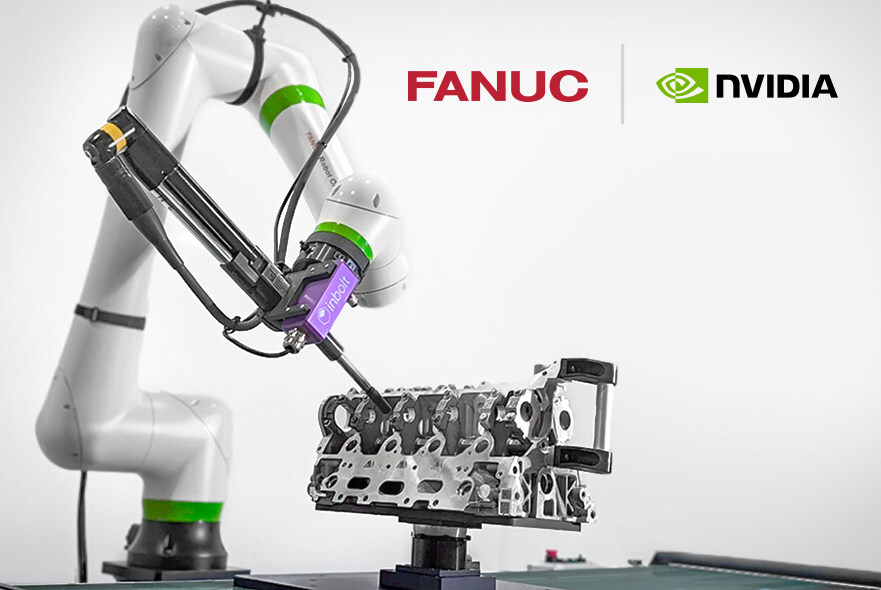
FANUC and NVIDIA Partner to Accelerate Physical AI for Smarter Factory Automation
Strategic collaboration integrates FANUC robotics with NVIDIA AI and simulation platforms to enable intelligent, adaptive, and digitally optimized manufacturing environments.
Image Courtesy: Public Domain
Strategic collaboration combines FANUC's global robotics leadership with NVIDIA AI computing and simulation platforms to deliver intelligent, adaptable automation for the factory of the future.
FANUC, the world's leading supplier of industrial robots and factory automation systems, is collaborating with NVIDIA to advance physical AI—a new paradigm that merges artificial intelligence with physical robotics to enable machines that see, reason, and act in dynamic environments.
Under this collaboration, FANUC will leverage NVIDIA AI infrastructure, including NVIDIA Jetson edge modules, cloud/edge AI infrastructure, NVIDIA Isaac Sim open robotic simulation framework and NVIDIA Omniverse libraries, within its extensive robot portfolio and ROBOGUIDE simulation software. This approach empowers manufacturers to create photorealistic digital twins of their factories, train robots virtually, and deploy them with unprecedented speed and flexibility.
Key Highlights of FANUC's Physical AI Strategy:
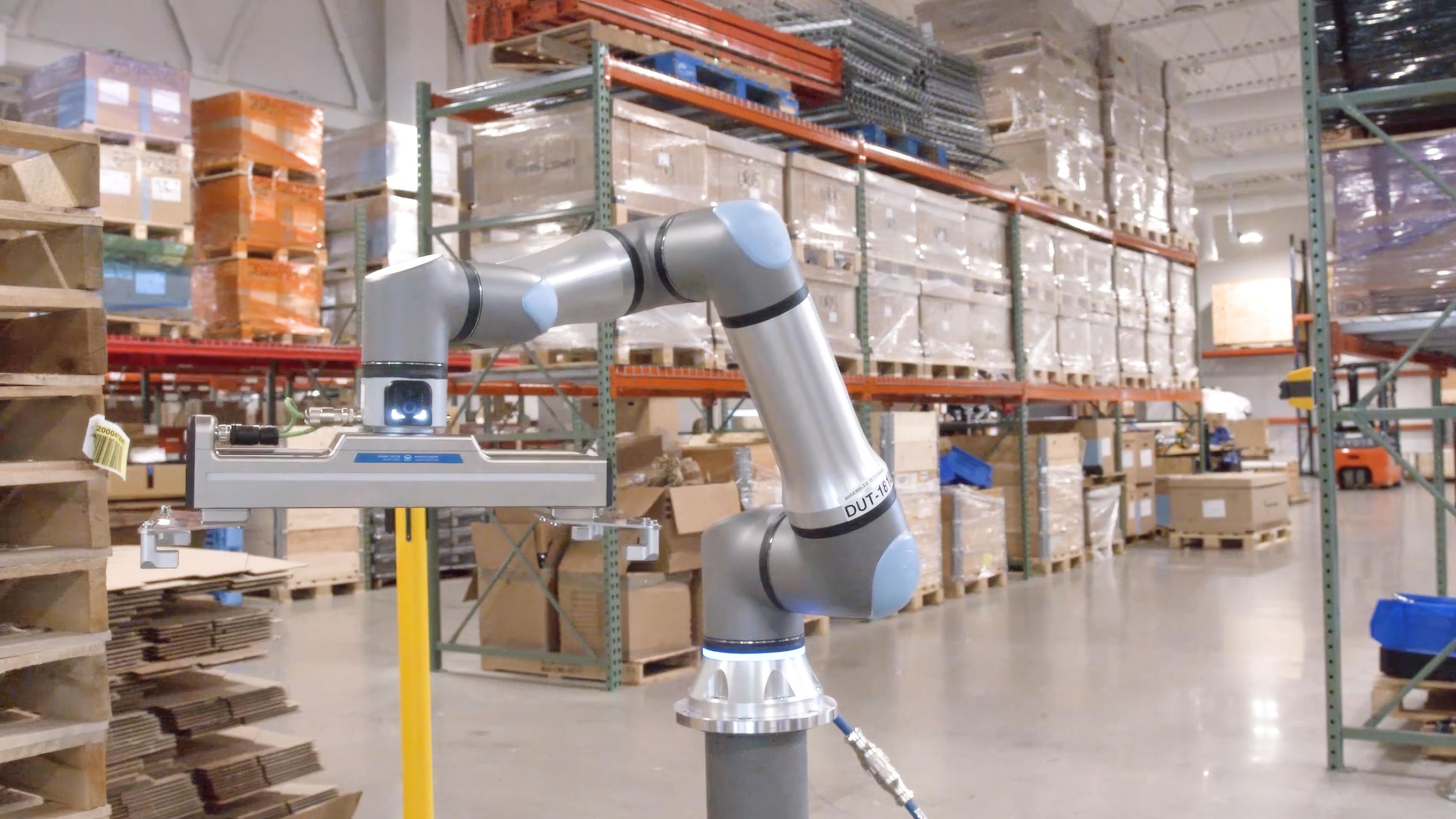
- Open Platform Commitment: FANUC has released an official ROS 2 driver and supports Python as standard across its robots—with payloads ranging from 3 kg to 2.3 tons—enabling developers to build AI-driven applications with ease.
- Ultra-High-Speed Streaming Motion: Enables precise, responsive control of robot joints and end-effectors for smooth trajectories and dynamic path adjustments.
- Digital Twin Integration: Integrating FANUC's robot simulation software ROBOGUIDE with NVIDIA Isaac Sim and NVIDIA Omniverse allows manufacturers to simulate entire production lines with high fidelity, validate workflows, and optimize performance before hardware deployment, reducing commissioning time and cost.
- Real-Time Intelligence: Combining FANUC's proven reliability with NVIDIA Jetson and AI-accelerated computing enables robots to adapt to variability, execute complex tasks, and deliver higher throughput in industries such as automotive, logistics, and food processing.
"Physical AI is the next frontier in industrial automation," said Mike Cicco, President and CEO, FANUC America. "By collaborating with NVIDIA, we're giving manufacturers the tools to deploy intelligent robotics faster and align virtual design with real-world production."
"Manufacturers are increasingly seeking physical AI solutions that bridge the gap between virtual simulation and real-world production to overcome labor shortages and increase operational efficiency," said Murali Gopalakrishna, general manager of robotics at NVIDIA. "By integrating NVIDIA's AI and simulation platforms with FANUC's robotics expertise, we are providing developers with the tools to build and deploy intelligent, adaptable automation at scale."
In addition to advancing simulation and deployment, FANUC is also expanding how operators interact with automation. FANUC is applying NVIDIA AI to enable robots to interpret voice commands and automatically generate Python code—allowing operators to give verbal instructions, reduce setup time, empower more employees to adjust processes without specialized programming skills, and support rapid reconfiguration of production workflows.
These capabilities give manufacturers new ways to overcome skilled labor shortages and meet rising demands for customization and efficiency. By combining virtual training environments, open-source frameworks and real-time AI inference, manufacturers can modernize their operations with greater flexibility.