China Plans 590-Foot AI-Built Hydropower Dam Using Autonomous Robots and 3D-Printing Technology
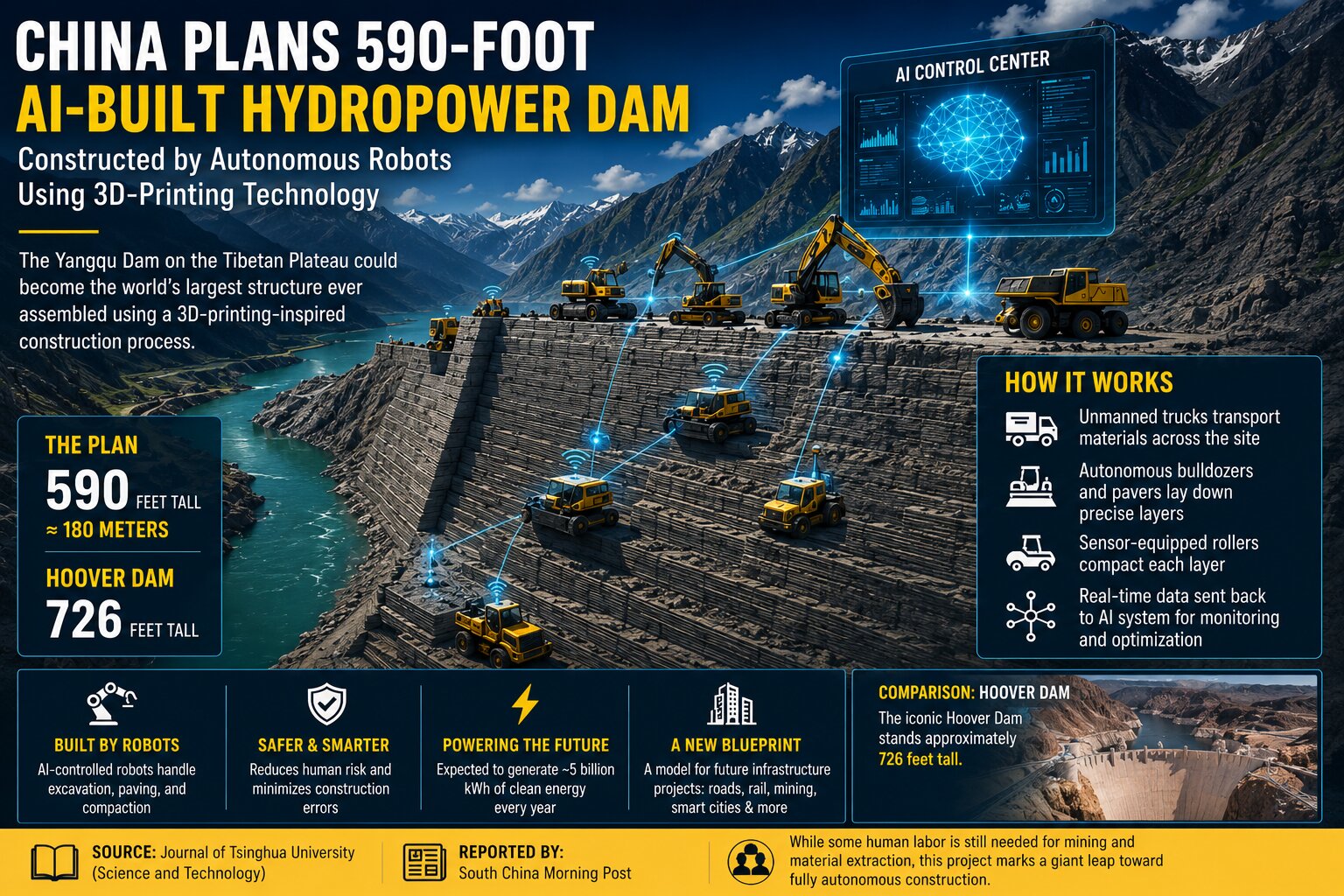
Researchers from Tsinghua University say the Yangqu Dam could become the world’s largest AI-driven construction project, with autonomous trucks, robotic bulldozers, and sensor-equipped rollers building the massive structure layer by layer with minimal human labor.
Image Courtesy: Public Domain
China is preparing to build one of the world’s most technologically ambitious infrastructure projects: a 590-foot-tall hydropower dam constructed almost entirely by artificial intelligence and autonomous construction robots.
The proposed Yangqu hydropower dam, located on the Tibetan Plateau, could become the largest structure ever assembled using a 3D-printing-inspired construction process, according to researchers involved in the project.
Scientists from Tsinghua University described the concept in a paper published in the Journal of Tsinghua University (Science and Technology) and later highlighted by the South China Morning Post.
Autonomous Construction at Massive Scale
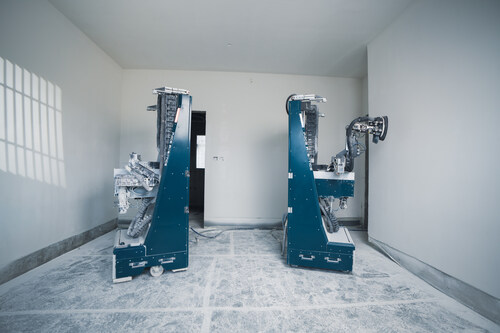
Unlike traditional dam construction projects that rely on thousands of workers operating heavy machinery around the clock, the Yangqu project would use a centralized AI control system to coordinate fleets of autonomous vehicles and robotic equipment.
Researchers say the dam will be built layer by layer, similar to additive manufacturing or industrial-scale 3D printing.
The proposed height of the structure is:
590 feet≈180 meters590\ \text{feet} \approx 180\ \text{meters}590 feet≈180 meters
For comparison, the iconic Hoover Dam stands approximately 726 feet tall.
According to the research team, the automated workflow would begin with unmanned trucks transporting earth and construction materials across the worksite. Autonomous bulldozers and paving systems would then distribute the material into carefully measured layers.
Sensor-equipped robotic rollers would compact each layer to ensure structural integrity and durability before transmitting real-time progress data back to the AI management system.
The researchers argue that this closed-loop autonomous process could significantly reduce construction errors commonly caused by human operators, such as uneven compaction, incorrect material placement, or inconsistent equipment paths.
Lead researcher Liu Tianyun said the AI-driven system could allow construction to continue continuously without exposing workers to dangerous conditions typically associated with large-scale infrastructure projects.
Human Labor Not Entirely Eliminated
Despite viral social media claims describing the project as having “zero human workers,” the researchers acknowledged that some stages would still require human involvement.
Mining and extraction of raw construction materials, for example, would continue to rely on conventional human-operated processes.
Still, the level of automation proposed for Yangqu would represent one of the most advanced uses of robotics and AI ever attempted in civil engineering.
A New Blueprint for Infrastructure Robotics
Once operational, the Yangqu dam is expected to generate approximately 5 billion kilowatt-hours of electricity annually for China.
Researchers believe the technologies developed for the project could eventually expand beyond hydropower into broader infrastructure sectors, including highway construction, mining operations, rail systems, and smart city development.
The initiative also reflects China’s accelerating investment in industrial automation, AI-driven manufacturing, and autonomous heavy equipment as the country seeks to modernize large-scale infrastructure development while addressing labor shortages and safety concerns.
If successful, the Yangqu project could redefine how megastructures are built in the future — replacing large onsite human workforces with coordinated fleets of intelligent machines.