Comau Launches MATE-XT GO Exoskeleton to Cut Worker Strain by 50% and Boost Industrial Productivity
Lightweight, Made-in-Italy wearable exoskeleton delivers higher assistance, Category II PPE certification, and scalable affordability for enterprises and SMBs across manufacturing, logistics, construction, agriculture, and skilled trades.
Image Courtesy: Public Domain
- By reducing physical strain by up to 50% during repetitive and overhead tasks, MATE-XT GO helps improve worker comfort and stamina while supporting productivity across the entire shift
- The new MATE-XT GO delivers higher assistance in a lighter, more accessible and easier-to-maintain solution designed for large-scale adoption and ideal also for SMBs
- Made in Italy and certified as Category II Personal Protective Equipment, MATE-XT GO is ready for use in regulated professional environments and supports safer, more sustainable working conditions in manufacturing, construction, logistics, agriculture, skilled trades and emerging sectors
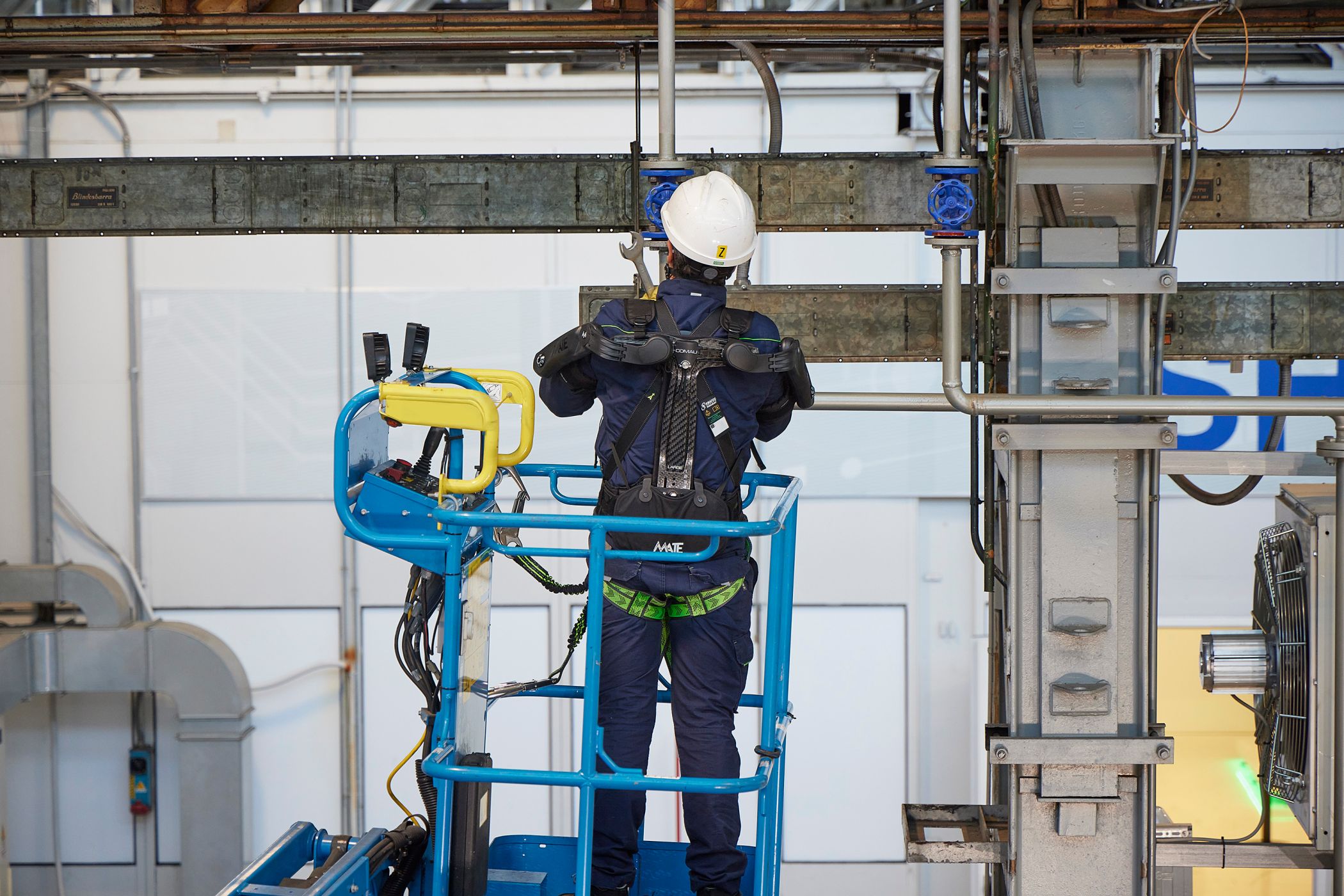
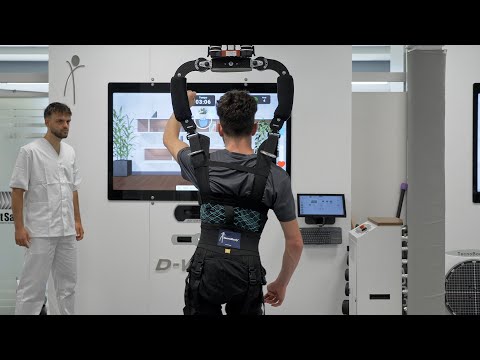
Comau introduces MATE-XT GO, the new wearable exoskeleton designed to support workers’ arms and shoulders during repetitive or overhead tasks. Weighing less than 3 kg and easy to use, it can be put on in 30 seconds and taken off in just 10 seconds, allowing for easy integration into daily activities without interrupting workflows. Certified as Category II Personal Protective Equipment*, which allows use in regulated work environments, MATE-XT GO reduces muscle and perceived effort by up to 50%, improving comfort, endurance, and posture throughout the workday without restricting natural movements. Designed for sectors such as industry, logistics, construction, agriculture, and skilled trades, it makes work safer and more efficient, by benefiting not only large enterprises, but also small and medium-sized businesses (SMBs) and artisans and helping to improve the quality of life of workers.
Building on the success of the Made-in-Italy MATE range, the new MATE-XT GO robotic exoskeleton delivers higher assistance in a lighter solution while preserving natural movement and comfort throughout the workday. The reduced overall weight and increased comfort of MATE-XT GO during prolonged use supports seamless integration into normal operations without disrupting established workflows. MATE-XT GO is also more economically accessible for all, as its fully passive design requires minimal maintenance and lower lifecycle costs. All of which make MATE-XT GO well suited for large-scale deployment within operations of any size.
Developed in close collaboration with IUVO, a former spin-off company of the prestigious university Scuola Superiore Sant’Anna whose majority share is now held by Comau, MATE-XT GO combines Comau’s industrial automation expertise with deep know-how in wearable technology and human biomechanics.
“This achievement marks an important step forward in our vision of human-centric automation,” said Marco Manavello, Chief Industrials Operations Officer. “Building on the real-world experience of more than 3,000 companies already using MATE exoskeletons at international level, and by listening closely to the needs of both workers and employers, we have further evolved the technology to deliver measurable, everyday benefits. MATE-XT GO combines a lighter design with professional certification and proven performance. The result is a wearable solution that can reduce perceived fatigue by up to 50%, support workers during physically demanding tasks, and help companies systematically improve ergonomics at scale. The solution is also more economically accessible and easier to adopt and maintain by SMBs. This in turn opens new opportunities for adoption across a much wider range of sectors, including manufacturing, construction, logistics and agriculture, in addition to crafts and specialized trades.”
From a performance standpoint, MATE-XT GO provides 8 levels of assistance for both arms, with eight adjustable levels that follow the physiological movement of the shoulder. The result is measurable ergonomic impact, with reduced efforts and improved posture
Key benefits
- Calculable results based on measurable ergonomic improvement
- Reduces shoulder muscle activity and the perceived effort felt by workers
- Facilitates increased precision, quality and performance with workers reporting beneficial upgrades of job quality
- Helps improve quality of life at work