McMaster Children’s Hospital Adopts Trexo Plus Robotic Legs to Advance Pediatric Rehabilitation
With support from OBIO and Hamilton Health Sciences Foundation, Trexo Robotics’ pediatric exoskeleton aims to improve mobility, neuroplasticity, and quality of life for children with neurological conditions.
Image Courtesy: Public Domain
In North America, 250,000 children are unable to walk due to central nervous system injuries or neurological conditions, such as cerebral palsy. An effective physical therapy for children with injuries or disabilities affecting their motor skills requires an innovative solution that can build muscle memory and stimulate neuroplasticity.
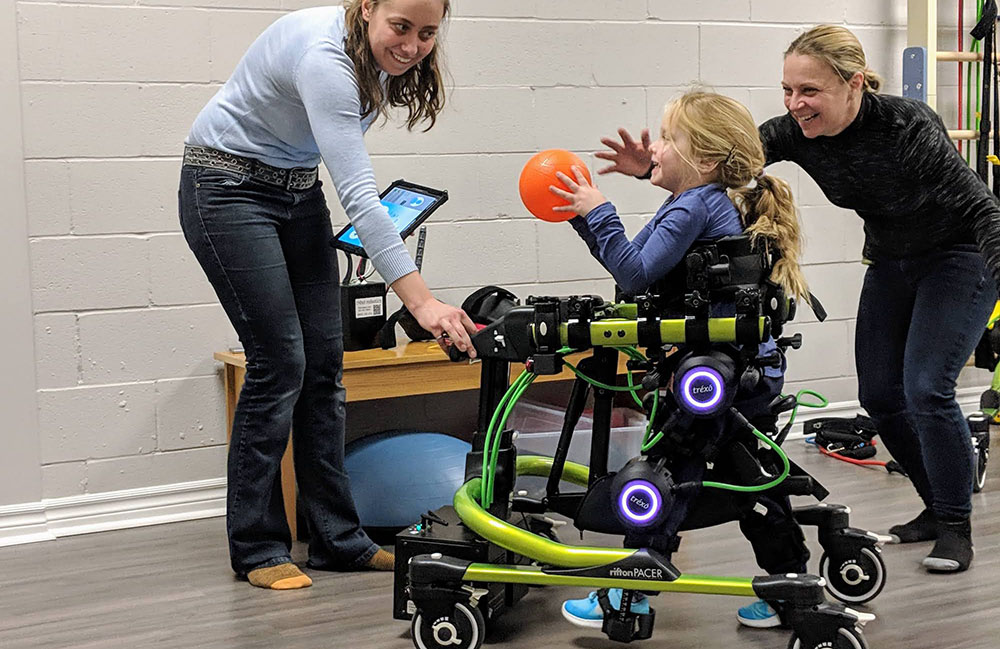
With support from OBIO®, Hamilton Health Sciences’ (HHS) McMaster Children’s Hospital has a new tool, the Trexo Plus, designed by Mississauga-based Trexo Robotics, to support patients needing pediatric rehabilitation. The adoption of this innovative technology was made possible through funding from Hamilton Health Sciences Foundation, alongside support from OBIO’s LSCTC Centre of Excellence. The aim is to understand the benefits of the Trexo Plus device on pediatric patients with mobility-related injury or disabilities receiving care at the hospital’s Ron Joyce Children’s Health Centre.
The Trexo Plus robotic legs allow children to walk with the postural support they need. The device may allow many patients to walk independently for the first time.
Trexo Plus was adopted with the support of OBIO’s LSCTC Centre of Excellence after a successful evaluation was completed at Alberta Health Services through the Early Adopter Health Network (EAHN™) program. EAHN™ is supported by the Government of Canada through the Federal Economic Development Agency for Southern Ontario (FedDev Ontario), and LSCTC is supported by the Government of Ontario.
“Partnering with OBIO’s EAHN™ program and LSCTC Centre of Excellence, and HHS will help us to better understand the life-changing impact that we have seen Trexo have on children. We often hear powerful stories from parents about how this device has dramatically improved their child’s quality of life,” said Manmeet Maggu, CEO and Co-founder of Trexo Robotics.
“This partnership between OBIO®, Trexo Robotics, and Hamilton Health Sciences mobilizes Canadian expertise and innovation to deliver transformative healthcare solutions that improve the lives of children,” said the Honourable Evan Solomon, Minister of Artificial Intelligence and Digital Innovation and Minister responsible for the Federal Economic Development Agency for Southern Ontario. “The Government of Canada is supporting OBIO’s EAHN™ in driving forward groundbreaking initiatives like these—solutions that are actively strengthening the health of Canadians.”
The availability of this new robotic leg will contribute to enhancing pediatric physical therapy plans and help teams deliver care more effectively and efficiently.
Most importantly, it will allow children with mobility challenges to realize the benefits that come with walking. Typically, these benefits are better sleep, improved motility, increased confidence, weight control, and greater strength and endurance.
“This innovation is about more than technology—it’s opening doors to independence, confidence, and a better life by supporting the mobility of our youngest patients,” said Dr. Marc Jeschke, Vice President of Research and Innovation, HHS. “We’re pleased to be able to support our pediatric patients and their families in this way.”
This partnership brings together cutting-edge Canadian innovation and a shared commitment to improving the lives of children. As the Trexo Plus begins its journey at McMaster Children’s Hospital, families and clinicians alike will be watching, and walking, towards a more mobile future.
“This project is a powerful example of what is possible when made-in-Ontario innovation meets the needs of our healthcare system,” said Dr. Maura Campbell, President and CEO of OBIO®. “Trexo Plus is a life-changing technology that will give children with mobility challenges a chance to be more independent and confident. Through our LSCTC Centre of Excellence and EAHN™ programs, we are proud to have supported Trexo Robotics in bringing this remarkable solution to McMaster Children's Hospital.”