Singapore Startup Tashi Launches Edge-Native Coordination Fabric for Autonomous Systems
The deep-tech company introduces an infrastructure layer that enables real-time, cross-vendor coordination for robots and AI agents without relying on centralized cloud control.
Image Courtesy: Public Domain
Singapore deep-tech startup launches an edge-native infrastructure layer that enables multi-vendor robots and AI agents to coordinate instantly and securely without centralized servers.
As autonomous systems proliferate across robotics, IoT, and AI, a critical coordination challenge has stalled enterprise adoption. While machines are becoming intelligent, they still struggle to operate together across vendors, networks, and environments - leaving enterprises trapped by centralized cloud brokers, custom integrations, and vendor lock-in.
Today, Tashi, a Singapore‑based deep‑tech company founded in 2022, announced the launch of its coordination fabric for autonomous systems. The fabric is designed to enable real‑time, cross‑vendor interoperability without reliance on centralized cloud control.
Led by a team with experience across large‑scale platforms and distributed systems, Tashi operates at the infrastructure layer. It allows autonomous systems to discover one another, exchange state, and coordinate actions locally - bringing determinism, resilience, and speed to environments where latency and reliability are critical.
The Coordination Gap in Autonomous Systems
Modern autonomous systems - robots, sensors, industrial machines, and AI agents - are typically deployed in silos. Each vendor ships its own communication stack, control plane, and integration model. When coordination is required, enterprises are forced to rely on centralized cloud brokers, custom middleware, or brittle APIs.
This creates a persistent coordination bottleneck:
- Latency: Cloud round‑trips (often 150–300ms) are too slow for safety-critical decisions.
- Fragility: Single points of failure when internet connectivity degrades.
- Cost: High integration overhead and code maintenance.
- Lock-in: Inability to mix-and-match best-in-class hardware from different vendors.
- Trust boundaries: Cross‑vendor and cross‑jurisdiction coordination remains difficult because data privacy laws often block collaboration. Tashi enables secure coordination without exposing proprietary data or requiring a trusted middleman.
The Tashi Architecture: A Fabric, Not a Platform
Tashi introduces a fundamentally different architectural approach. At its core, it is an edge‑first coordination fabric that enables autonomous systems to:
- Discover peers dynamically
- Exchange state and intent in real time
- Reach local agreement
- Coordinate actions without a central controller
By moving coordination closer to the machines themselves, Tashi reduces local decision latency to tens of milliseconds (a 40-60% latency reduction), while improving fault tolerance and operational resilience.
"The market has figured out how to make robots intelligent. The next decade is about making them work together without vendor lock-in," said Amar Bedi, CEO of Tashi. "That is the infrastructure gap we are solving. We are building the invisible layer that allows a robot from Vendor A to collaborate with a sensor from Vendor B safely and instantly."
From Proven Deployments to Robotics and IoT
Tashi's architecture has already been validated in production environments within the gaming industry, where low‑latency and decentralized coordination are essential. With the core fabric proven, Tashi is now expanding into robotics, warehousing, and industrial IoT.
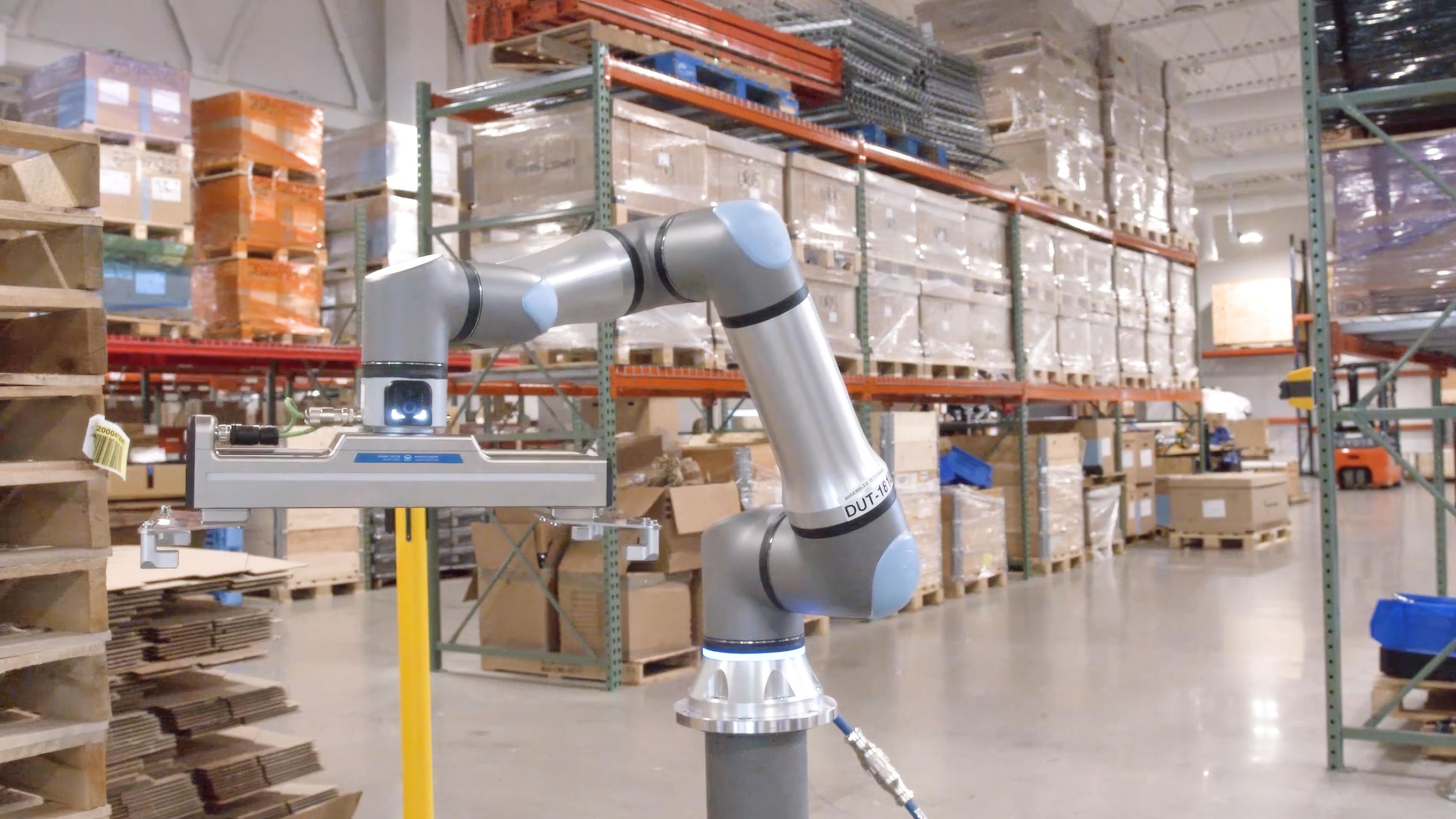
- Robotics & Warehousing: Robots from different vendors coordinate task allocation, routing, and collision avoidance locally, even under intermittent connectivity, improving throughput and reducing downtime.
- Industrial IoT: Sensors form local decision loops for monitoring, alerts, and automated responses, minimizing reliance on cloud processing.
- AI Agent Coordination: Distributed software agents coordinate execution and data sharing, reducing orchestration overhead.
Enterprise Impact
Enterprises deploying Tashi benefit from:
- Lower latency through local coordination
- Reduced infrastructure costs by eliminating per-message billing from cloud brokers
- Faster deployment by reducing integration timelines from weeks to days
- Increased Resilience as coordination continues even during cloud outages
- Scalability as autonomous agent counts increase
"The machine economy cannot scale on custom code and cloud metering," said Jay McCarthy, CBO at Tashi. "We are moving the industry from fragile, expensive silos to a unified fabric that turns coordination into a predictable utility."