Hidonix Is Rewriting Indoor–Outdoor Navigation With Spatial Intelligence Built for the Real World
07 January 2026 | Interaction | By editor@rbnpress.com
In an interview with Robotics Business News, Achille De Pasquale, Founder & CTO of Hidonix, explains how the ION platform overcomes Wi-Fi and GPS limitations, enabling AI-driven navigation, tracking, and robotics across complex environments.
As autonomous systems, robotics, and smart infrastructure increasingly move into real-world environments, the ability to understand space with precision has become a foundational challenge. In this in-depth conversation with Robotics Business News, Achille De Pasquale, Founder & CTO of Hidonix, shares how the company’s mission to translate advanced AI and spatial research into practical deployments led to the creation of the ION platform. He explains why traditional Wi-Fi- and beacon-based navigation systems fall short, how geomagnetic mapping enables reliable indoor–outdoor continuity, and how Hidonix is positioning spatial intelligence as a core infrastructure layer for AI, robotics, and next-generation smart environments.
Can you share the mission and evolution of Hidonix as a deep-tech company, and what challenges in indoor–outdoor navigation led to the creation of the ION platform?
Hidonix was founded with the mission of turning advanced research in AI, spatial intelligence, and extended reality into practical products that can operate in real-world environments—not ideal or controlled ones.
Very early on, we encountered a fundamental limitation in existing indoor navigation platforms: most of them depend on Wi-Fi availability or on the installation of dedicated hardware such as beacons.
This immediately became a critical issue in many of the environments we were working with. In large venues, Wi-Fi coverage is often inconsistent or unavailable in key areas, and in places like museums or historical buildings, installing beacons is simply not an option due to architectural and conservation constraints.
At the same time, GPS works reliably outdoors but completely breaks down indoors, creating a discontinuity that existing platforms were unable to solve.
These constraints pushed us to rethink indoor–outdoor navigation from the ground up and led to the creation of ION—a platform designed to work without relying on Wi-Fi or invasive infrastructure, while ensuring continuity, precision, and scalability across complex spaces.
How does Hidonix’s approach to spatial intelligence differ from traditional navigation or tracking systems, and what unique value does ION offer enterprises and venue operators?
Traditional navigation systems rely heavily on infrastructure—beacons, Wi-Fi triangulation, or static maps—and typically treat positioning, mapping, and navigation as separate layers.
Hidonix takes a fundamentally different approach: we see spatial intelligence as a living system.
ION continuously understands, maps, and interprets space using AI, sensor fusion, and geomagnetic data. This allows enterprises and venue operators to gain not just navigation, but real-time operational awareness.
The result is higher accuracy, lower infrastructure costs, faster deployment, and the ability to adapt instantly to changes in the environment—whether it’s crowd flow, emergency situations, or operational constraints.
ION integrates AI, mapping, real-time tracking, and navigation—how do these technologies work together to operate reliably in complex environments?
At the core of ION is artificial intelligence.
AI analyzes data collected from hardware sensors—such as inertial sensors, and geomagnetic signals—to continuously estimate and refine the user’s or object’s position.
This data feeds into a dynamic mapping layer that updates in real time, allowing navigation and tracking to remain accurate even in complex, signal-challenged environments.
Because these technologies are deeply integrated rather than stacked, ION can operate reliably in spaces with multiple floors, moving obstacles, or limited connectivity.
The platform is already deployed in venues such as hospitals and museums—what key operational or user benefits have organizations reported so far?
Across different types of venues—including hospitals, museums, schools, campuses, and large public spaces—organizations report strong benefits both on the operational and user-experience side.
From an operational perspective, ION enables venues to truly understand how people move through space. This crowd intelligence helps organizations optimize layouts, reduce congestion, improve wayfinding, and design better services based on real usage patterns rather than assumptions.
From a user perspective, visitors, patients, and staff benefit from faster navigation, reduced stress, and clearer guidance—especially in complex or unfamiliar environments.
Security and safety are another major area of impact. In schools and educational campuses, ION is used to locate students and staff in real time during emergencies, helping security teams coordinate evacuations and guide people to safe exits more effectively. Similar capabilities apply to hospitals and large venues, where knowing where people are in critical moments can make a decisive difference.
Overall, organizations see ION not just as a navigation tool, but as a spatial intelligence platform that improves efficiency, safety, and the quality of the experience within their spaces.
Geomagnetic mapping is a core capability of ION—how does this technology enhance indoor navigation compared to beacon- or Wi-Fi-based systems?
Geomagnetic mapping allows ION to use the Earth’s natural magnetic field as a stable and pervasive signal for positioning.
Unlike beacon- or Wi-Fi-based systems, it requires no physical installation, no battery-powered devices, and no ongoing maintenance.
Beacon systems need regular battery replacement and provide limited coverage, while Wi-Fi triangulation is often inaccurate and unstable in complex environments.
Geomagnetic signals, on the other hand, cover the entire area, work reliably even in challenging conditions, and deliver significantly higher precision—making indoor navigation more robust, scalable, and cost-effective.
Hidonix is debuting the Hido II Rover at CES—what makes this platform unique, and how do features like dual-modality perception and stair-climbing expand its use cases?
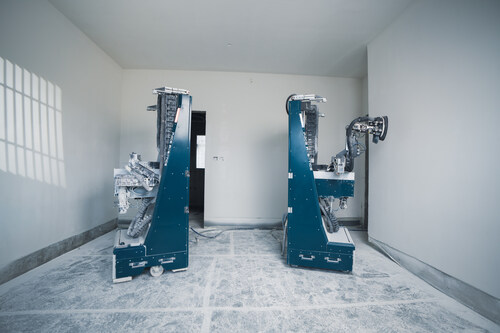
Hido II is the latest rover developed entirely in-house at Hidonix, and it was designed as a technical platform rather than a general-purpose robot. Its primary goal is to enable high-fidelity spatial and geomagnetic data acquisition in real-world environments—at a scale and consistency that would be impossible to achieve through manual workflows.
The platform was born from a very concrete need: scaling human mapping. Compared to manual acquisition, Hido II increases data collection speed by over 50%, allowing large and complex environments to be mapped faster while preserving consistency, repeatability, and signal quality.
A key differentiator of Hido II is that it is the only rover capable of autonomously mapping and acquiring geomagnetic fingerprints. During development, we discovered that commercially available robots introduced geomagnetic interference that compromised downstream navigation accuracy. For this reason, the second generation of Hido was completely redesigned in our lab—starting from the chassis architecture and material composition—to eliminate magnetic noise and preserve a clean, stable geomagnetic signature.
From a robotics standpoint, Hido II is built around a dual-modality perception system. A front-mounted 2K stereo camera provides depth reconstruction, human and object detection, and visual classification, while a top-mounted Ouster LiDAR delivers continuous 360-degree point-cloud acquisition. The fusion of visual and LiDAR data enables deterministic environmental awareness, real-time SLAM, dynamic replanning, and reliable operation in dense, irregular, or highly dynamic spaces.
The acquisition subsystem is another defining element. Hido II features a folding, extendable robotic arm carrying the Hidonix Acquisition Module. Inside this module, the Hidonix Embedded Computer runs proprietary firmware optimized for precise geomagnetic fingerprint acquisition, leveraging NVIDIA compute modules for real-time processing and parallel sensor workloads. The arm’s kinematics ensure controlled, repeatable placement and consistent contact geometry, which is critical for low-variance signal collection across different environments.
Mobility further expands the platform’s use cases. Hido II uses a NASA-derived rocker-bogie suspension, enabling controlled stair climbing and descent while maintaining sensor stability and continuous data acquisition. In addition, the rover supports zero-radius rotation and sideways motion, allowing precise positioning in constrained or architecturally complex spaces. Unlike many robots that are limited to flat surfaces, Hido II can operate autonomously across multi-level venues without human intervention.
Finally, Hido II is fully integrated with the ION CMS. Operators can monitor the rover’s position on a site map, access the live camera feed, and define or modify routes remotely, making it a scalable and controllable system rather than a standalone robotic unit.
Overall, Hido II combines mechanical continuity, predictable sensor performance, and advanced perception to serve as a foundational robotics platform for spatial intelligence—bridging robotics, AI, and navigation in environments where traditional systems fail.
With the launch of new real-time tracking devices like the smart bracelet and badge case, which environments are you targeting, and how do these devices improve safety and situational awareness?
Our initial target environments include hospitals, industrial and manufacturing sites, oil & gas facilities, airports, entertainment venues, and large public infrastructures—sectors where real-time visibility of people and assets directly impacts safety, efficiency, and compliance.
These devices provide precise, real-time location data that enhances situational awareness across operations. From a business perspective, this enables organizations to reduce operational risk, improve emergency response, optimize workforce coordination, and generate actionable insights on how spaces are used. In safety-critical scenarios—such as schools, hospitals, or industrial sites—the ability to instantly locate individuals and guide them to safe zones can be decisive.
From a go-to-market standpoint, however, Hidonix is not positioning itself as a direct, large-scale deployment provider. Our strategy is to scale through partnerships. ION is designed as a modular platform with an SDK that allows system integrators, software vendors, and enterprise solution providers to embed advanced tracking and spatial intelligence directly into their existing suites.
This model allows partners to accelerate time-to-market with a best-in-class positioning layer, while Hidonix focuses on licensing, platform evolution, and core R&D. Ultimately, we see ION becoming the spatial intelligence backbone for a broad ecosystem—powering safety, operations, and analytics across multiple industries without requiring organizations to replace their current systems.
Looking ahead, how do you see spatial intelligence converging with AI, robotics, and smart infrastructure over the next three to five years, and what role will Hidonix play in that evolution?
Over the next three to five years, spatial intelligence will evolve from being a supporting layer to becoming a core decision-making infrastructure that sits at the intersection of AI, robotics, and the built environment.
AI systems will no longer operate in isolation. They will need context: where things are, how spaces behave over time, how humans and machines move, interact, and deviate from expected patterns. Spatial intelligence is what provides that context—turning physical environments into continuously interpretable, machine-readable systems.
Robotics will increasingly rely on spatial intelligence not just for navigation, but for anticipation—understanding intent, predicting movement, and adapting behavior in real time. At the same time, smart infrastructure will shift from static sensing to adaptive environments, capable of responding dynamically to people, assets, and risk.
At Hidonix, our role is to act as the connective tissue between these domains. We are building spatial intelligence as a modular, AI-native layer that can plug into robotics, security systems, training environments, and critical infrastructure—without requiring massive hardware overhauls.
What differentiates Hidonix is that we don’t see spatial intelligence as a single product, but as a foundational capability: one that can scale from civilian environments to high-stakes defense, safety, and industrial applications. Our focus is on real-time understanding, interoperability, and decision support—helping machines and humans operate with shared spatial awareness.
In short, the future isn’t just smarter AI or more capable robots. It’s systems that understand space the way humans intuitively do—and Hidonix is building the infrastructure to make that possible.