Comau’s Alejandro Antonio Alvarez on AI-Driven Robotics, Edge Intelligence, and the Future of Human-Centric Smart Factories
15 May 2026 | Interaction | By Editor Robotics Business NEWS <editor@rbnpress.com>
In conversation with Robotics Business News, Alejandro Antonio Alvarez, Business Development Manager at Comau, discusses how AI, edge computing, autonomous robotics, and human-centric automation are reshaping the next generation of smart manufacturing.
As industries accelerate toward AI-powered manufacturing, the convergence of robotics, edge intelligence, and autonomous systems is redefining how factories operate. In this exclusive conversation with Robotics Business News, Alejandro Antonio Alvarez, Business Development Manager at Comau, explains how intelligent automation, collaborative robotics, digital twins, and human-centric innovation are shaping the future of smart factories and transforming industrial productivity worldwide.
Comau has decades of experience in industrial robotics and factory automation. How is the company evolving its strategy to meet the growing demand for AI-driven and autonomous industrial systems?
Industrial robotics is no longer limited to stable environments where repeatability and precision are the main drivers. As a result, our strategy has evolved from traditional automation toward what can be defined as intelligent, adaptive automation, whereby artificial intelligence, machine learning, and advanced vision systems are integrated into our robotics and automation platforms. In this way, Comau’s solutions are able to interpret unstructured environments, make real-time decisions, and continuously optimize performance. This transformation is already visible in AI-enabled applications such as intelligent picking, predictive diagnostics, and real-time quality control, where systems adapt without requiring extensive reprogramming.
At a strategic level, we are also transitioning toward software-defined automation, which includes digital platforms, IoT connectivity, and data-driven services that enable predictive and prescriptive manufacturing. The objective is to move from static production lines to flexible networks where automation can be rapidly reconfigured and scaled.
The real challenge today is no longer choosing between AI and automation, but integrating artificial intelligence with physical automation in a way that delivers measurable industrial value. In this context, robotics becomes the strategic bridge between the digital world and real-world operations.
The new collaboration with Aptiv combines Comau’s robotics expertise with advanced perception, compute, and edge software technologies. What made Aptiv the right strategic partner for this next phase of industrial automation innovation?
As is the case with all our strategic collaborations, our joint agreement with Aptiv is grounded in strong technological synergies. Comau brings decades of experience in industrial robotics, system integration, and large-scale deployment across complex manufacturing environments. Aptiv contributes advanced capabilities in perception, edge computing, and software-defined architectures, which we feel is increasingly critical for next-generation automation.
What makes this collaboration particularly relevant is the convergence of hardware and software. By combining our robotics expertise with Aptiv’s advanced sensing and computing platforms, we can increasingly develop intelligent systems that process data, interpret their surroundings, and act autonomously in real time. This also addresses a critical barrier to automation adoption, which is complexity. By integrating advanced perception, edge AI, and software into cohesive solutions, we aim to reduce implementation costs and simplify deployment. This is particularly relevant in sectors where flexibility and rapid reconfiguration are essential.
Comau has expanded beyond automotive manufacturing into logistics, renewable energy, food processing, and battery production. Which industries do you believe are currently the biggest growth opportunities for robotics and automation?
Industries such as the ones just mentioned represent high growth opportunities because they combine strong demand with relatively low levels of automation maturity. The rapid growth of e-commerce, for example, and increasing demand for customization are driving the need for flexible, software-driven automation. Many warehouses still rely heavily on manual processes, creating significant potential for robotics, especially in picking, sorting, and material handling.
Renewable energy and electrification are also major growth areas, as solar, hydrogen, and battery production require scalable, high-precision manufacturing processes where automation can play a critical role. At the same time, sectors such as aerospace, critical infrastructure, food processing, heavy and light industry are increasingly adopting automation to address labor shortages and improve operational flexibility. Autonomous mobile robots, collaborative robots, and AI-enabled warehouse systems are becoming central to smart factory transformation. How does Comau see the balance evolving between traditional industrial robotics and more flexible autonomous systems?
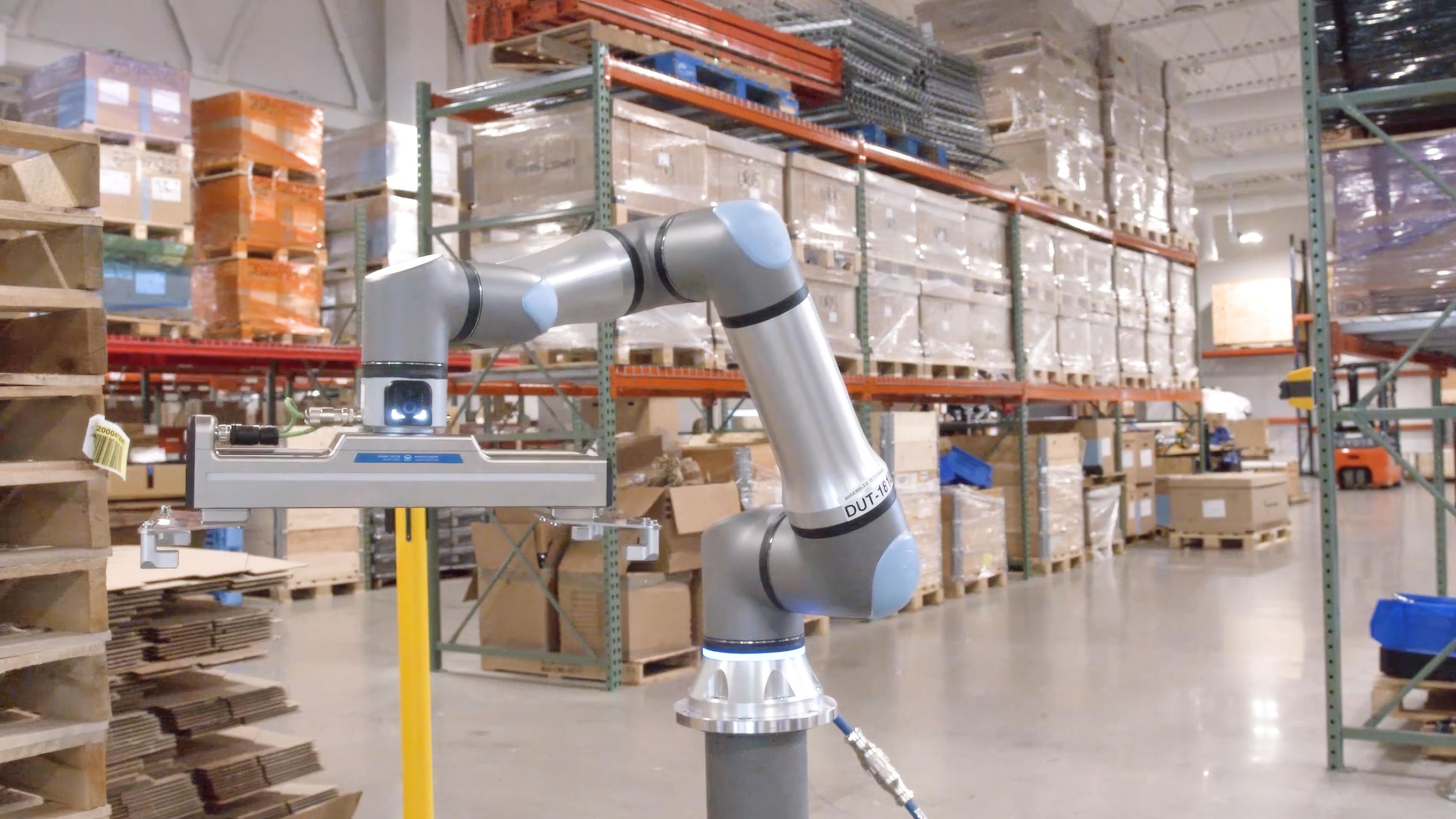
It’s important to recognize that advanced robotics are not designed to replace traditional industrial robots. Not only does traditional robotics remain essential for high-speed, high-precision, and repeatable tasks, it continues to deliver unmatched performance in structured environments such as welding, machining, and assembly. When greater flexibility is required, however, the answer is AI-enabled systems, autonomous mobile robots (AMRs), and collaborative robots. All three excel in dynamic environments and enable rapid reconfiguration, decentralized operations, and closer interaction with human workers. The balance is therefore shifting toward a more integrated framework in which fixed, mobile and smart automation coexist.
In this scenario, AI becomes the unifying layer because it helps connect and coordinate these different elements across the factory. This leads to more adaptive production flows, reduced downtime, and improved resource utilization. What this means in practical terms is that smart factories will not rely on a single type of robot, but on a coordinated network of specialized systems optimized for a specific role within a flexible, data-driven environment.
The partnership highlights the importance of edge AI and real-time industrial intelligence. How critical is low-latency edge computing for enabling safer and more adaptive robotic operations in complex manufacturing environments?
Comau believes that low-latency edge computing is becoming a foundational requirement in environments where robots must interact with humans, handle variability, and respond to unexpected events. In these contexts, decision-making cannot rely solely on centralized or cloud-based systems.
Edge computing enables data to be processed directly within the robot or at the production line. This drastically reduces latency, allowing systems to react in real time, which from a safety perspective is essential.
Edge computing also supports scalability and enhances system resilience. This is because distributed intelligence allows multiple systems to operate autonomously while still being coordinated within a broader digital framework. And by reducing dependence on external connectivity, it ensures continuity of operations even in the event of network disruptions.
Comau has long advocated “humanufacturing,” where humans and robots work collaboratively. How is that philosophy influencing the design of next-generation collaborative robotics and workforce augmentation technologies?
The concept of human-centric technologies is based on the principle that automation should enhance human capabilities rather than replace them, which is central to how we approach innovation. Collaborative robotics is a great example. Collaborative robots with advanced sensing and AI capabilities can operate safely alongside humans without the need for physical barriers, which facilitates more flexible and ergonomic workflows.
At the same time, we are developing new interfaces that leverage AI to simplify programming and interaction, allowing operators with limited technical expertise to manage complex systems. This democratizes access to automation and supports workforce upskilling.
Ultimately, human-centric manufacturing is about creating a balanced ecosystem where technology amplifies human intelligence, efficiency and decision-making. It can be through collaborative robotics, wearable exoskeletons, or intuitive digital tools that enable a more natural interaction between humans and machines. In this way, automation becomes an enabler of productivity as well as inclusion, ensuring that technological progress aligns with workforce empowerment and long-term industrial sustainability.
Industrial companies often struggle with automation complexity and integration costs. What innovations are most needed to make advanced robotics more accessible for mid-sized manufacturers and emerging markets?
Here, the main barriers tend to be cost, complexity, and lack of specialized skills. This is where modular and standardized automation can help. Pre-engineered robotic cells and plug-and-play solutions, significantly reduce design time, installation complexity, and upfront investment, allowing manufacturers to scale automation incrementally based on their operational needs and financial resources.
Another critical area is software simplification. Intuitive programming interfaces, often supported by AI, enable non-experts to configure and operate robotic systems. This reduces dependency on highly specialized personnel and accelerates adoption. Digital tools such as simulation, virtual commissioning, and digital twins also play a key role because they allow companies to test and optimize systems before deployment, minimizing risk and improving ROI. Finally, new service-based models are emerging to lower entry barriers by shifting automation from a capital expenditure to an operational expenditure.
Looking ahead, how do you envision the future smart factory evolving over the next decade as AI, robotics, autonomous logistics, and digital twins become increasingly interconnected?
The smart factory will increasingly integrate and leverage interconnected intelligence to operate as a fully integrated network where machines, software, and humans collaborate seamlessly. Within this AI-enabled environment, autonomous logistics will play a critical role, with AMRs and intelligent warehouse systems ensuring real-time material flow optimization. This will reduce bottlenecks and enable just-in-time production at an unprecedented level of precision.
Digital tools will provide a virtual representation of the entire factory, allowing companies to simulate, monitor, and optimize processes, which will significantly reduce downtime, improve efficiency, and accelerate innovation cycles. Sustainability will also be embedded into the system design, with energy-efficient processes, circular production models, and localized supply chains becoming standard. Finally, human-machine collaboration will remain central. The factory will be designed around people, with technologies that enhance safety, ergonomics, and decision-making capabilities.