Fairbanks Morse Defense Deploys Robotic Welding to Reduce Naval Maintenance Bottlenecks
02 February 2026 | Interaction | By editor@rbnpress.com
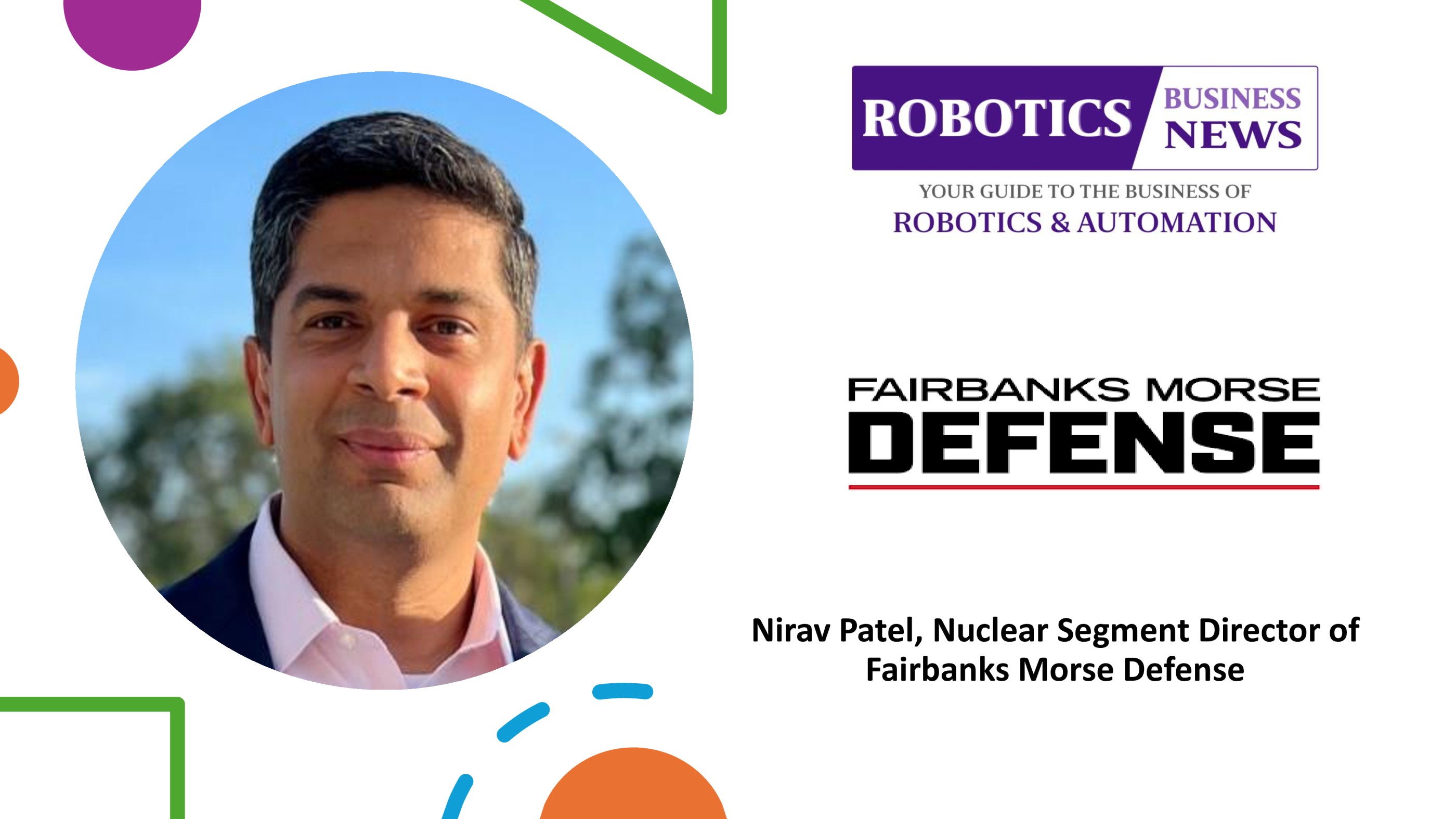
In a conversation with Robotics Business News, Nirav Patel discusses how robotics, AI vision, and automation are improving weld quality, safety, and throughput in maritime environments.
In an interview with Robotics Business News, Nirav Patel, Nuclear Segment Director at Fairbanks Morse Defense, discusses how the company is leveraging robotic welding, AI, and automation to modernize naval maintenance. Patel explains how robotics is helping reduce repair timelines, improve safety, and strengthen operational readiness across the U.S. Navy and allied fleets—marking a critical step forward in the evolution of maritime sustainment.
What prompted this announcement (robotics press release), and why is now the right time for the company to make this move?
The announcement of expanded robotic welding capabilities at Fairbanks Morse Defense (FMD) was the convergence of two powerful drivers: proven capability and meeting an urgent need.
As a company that has been serving the U.S. Navy and Coast Guard for over a century and providing mission-critical support to allied fleets, our investment in robotics is part of a long history of finding innovative ways to address complex challenges. We’ve spent years developing our robotics platform to address areas where robotics can deliver the most value in terms of speed, efficiency and quality. One of the key problems we’re working to solve for our Navy customers and the broader maritime industry is lengthy maintenance delays, which lead to reduced asset availability.
Today, Western navies face a maintenance crisis due to aging fleets, labor shortages, limited shipyard capacity and continuous operational demand. This is especially true in the United States, where long maintenance timelines and a shrunken maritime industrial base have put operational readiness in jeopardy. Robotics represent a path forward.
For a navy to be powerful, it must be ready to sail. That means ships aren’t sitting idle in drydocks, waiting for maintenance. With our robotic welding platform, we’ve been able to complete certain submarine repair jobs three times faster than a human welder alone. We have cut repair times by 50-75% on large-scale welding jobs. While FMD's work is only a portion of total ship maintenance, we believe this innovation, applied throughout the maritime industrial base, can reduce dry-docking times dramatically and multiply the efforts of the workforce.
Ultimately, this is the right time to expand our robotics capabilities because our customers can’t afford to wait. The U.S. and its allies face unprecedented challenges in the maritime domain. This innovation helps ensure mission readiness through timely maintenance and sustainment.
What specific market gap or customer challenge are you aiming to solve with this development?
The U.S. Navy has long recognized the overlapping challenges of maintenance delays and workforce shortages. To address that gap, the Navy launched the Maritime Industrial Base (MIB) program, a public-private partnership that is driving investment into maritime infrastructure modernization, workforce development and advanced manufacturing, like robotics. The program is a vital enabler, and FMD is proud to be a MIB partner. Not only does MIB provide resources to help us deliver technical solutions—robotics, 3D-printing and AI/ML capabilities—but it is also helping us drive organizational transformation. Adopting new technologies is a major undertaking for large organizations like the Navy. Having an advocate who is willing to take calculated risks to demonstrate new capabilities and drive process modernization is an essential part of how we all make progress.
FMD’s robotics program is also deeply tied to our workforce initiatives that ensure we have a sustainable pipeline of skilled maritime workers, from the coastlines to the heartland. Sometimes when workers hear about robotics and AI, they think robots are going to replace humans. That’s not the case. We need both. We need skilled operators to monitor repairs, ensure quality and engage in high-level problem-solving, and we need robots and cobots working on repetitive tasks, especially in hazardous conditions. We don’t need human operators cramped in tight engine rooms working over a thousand-degree welding arc for hours at a time. Efficiency and cost are important. But operator safety and sustaining a workforce long-term are paramount. Advanced manufacturing technologies help the industry attract and retain top talent by making their work safer, more fulfilling and less physically demanding.
How does this differentiate your company from other robotics players addressing similar use cases?
One important distinction: Fairbanks Morse Defense is not a robotics company trying to break into naval applications. We’re a total-ship systems integrator using robotics to enhance our century-long commitment to delivering advanced marine power, propulsion and manufacturing solutions for the U.S. and allied fleets.
When it comes to our robotics program, we are deliberate in identifying where the application will create the greatest advantages. That’s why we’re applying it to tackle the maintenance and sustainment bottleneck. Today, repairs on surface vessels routinely stretch 20-100% longer than planned and roughly one-third of the U.S. submarine fleet is non-deployable at any given time due to maintenance delays.
Our robotic welding systems are validated for emergent repairs under operational pressure. Through a series of crank line repairs on submarine diesel engines, FMD showcased the reliability of robotic welding in a high-stakes, time-critical military context. Traditionally, this is a job that is time-consuming, labor-intensive and requires accuracy within a thousandth of an inch. By training the cobot platform on the parameters of this problem set, we were able to cut repair times by 75%. That translates into moving the maintenance schedule forward faster, which directly supports operational availability.
Other Original Equipment Manufacturers (OEMs) are investing in robotics for shipbuilding. That’s an important application, but not our current focus. While shipbuilding ensures availability for the next decade, maintenance ensures availability for tomorrow.
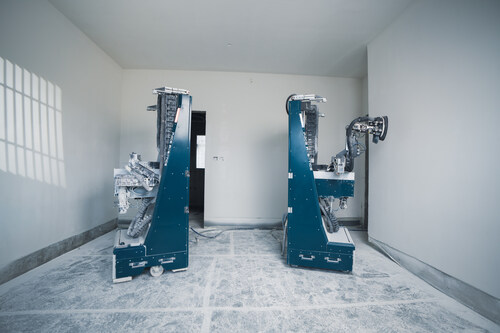
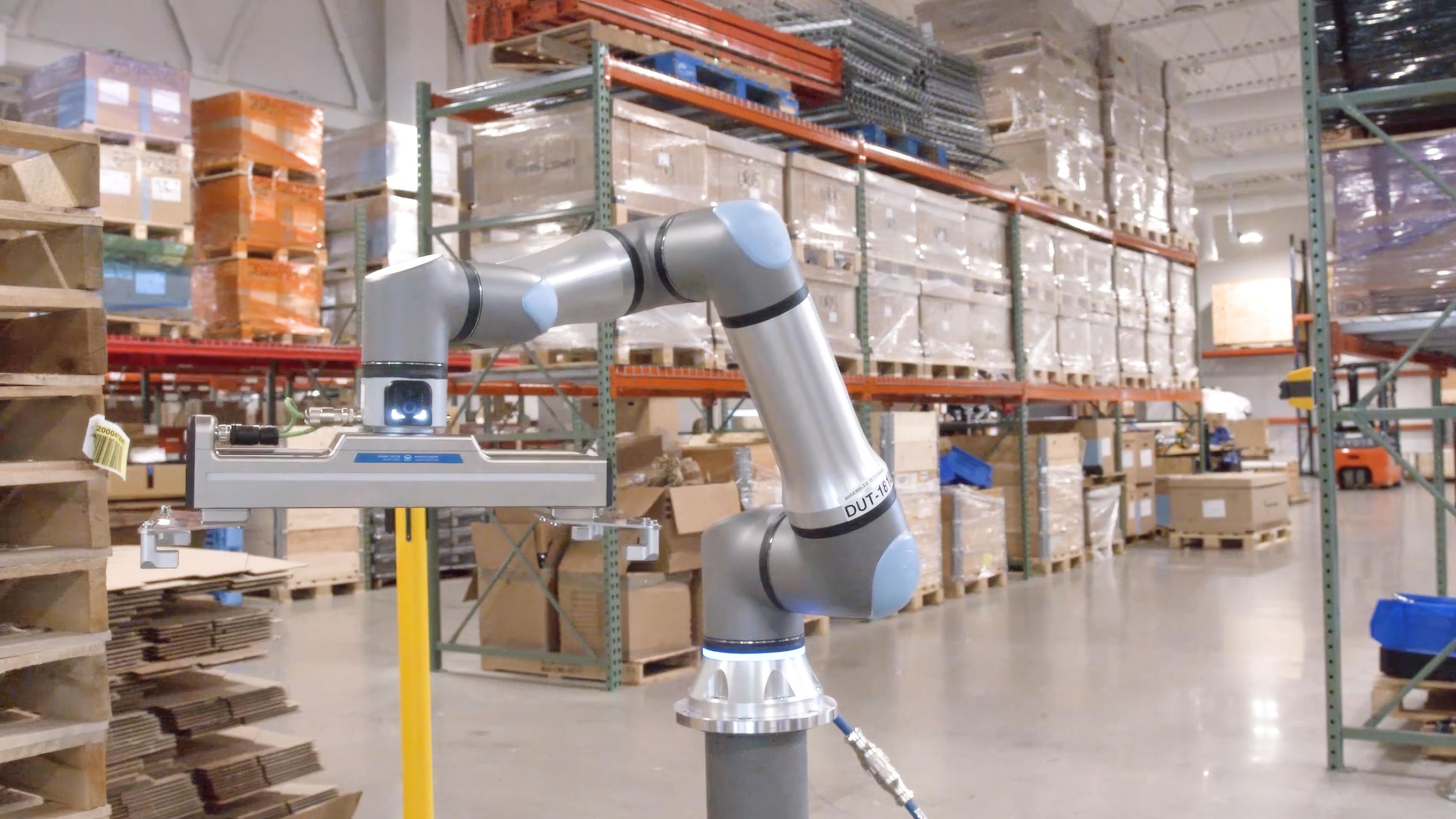
Additionally, where some companies are developing robotic systems from scratch, we’ve found that commercially available cobots give us the flexibility and reliability we need for our mission. FMD’s platform is modular and portable to complete repairs in confined, demanding operational environments.
Who do you see as the primary customers or industries that will benefit most from this launch?
The U.S. Navy is our primary customer and they stand to benefit most. This is why we've been working with them through the Maritime Industrial Base program. What we’ve accomplished with our robotics platform represents just a fraction of the Navy’s total sustainment requirements. But we were able to validate the concept in terms of speed, efficiency and quality. Moving forward, we believe this will give our customers the confidence needed to scale this solution across the enterprise.
We also see a huge benefit to the broader maritime industrial base. In naval sustainment, the critical path dictates when a ship can return to the fleet. When one task or one vendor falls behind, it leads to a cascade of delays. For years, we've been talking about delays in the critical path. What if that were reversed? Instead of cascading delays, we could be creating cascading efficiencies. FMD was able to complete recent submarine repair tasks three times faster with a welding cobot. We see similar opportunities in our workflows and across the maritime industrial base, where applying advanced manufacturing technologies can help eliminate bottlenecks and introduce schedule advantage. Ultimately, technologies that improve efficiency, enhance safety and deliver consistent quality help the entire industry.
How does this initiative impact your overall commercialization and go-to-market strategy?
As a trusted provider of integrated maritime solutions for the U.S. and allied navies, we do not follow a traditional commercialization strategy. Our “go-to-market" approach is defined by fielding solutions that support the operational readiness of our customers. This approach has driven FMD’s recent acquisitions, which have helped us accelerate the adoption of new technologies, cultivate innovation, industrial strength and supply chain resilience.
What role does AI or autonomy play in the technology behind this offering?
AI, machine learning and autonomy are central to our deployment of robotics in challenging environments. Right now, we’re focused largely on non-destructive testing and keeping the system running autonomously to the greatest extent possible with fewer areas of human intervention.
Our current platform uses a near-field camera mounted on the cobot. The camera captures images of each weld bead and compares it to a large language model trained on thousands of pictures of welds. The key is the ability to evaluate welds in real time. The platform is programmed to “understand” what a good weld looks like and grade itself in reference to the upper 90% and lower 5% of the dataset. If it detects a weld below that 90% threshold, it will flag that to the attention of the human operator who can make an informed decision about how to proceed.
We’re still in the early stages of teaching the cobot how to independently orient itself along specific welding paths. It still requires a lot of programming. In the future, we’re looking to improve our touch sensor and camera sensor, so the cobot can touch off at the first location and independently determine the optimal path to a designated end point. We anticipate LIDAR will play more of a role in our future vision sensor.
Again, the human remains critical throughout this process, for training, programming and oversight. This technology fundamentally changes the role of the human operator, who is now focused on complex decision-making and handling edge cases flagged by the AI.
What early feedback or traction have you seen so far from customers or partners?
One of the advantages our customers and partners are seeing with robotic welding is the quality of the work. The Navy maintains strict quality assurance protocols that require documented precision. The accuracy of a weld directly impacts the integrity of the component and the subsystem. Many of the ships in FMD's maintenance portfolio are upwards of 30 years old. They are constantly operating under variable loading conditions—vibration, thermal cycles, mechanical stress. Under these conditions, the service life of the subsystem and the system as a whole is tied to weld quality.
Weld consistency is similar. Human welders operate in some of the most challenging environments—extreme heat, confined quarters and exposure to hazardous fumes. It often takes up to a decade to train a master welder. But human error is always a factor, so is fatigue and environmental stress. Robotic systems minimize those variables, so the thousandth weld looks like the first. For our customers, that consistency means fewer reworks, faster repair times and theoretically lower risk of long-term failure compared to less precise welds.
Additionally, our robotic welders track each weld, creating a traceable digital record. This not only simplifies reporting for quality assurance requirements, it also feeds predictive maintenance. Having this data allows fleet managers to identify trends and move away from reactive repairs to proactive, data-driven sustainment.
Looking ahead, how does this announcement fit into your broader vision for the company and the future of robotics?
Innovation is at the heart of what we do at Fairbanks Morse Defense. Historically, FMD has been known as a trusted provider of integrated power and propulsion systems, supporting allied defense from the Arsenal of Democracy to today’s connected fleets. The maritime environment is evolving. Operational dynamics, threats, supply chains and workforce dynamics are increasingly complex. We are positioned to respond to those changes. Robotics, along with AI, machine learning and our growing additive manufacturing portfolio, is part of a comprehensive digital transformation strategy.
One thing that excites us about our robotics platform is its adaptability. The same core technology used to repair backup power systems on submarines is being trained and programmed for other high-precision, high-value applications. Our team is actively identifying opportunities to scale this capability across repair and manufacturing workflows.
As we integrate more advanced sensing technologies and expand the AI models driving these systems, we're creating an operational advantage for our customers and for the industry as a whole. Building robotics into workflows is already helping to reduce maintenance times—though much work remains. Meeting the demands of sustainment has everything to do with innovation. That means leaning into tools like robotics, AI, machine learning, advanced sensors and 3D printing.
Process improvements will be essential to eliminating manufacturing bottlenecks, securing supply chains and delivering mission-critical systems at the speed of relevance. We see robotics helping us improve the speed and precision of our work while maintaining the highest standards.