NEURA Robotics Launches HealthTech Unit to Automate Hospital Bed Transport
The new healthcare robotics division introduces an autonomous mobile robot for moving empty hospital beds, aiming to reduce staff workload and improve hospital logistics.
Image Courtesy: Public Domain
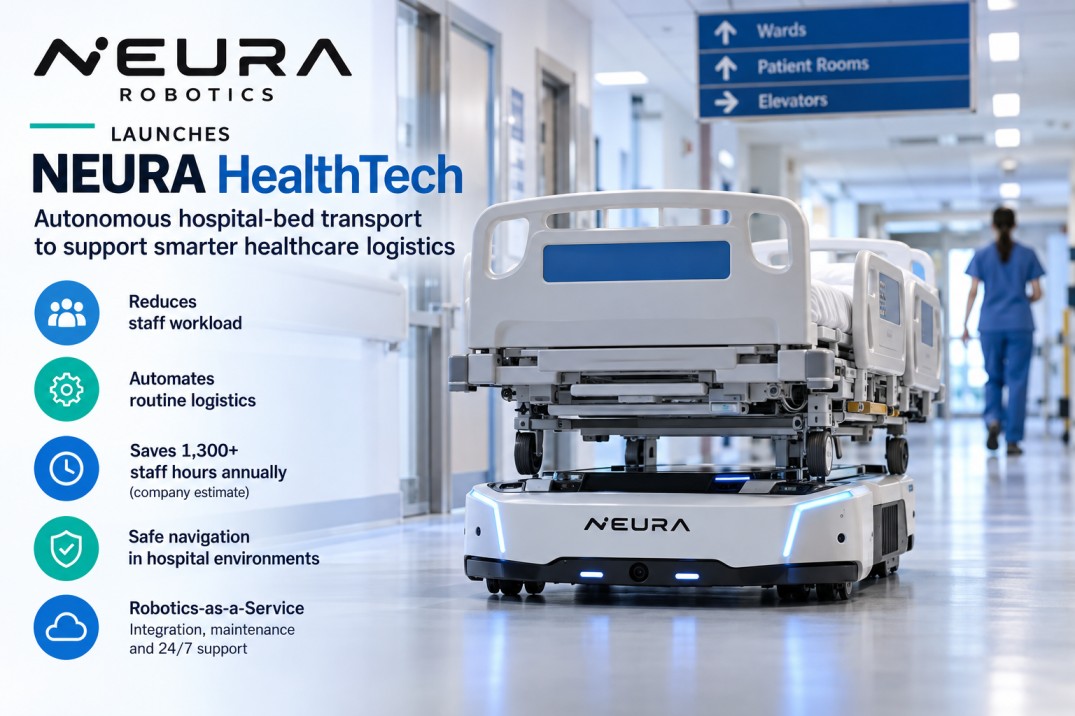
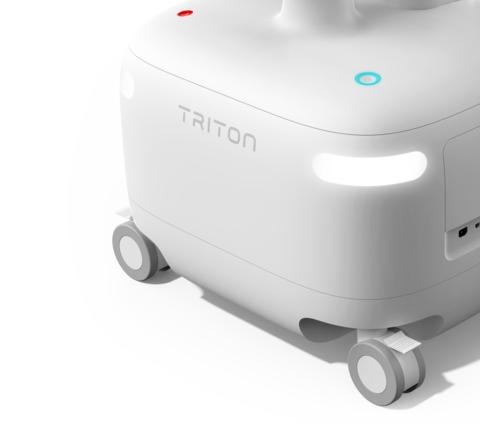
NEURA Robotics has launched NEURA HealthTech, a dedicated business unit focused on bringing physical AI and robotics into healthcare environments. Its first application is an autonomous mobile robot designed to transport empty hospital beds between wards and floors, helping healthcare staff spend less time on routine logistics.
The launch reflects growing interest in healthcare automation as hospitals face increasing operational demands, staff shortages and pressure to improve efficiency. By automating repetitive transportation tasks, NEURA Robotics aims to support clinical teams and free up time for patient care.
Autonomous Robot Targets Hospital Logistics
NEURA HealthTech's initial platform is designed to navigate hospital environments, including narrow corridors and patient rooms. Its low-profile, omnidirectional design allows it to maneuver in confined spaces and turn around its own axis while operating with integrated safety functions.
The robot transports empty hospital beds only and is not designed to carry patients. Its initial focus is on a defined logistical task that can be integrated into existing hospital workflows.
NEURA Robotics also plans to extend its healthcare platform to other applications, including sterile-goods transportation, instrument assistance and in-house logistics.
Robotics-as-a-Service Model Supports Deployment
NEURA Robotics plans to offer the solution through a Robotics-as-a-Service (RaaS) model. The fixed monthly fee covers integration, operation, maintenance, software updates and 24/7 standby support.
AURONIQ ROBOTICS GmbH is the integration partner responsible for installation in healthcare facilities. The commercial model is intended to help hospitals adopt automation while managing the associated deployment and operating requirements.
The company also states that data is hosted on European cloud infrastructure.
NEURA Estimates More Than 1,300 Staff Hours Could Be Saved Annually
According to NEURA Robotics, transporting beds approximately 20 times per day could free up more than 1,300 staff hours annually at an individual facility. This figure is a company estimate rather than a verified outcome from published hospital trials.
The opportunity comes as healthcare providers explore technologies that can reduce the time employees spend on repetitive, non-clinical activities.
NEURA Robotics has also identified further potential applications within its broader healthcare strategy. Its MAiRA cognitive robot arm is expected to support future instrument-assistance and internal logistics applications, while its MiPA cognitive service robot is being developed for personal assistance and patient-room support.
Physical AI Expands into Healthcare
NEURA HealthTech connects the company's healthcare ambitions with its Neuraverse ecosystem, which links sensors, artificial intelligence and robotic systems.
The company presented its healthcare platform publicly at the VDMA HealthTech Smart Health Automation Summit in Düsseldorf on September 29–30, 2026.
The launch demonstrates how robotics companies are targeting practical hospital operations alongside established medical robotics applications. Rather than focusing exclusively on surgical procedures or direct patient interaction, autonomous logistics systems can address repetitive transportation tasks that affect everyday hospital operations.
For healthcare providers, the next steps will include evaluating navigation reliability, safety, integration with hospital infrastructure and the measurable operational benefits of deployment.
NEURA HealthTech's initial focus on empty-bed transportation provides a specific use case for testing how physical AI can support hospital workflows. Wider adoption will depend on real-world performance, integration requirements and demonstrated value for healthcare organizations.