KEENON Robotics Deploys Integrated Service Robot Fleet at South Korea’s Hotel Around Resort
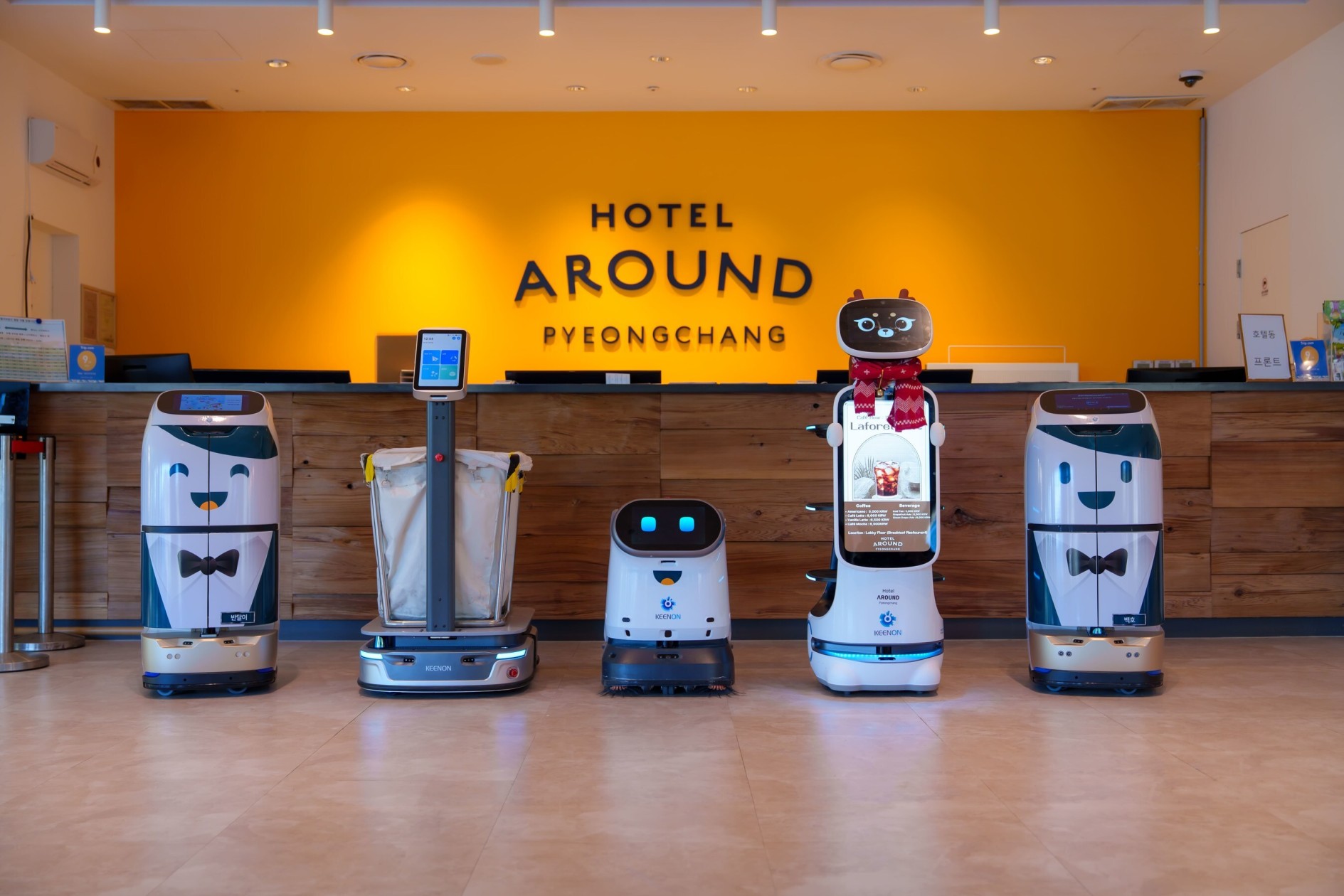
KEENON Robotics introduced a 10-unit multi-model robot solution at Hotel Around in Pyeongchang, enhancing hotel operations across delivery, cleaning, restaurant service, and internal logistics.
Image Courtesy: Public Domain
Simultaneously enhancing hotel operational efficiency and service stability… Implementing integrated operations for delivery, cleaning, F&B, and serving
KEENON Robotics (hereinafter KEENON)** announced that it has introduced service robots to "Hotel Around," a large-scale integrated resort in Pyeongchang, Gangwon-do, and established a multi-model ( total of 10 units ) integrated operation solution that simultaneously improves operational efficiency and service stability .
This project is considered a representative example of a smart operation model within the Korean hotel industry, as it applies robots to various operational areas such as room delivery, common area cleaning, restaurant serving and retrieval, and internal logistics support .
- Need to Improve Environment and Operational Efficiency at Large-Scale Integrated Resorts Emerges
The hotel is a complex resort connected to various leisure facilities such as a ski resort and a golf resort, featuring approximately 10 floors and over 500 guest rooms. In addition, it operates various service spaces including restaurants, cafes, convenience stores, and banquet halls, resulting in a structure with high operational complexity .
- Application of a 'multi-model collaborative' operating model rather than a single model
To solve these problems, KEENON proposed a multi-type collaborative solution rather than a single robot.
In this project
- Delivery Robot W3
- Cleaning Robot C40
- Restaurant Robot T10
These units were deployed, and the structure was designed so that each model takes on a specific role tailored to the characteristics of the main building, annex, and key service spaces. This enables the management of cleaning, delivery, and F&B services under a single integrated operating system.
- Substantial operational improvement effects across cleaning, serving, and delivery
A total of three C40 cleaning robots were deployed to maintain cleanliness in key areas such as the lobby, common halls, and corridors.
According to data, the three C40 robots cleaned approximately 4,388.75 square meters over about 15 hours a day, which is equivalent to about 21 hours of work by human personnel . This ensured consistency in the cleanliness levels of common areas.
Two T10 restaurant robots were operated, with one handling serving and the other retrieving items, thereby distributing workloads during peak hours. The serving-focused T10 performed approximately 34 tasks per day, while the retrieving robot handled repetitive tasks from 10:00 to 14:00. This allowed employees to focus on high-value tasks, such as customer interaction and service quality management.
- Confirmation of potential for operational efficiency improvement and cost structure optimization
According to operational data, this project is analyzed to have contributed to improving the overall efficiency of hotel operations by having robots handle repetitive and high-frequency tasks, such as room delivery, cleaning of common areas, F&B serving and retrieval, and internal logistics.
In addition, in terms of cost, the robot rental-based operating model demonstrated a more efficient structure compared to the existing human-centered operating method, suggesting the possibility of annual cost savings of approximately 126 million won. However, actual effects and figures may vary depending on the operating environment, facility structure, and service scope.
- KEENON Expands In-Building Mobility Solutions in Korea and Global Markets
KEENON plans to continue expanding its robot solutions that contribute to actual operational improvements in various industrial settings, including hotels, resorts, and commercial facilities.
In particular, in the Korean market, eBox-based elevator integration solutions support more stable and seamless robot operation even in multi-story facilities. eBox is a solution that enables robots to move between floors in conjunction with elevators, and it can be utilized to expand the scope of services in multi-story indoor environments such as hotels.
Meanwhile, API-based integration methods are also expanding in overseas markets. In the Japanese market, the company recently acquired Octa’s LCI certification to strengthen its capabilities for local elevator integration, and in the Korean market as well, plans are underway to continuously review the feasibility of applying API-based certification methods in accordance with future operating environments and local requirements.