Industrial AI Adoption Accelerates Globally as Enterprises Scale Automation, Robotics, and Predictive Systems
09 February 2026 | News
From smart factories to autonomous logistics, artificial intelligence is rapidly reshaping manufacturing and industrial operations worldwide
Image Courtesy: Public Domain
The integration of AI in industrial sectors is increasing significantly, with large enterprises leading the way. According to data provided by Precedence Research, AI adoption in manufacturing is not only improving operational efficiency but also enabling new capabilities like autonomous navigation, robotics, and predictive maintenance, positioning AI as a pivotal force in the future of industrial automation.
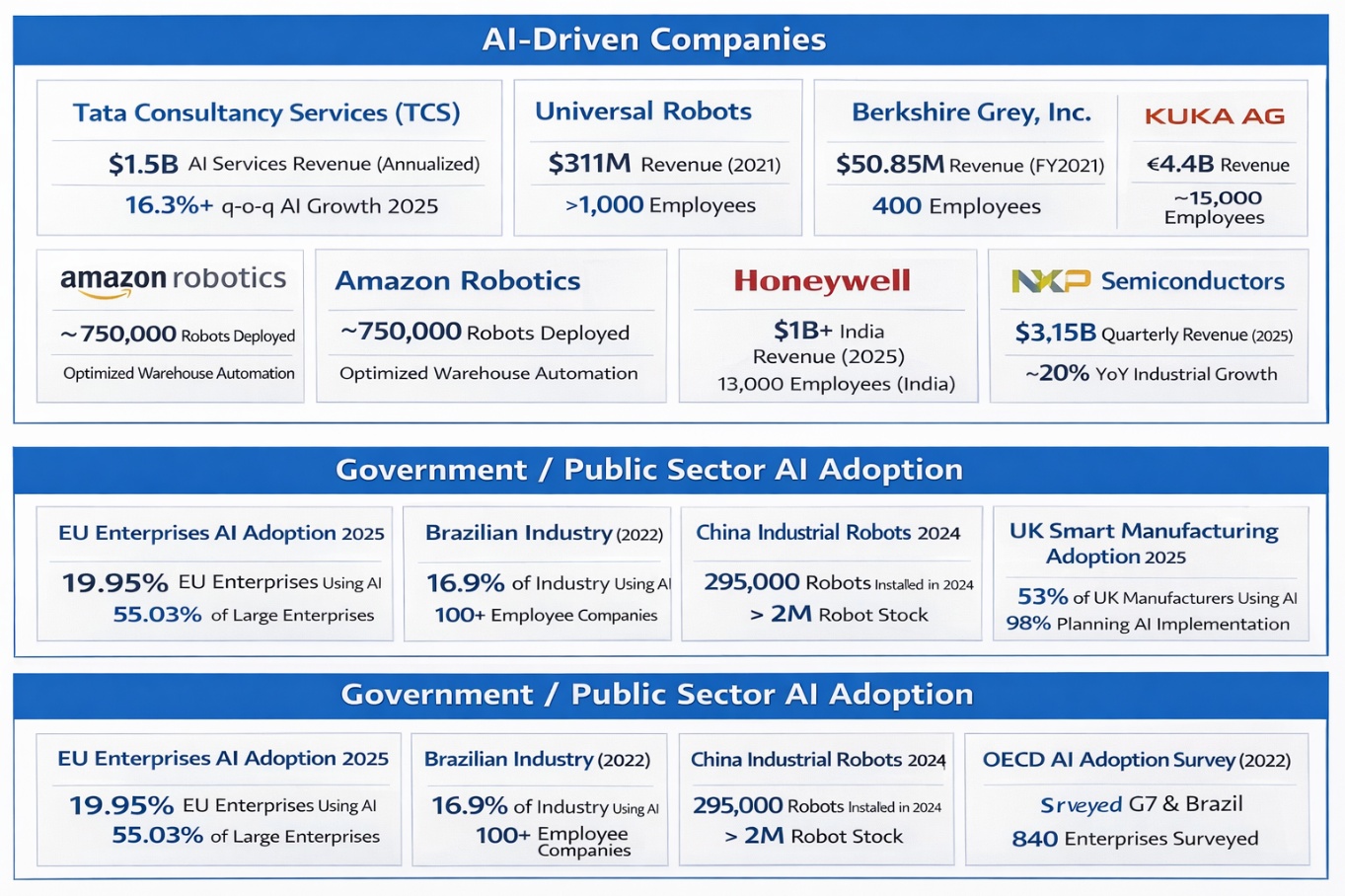
Several global companies are leading the charge in integrating AI into industrial operations. These companies are leveraging cutting-edge technologies, from collaborative robots to predictive maintenance systems, to revolutionize manufacturing, logistics, and supply chains.
Tata Consultancy Services (TCS)
Key Use Cases: AI integration in industrial automation, predictive systems, analytics, and digital transformation platforms.
Impact: TCS is positioning AI as a core growth engine, with its AI-driven services growing faster than other business areas. The company continues to integrate AI solutions across various sectors, helping clients in automation, manufacturing, and supply chain optimization.
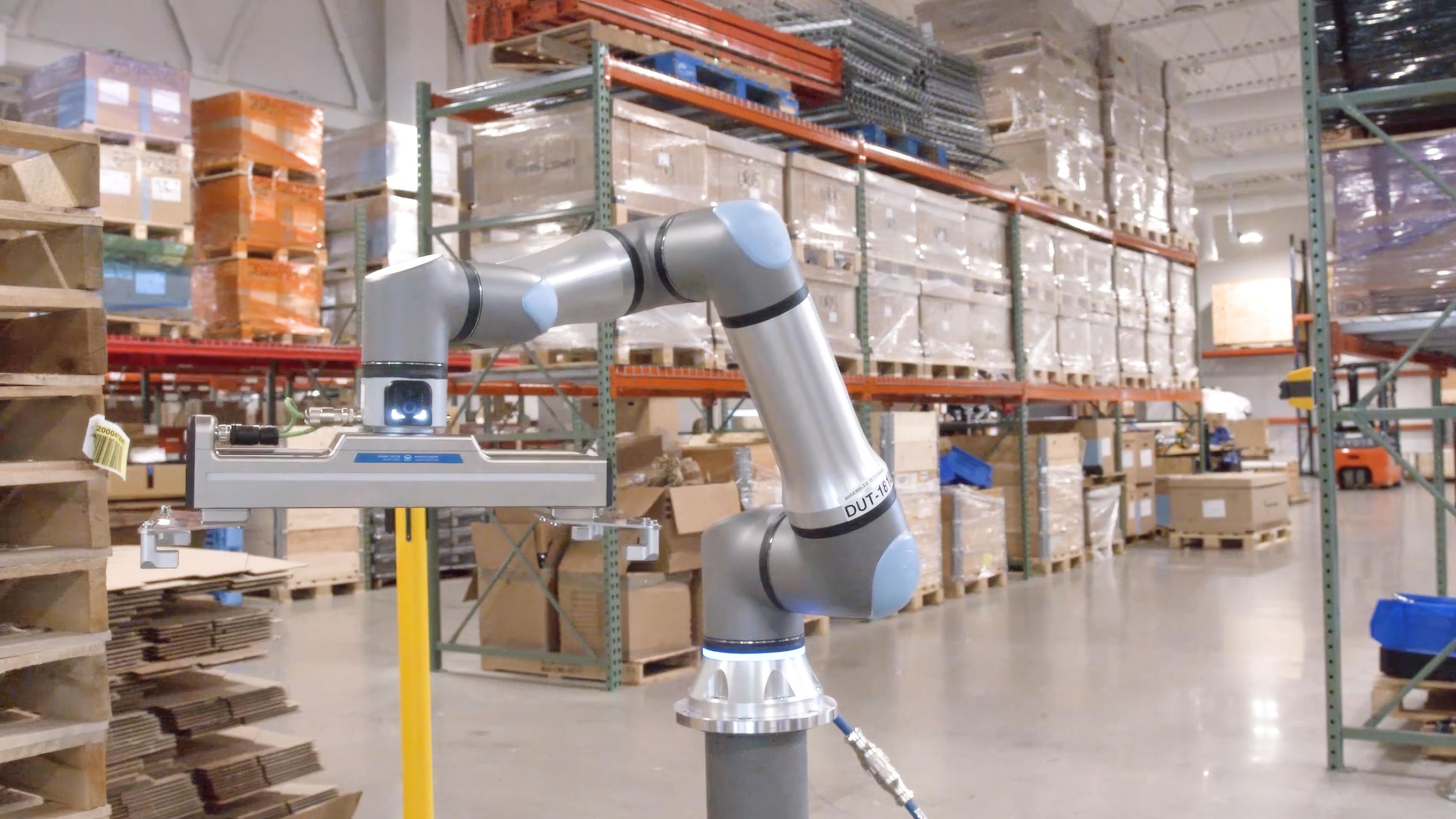
Universal Robots
Key Use Cases: Collaborative industrial robots (cobots) integrated with AI to assist workers in production and assembly lines.
Impact: Universal Robots is a leader in the collaborative robotics market, offering solutions that enhance worker efficiency and safety. With AI-powered cobots, they have transformed production lines by improving worker collaboration with robots in industries like automotive, electronics, and manufacturing.
Berkshire Grey, Inc.
Key Use Cases: AI-enabled robotics for warehouse automation, including pick, pack, and sorting systems.
Impact: Berkshire Grey is revolutionizing logistics by integrating AI and robotics to automate warehouse operations. Its solutions reduce manual labor, increase throughput, and enhance the efficiency of sorting and packing processes in e-commerce and logistics sectors.
KUKA AG
Key Use Cases: Industrial robots and automated production lines powered by AI for motion planning, optimization, and vision systems.
Impact: As a major supplier to the automotive and industrial sectors, KUKA uses AI to optimize motion planning and increase the precision of manufacturing robots. With its vast portfolio, KUKA continues to lead the global industrial automation market.
Amazon Robotics
Key Use Cases: AI and robotics integrated for logistics, autonomous navigation, sorting, and fulfillment optimization.
Impact: Amazon Robotics has deployed nearly 750,000 robots in its global fulfillment network, significantly boosting operational efficiency. Through AI and robotics, Amazon has reduced operational costs while increasing throughput and delivery speeds.
Honeywell Industrial AI (India)
Key Use Cases: AI-driven predictive maintenance, asset optimization, digital twin analytics through Honeywell’s Forge platform.
Impact: Honeywell’s Forge platform supports real-time monitoring and predictive maintenance across industrial sectors, significantly reducing downtime and optimizing asset management. This is a key tool in industries like aerospace, manufacturing, and energy.
NXP Semiconductors
Key Use Cases: “Physical AI” chips used in automation, safety, robotics, and logistics systems.
Impact: NXP’s AI chips are crucial for the development of industrial automation and smart manufacturing systems, enabling robotics, logistics, and safety systems to operate autonomously and efficiently.
Public Sector AI Adoption in Industrial Sectors
Governments and public sector entities around the world are increasingly adopting AI to drive industrial innovation, particularly in manufacturing, logistics, and supply chain operations. The widespread adoption of AI is evident in regions like the EU, China, and Brazil, where AI is not just a future possibility but an active force in reshaping industrial operations.
Region
Statistical Data
Context
EU Enterprises (2025)
19.95% of EU enterprises use AI, 55.03% of large enterprises use AI
AI is used for business processes including manufacturing, admin, marketing, and logistics.
Brazilian Industry (2022)
16.9% of Brazilian industrial companies use AI
Adoption is strongest in administration and product development.
China (2024)
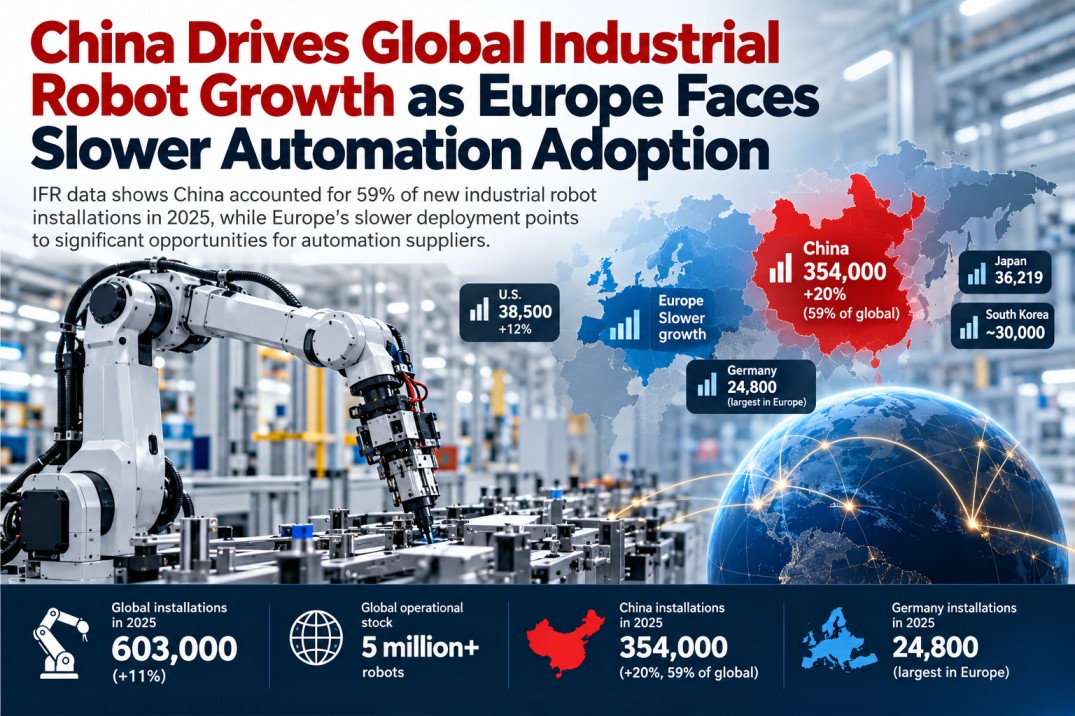
295,000 robots installed; accounts for 54% of global installations
AI-driven automation penetration in manufacturing, with predictive analytics and robotics playing a key role.
UK Smart Manufacturing (2025)
53% of UK manufacturers use AI on the factory floor
UK leads with AI adoption for computer vision, predictive maintenance, and demand planning.
These numbers show how different regions are progressing with industrial AI adoption. China is a clear leader in robot installations, while the EU and UK focus on smart manufacturing with AI tools like predictive maintenance and robotics.
Real-World Insights and Trends
AI-Driven Software & Robotics: AI software and robotics are being deployed globally across various industries, enabling machine vision, predictive maintenance, autonomous logistics, and robot-assisted production processes.
Large Enterprises Lead AI Adoption: Larger enterprises tend to adopt AI at higher rates than smaller businesses, with 55% of large EU companies using AI compared to only 17% of smaller firms.
China's Dominance in Industrial Automation: China has seen the largest growth in robot installations, with nearly 300,000 robots installed in 2024 alone, leading the world in industrial automation.
Revenue Growth: Companies like TCS and Honeywell are directly monetizing AI, seeing substantial revenue growth from AI services and platforms that support industrial transformation.
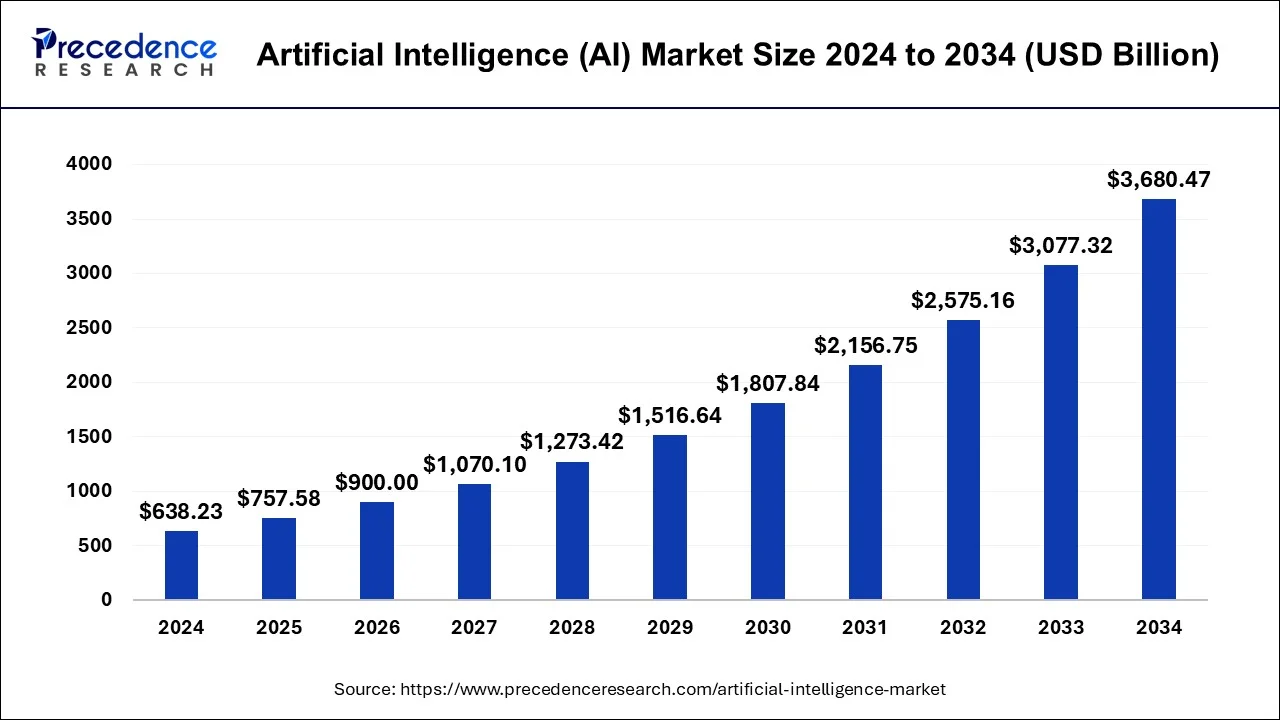
What is Artificial intelligence Market Size 2024 to 2034
The global artificial intelligence (AI) market size was USD 638.23 billion in 2024, calculated at USD 638.23 billion in 2025 and is expected to reach around USD 3,680.47 billion by 2034, expanding at a CAGR of 19.20% from 2025 to 2034.