AEye’s Apollo LiDAR Selected for Lunar Outpost’s Pegasus Vehicle to Support Artemis Moon Missions
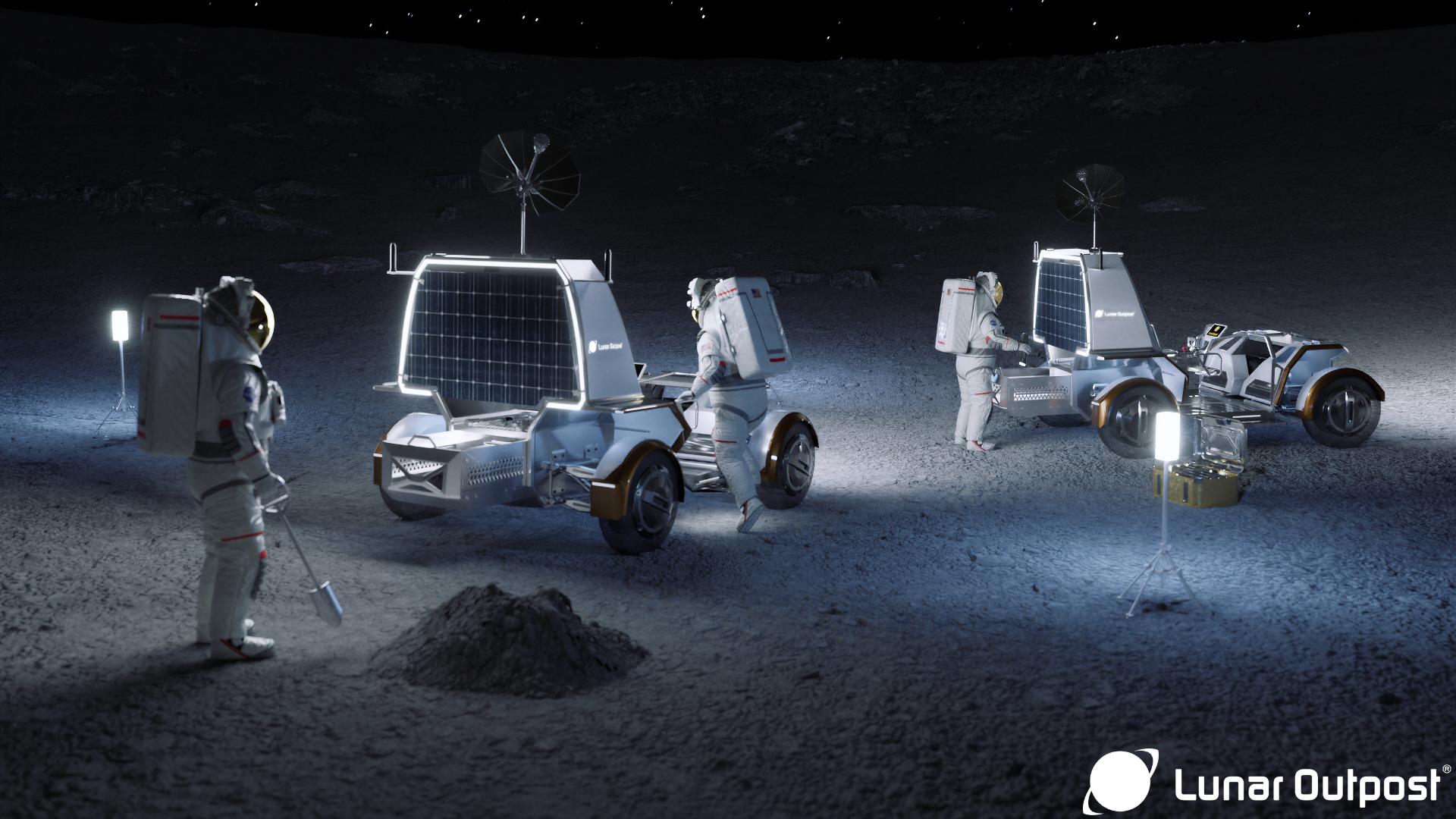
Software-defined long-range lidar will provide terrain perception, obstacle detection and autonomous navigation capabilities for the Pegasus Lunar Terrain Vehicle designed to transport Artemis astronauts across the Moon’s surface.
Image Courtesy: Public Domain
AEye, Inc. (Nasdaq: LIDR), a global leader in software-defined, high-performance lidar solutions, announced that its Apollo™ long-range lidar has been selected by Lunar Outpost, the leader in space mobility and infrastructure, for integration onto the Pegasus Lunar Terrain Vehicle (LTV), which will transport Artemis astronauts across the lunar surface. The contract award further diversifies AEye’s commercial footprint beyond its core automotive, defense, and industrial markets into space mobility, a new market category tied to the broader buildout of lunar infrastructure. The global lunar rover market is among the fastest-growing segments of the space economy, driven by sustained, multi-year government investment and increasing commercial activity.
“This multi-million-dollar contract award is a testament to our technology and its ability to address this significant market opportunity,” said Matt Fisch, AEye’s Chairman and CEO. “Space mobility is a new market opportunity for AEye, and the lunar environment represents the most demanding proving ground any sensor can face: no atmosphere, no margin for error, and no opportunity for in-mission repair. Apollo’s™ software-defined architecture enabled us to tune its performance for exactly what this mission required, with the same adaptability and durability we have proven in defense, now validated in the harshest environment there is.”
Lunar Outpost CSO, Forrest Meyen said, “As Lunar Outpost works to establish a sustained human presence at the Moon’s South Pole, we need partners who can scale with us. Apollo™ gives Pegasus enhanced perception to traverse safely, perform advanced autonomous operations, and begin building NASA’s Moon Base.”
Lunar Outpost selected Apollo™ for its cutting edge solid-state design that delivers the ruggedness needed to withstand the lunar vacuum, thermal extremes, and constant vibration with no possibility of field repair; its software-defined architecture lets scan patterns and performance be tuned to the mission using software rather than locked into a fixed configuration; and its compact form factor retains all this capability without competing for the mass and volume budget every lunar vehicle demands.
Lunar Outpost will leverage Apollo™ to support terrain perception, obstacle detection, and autonomous navigation functions for Pegasus, helping crews and mission operators traverse the challenging lunar environment, protecting both the vehicle and the astronauts aboard it as NASA establishes a permanent human presence at the Moon’s South Pole.