Nightfood Expands Dual-Region Manufacturing to Capture AI Semiconductor Automation Growth
Nightfood Holdings plans a dual-region manufacturing expansion with JJ Enterprise to strengthen semiconductor automation, advanced packaging, and robotics capabilities across Taiwan and the U.S.
Image Courtesy: Public Domain
The AI buildout is usually described in one word: chips. But the more revealing story may be happening downstream in the specialty automation, robotics and semiconductor production equipment needed to build and package those chips at scale. U.S. power companies are already scrambling to secure basic grid equipment for AI data centers, and experts project the global semiconductor industry will reach $975 billion in sales in 2026. Nightfood Holdings Inc. (OTCQB: NGTF) (profile), doing business as TechForce Robotics, sits squarely inside that downstream opportunity. Last week, the company announced it is evaluating up to 100,000 square feet of additional dual-region manufacturing capacity. That capacity would span Taiwan and the United States, built alongside its strategic partner, Jiun Jiang Enterprise Co., Ltd. ("JJ Enterprise"). The goal is to support semiconductor, advanced packaging and industrial automation customers driving this new wave of capital spending. The announcement denotes the company’s focus on strengthening its position as a key player among companies focused on providing the hardware and infrastructure that power today's rapidly expanding AI ecosystem, including NVIDIA Corporation (NASDAQ: NVDA), Advanced Micro Devices Inc. (NASDAQ: AMD), Broadcom Inc. (NASDAQ: AVGO) and Super Micro Computer Inc. (NASDAQ: SMCI).
- Robotics and automation are becoming central to how the industry scales, which is exactly the layer of the AI buildout where Nightfood is positioning itself, through its TechForce Robotics platform.
- Semiconductor manufacturing and packaging capacity is steadily shifting toward the United States as AI-driven chip demand accelerates.
- A manufacturing footprint spanning both Taiwan and the United States can offer real strategic advantages, which is the logic behind the dual-region expansion Nightfood and JJ Enterprise are now evaluating.
- JJ Enterprise's manufacturing and engineering capabilities are not built around a single niche; they sit at the intersection of several fast-growing industrial markets.
- “The long-term vision is not simply to participate in demand growth, but to build the operational capacity required to meet it,” said Nightfood Holdings CEO Jimmy Chan.
The Silent Boom Behind AI Chips
AI infrastructure spending is usually framed around GPUs and hyperscale data centers. But the buildout runs much deeper than that. Every new fab, packaging line or data center requires precision equipment to actually get built and operated. Reuters reported this month that surging AI data center demand is straining supplies of basic grid equipment such as transformers across the United States. That's a clear sign of how far the pressure has spread beyond chip design alone. Lead times for some high-voltage transformers have stretched to multiple years. That's up from around a year in 2020 and 2021, according to the same report.
The semiconductor industry itself is expanding at a pace that requires matching investment in manufacturing systems. Deloitte’s prediction that global chip sales will reach $975 billion this year indicates a 26% from last year, with AI chips alone approaching $500 billion in revenue. That kind of growth cannot be met with existing capacity alone. It requires new fabs, new packaging lines and the automation systems that run them day to day. Deloitte's analysis also notes that chip revenue climbed 22% in 2025, but silicon wafer shipments rose only about 5.4%. That gap shows how much growth is concentrated in complex, equipment-intensive production.
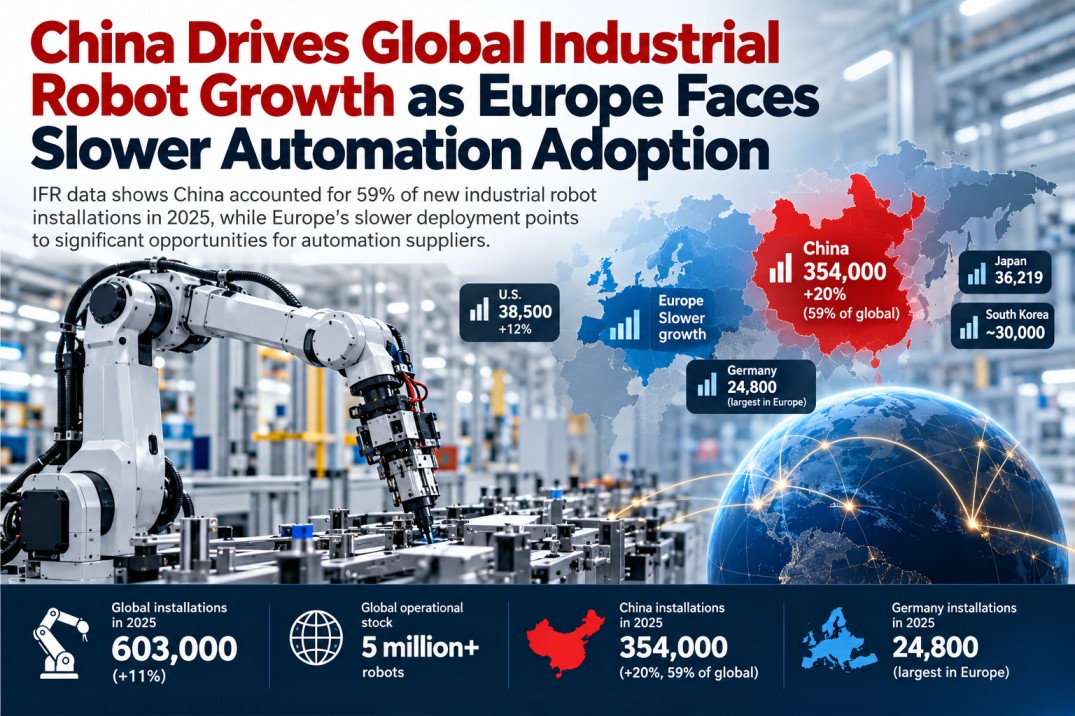
Robotics and automation are becoming central to how the industry scales. They are not just a side effect of that growth. GlobalFoundries describes this shift as physical AI moving out of the data center into the devices and machines that build and operate around it. The firm projects that category will reach at least $18 billion by 2030. Separate research predicts the data center robotics market growing fast, rising from $2.37 billion in 2026 to $17.14 billion by 2035, a CAGR above 24%. That's a signal of how quickly automation demand is scaling alongside the chips themselves.
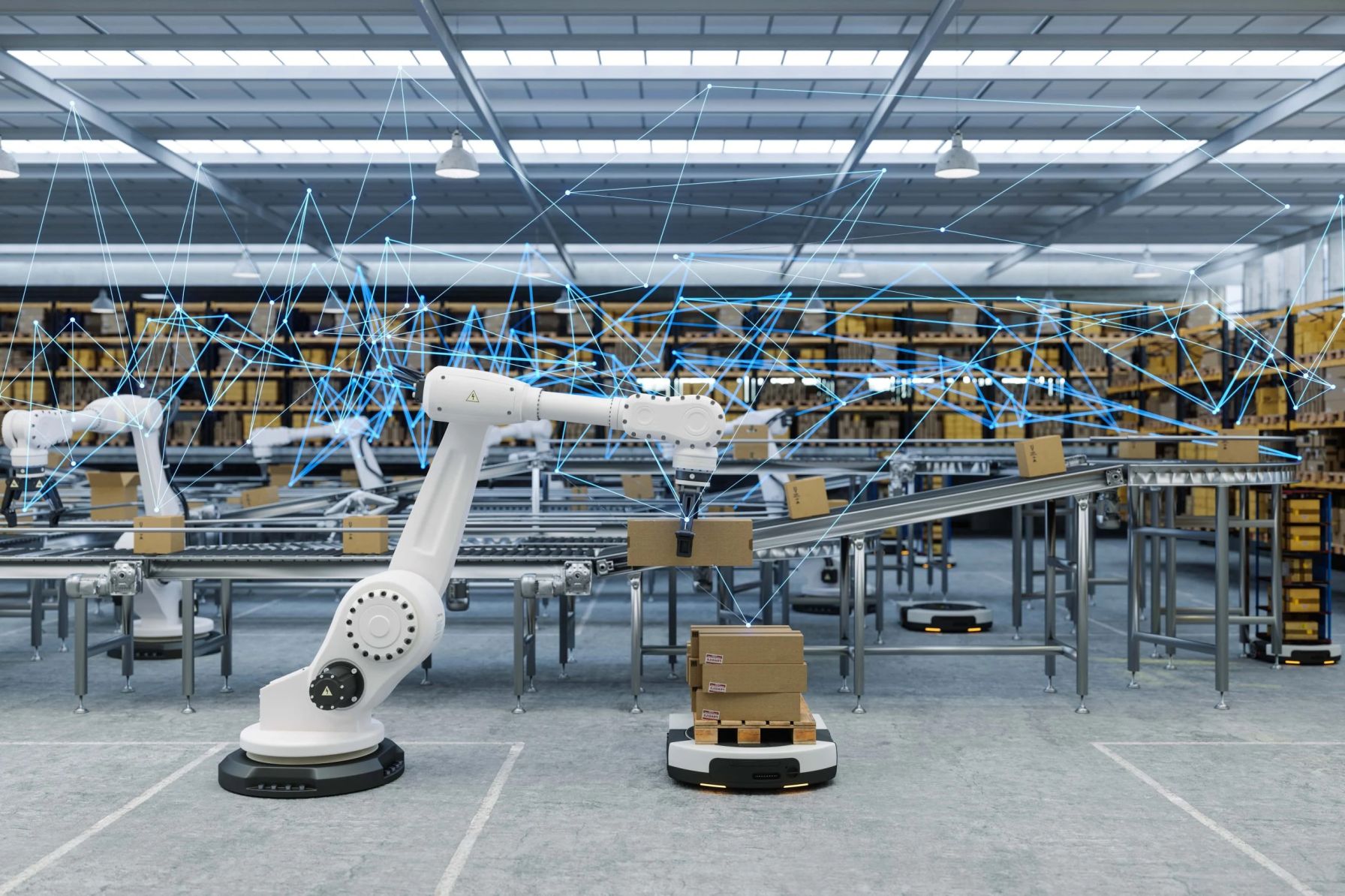
This is exactly the layer of the AI buildout where Nightfood is positioning itself, through its TechForce Robotics platform. The company's announcement about expanding manufacturing capacity with JJ Enterprise directly targets semiconductor automation, advanced packaging equipment and intelligent manufacturing systems. These are the categories of physical infrastructure that AI's chip boom depends on. They rarely make headlines on their own. Positioning inside that overlooked layer is central to how the company frames its own growth strategy.
Moving to America
Semiconductor manufacturing and packaging capacity is steadily shifting toward the United States as AI-driven chip demand accelerates. Taiwan Semiconductor Manufacturing Co. (“TSMC”), the world's largest contract chipmaker, has confirmed that it plans to open an advanced chip packaging plant in Arizona by 2029. Construction is already underway on the facility, which expected to add CoWoS and 3D-IC packaging capability, two technologies in high demand for AI chips. TSMC's board separately approved a $20 billion capital injection in May 2026 to keep expanding its Arizona site, with the total project now projected to reach $165 billion.
This shift is creating pressure well beyond TSMC itself. Chips made at TSMC's Arizona site still frequently travel back to Taiwan for final packaging. That gap highlights why supporting infrastructure increasingly needs to follow the chips themselves. TSMC is now actively encouraging Taiwanese suppliers to set up near its Arizona campus, including suppliers of semiconductor chemicals and equipment. That's a direct signal that the anchor customer itself is pulling its supplier base toward North America.
Axios reported this month that the broader chip supply chain is already stretched thin. That includes advanced packaging, high-bandwidth memory and lithography equipment, as more companies race to build custom AI chips. One analyst told Axios that a company starting to design a chip today would not see finished silicon for roughly three years. That shows how long these supply chains take to adjust. Suppliers that historically operated only in Taiwan increasingly need a presence closer to their customers. Faster lead times, localized support and on-the-ground deployment capability have become real competitive advantages. This is a market-wide trend, not a move limited to any single company.
Nightfood's TechForce Robotics platform is aligning with this exact migration through its relationship with JJ Enterprise. The company’s announcement last week specifically frames the proposed expansion as intended to support near-term production in Taiwan while establishing longer-term U.S. manufacturing capabilities aligned with North American demand. That places Nightfood squarely inside the broader supplier migration already reshaping the industry around it.
Two Regions Beat Just One
A manufacturing footprint spanning both Taiwan and the United States can offer real strategic advantages. Companies building in both markets can shorten delivery timelines for U.S. customers. At the same time, they keep established production relationships in Asia. That flexibility matters more each quarter, as capacity investment accelerates on both sides of the Pacific. It also reduces how often finished components need to cross the ocean twice before reaching a customer. Fewer border crossings mean fewer chances for delay.
Foreign direct investment into U.S. businesses reached $232 billion in 2025, with manufacturing accounted for more than half of that total. Long-term onshoring remains a dominant theme despite policy and cost uncertainty. The report noted labor shortages, energy infrastructure needs and tariff-related uncertainty as material risks. That backdrop mirrors the logic behind dual-region manufacturing. Overseas companies want a genuine foothold in the United States, even while core production stays in Asia.
A dual-region approach also builds resilience directly into the supply chain. If one region faces disruption, whether from logistics delays, tariffs or capacity constraints, a two-region company has more room to adapt. That flexibility grows more valuable as equipment lead times stretch to multiple years in some categories. The same logic applies to semiconductor-adjacent manufacturing. A single-region supplier has less room to absorb a shock. That shock could be a shipping delay, a policy change or a demand spike.
This is the logic behind the dual-region expansion Nightfood and JJ Enterprise are now evaluating. Their planned footprint, up to 100,000 square feet split between Taiwan and the United States, is designed to increase manufacturing throughput and strengthen delivery capabilities. It supports near-term Taiwan production alongside longer-term U.S. deployment at the same time, rather than choosing one region over the other. Management has framed the expansion as groundwork for larger production volumes as customer demand continues to build across both markets.
One Company, Many Markets
JJ Enterprise's manufacturing and engineering capabilities are not built around a single niche; they sit at the intersection of several fast-growing industrial markets. The Taiwan-based company designs and manufactures customized automation solutions, semiconductor and advanced-packaging equipment, robotics and intelligent manufacturing technologies.
This multiprong approach gives the company exposure to multiple demand drivers rather than just one. Its customer base already spans the semiconductor, electronics, AI infrastructure, pharmaceutical and industrial-technology supply chains. That spreads its growth across several markets rather than concentrating it in one.
Each of those markets is independently growing at a fast pace. The global industrial robotics market is projected to grow from roughly $30.71 billion in 2026 to $93.31 billion by 2035. The broader robotics technology market is expected to expand from $124.37 billion to $416.26 billion over that same period. Advanced packaging has become enough of an industry focus that SEMI is dedicating a full event to it, with the July 15, 2026, Advanced Packaging Summit covering how packaging is evolving for the AI era. Each of these overlapping markets is growing for its own reasons.
JJ Enterprise brings more than 30 years of family-owned manufacturing experience to these markets. The company’s background spans industrial machinery, precision engineering and automation systems. That combination of operating history and exposure to overlapping markets sets it apart from newer entrants building similar capabilities from scratch. Existing customer relationships and active commercial contracts also mean the business is not starting from an early-stage concept.
Nightfood's proposed 51% controlling stake in JJ Enterprise would give the company a direct foothold across each of these overlapping markets at once. Rather than betting on a single product category, the structure enables Nightfood to participate in semiconductor automation, advanced packaging and robotics adoption through one platform.
Building a Platform for the Automation Era
Nightfood's strategy is not built around a single acquisition or facility expansion. It is structured to capture value across multiple layers of the automation cycle at once. That spans semiconductor and advanced-manufacturing equipment demand, robotics adoption, and the localized manufacturing expansion tied to customer migration into North America.
The building blocks of that strategy are already in place. Nightfood signed a strategic supply and development agreement with JJ Enterprise on June 11, 2026, and only two weeks later, the companies signed a nonbinding letter of intent for Nightfood to acquire a 51% controlling interest. Then came this month’s announcement evaluating a dual-region manufacturing expansion of up to 100,000 square feet. Each step builds directly on the one before it. The path moves from a supply relationship to a proposed ownership stake to a concrete capacity plan, all in a matter of weeks.
“The long-term vision is not simply to participate in demand growth, but to build the operational capacity required to meet it,” said Nightfood Holdings CEO Jimmy Chan, explaining the strategy. That framing captures the real difference at stake. It's the difference between simply riding the AI infrastructure wave and building the physical capacity required to serve it.
AI Innovation Reaches New Frontiers
Artificial intelligence continues to advance at an extraordinary pace as companies invest across the full technology stack, from next-generation chips and computing infrastructure to robotics and edge AI. Recent developments underscore a broader industry shift toward more open, scalable and collaborative AI ecosystems that enable faster innovation while expanding the reach of intelligent technologies across enterprise, industrial and real-world applications.
NVIDIA Corporation (NASDAQ: NVDA) is collaborating with Hugging Face to bring new models and frameworks to LeRobot for the open-robotics community. The new LeRobot integrations give developers open access to NVIDIA Isaac GR00T 1.7, Isaac Teleop, datasets and robotics workflows, with NVIDIA Cosmos 3 integration planned to bring frontier world models to open-robotics development. The company noted that, with NVIDIA Isaac GR00T 1.7 and Isaac TeleOp in LeRobot, robotics developers can use shared models, data and workflows to train and evaluate robots in the open.
Advanced Micro Devices Inc. (NASDAQ: AMD) has signed a definitive agreement with Rackspace Technology for phased deployment of 30 MW of AMD AI compute. According to the company, the initial 30 MW footprint will be dedicated to AMD-based compute deployments across Rackspace's global data centers beginning in late 2026 through 2028. The agreement operationalizes the Memorandum of Understanding earlier this year and establishes AMD as a strategic technology partner at the silicon layer of Rackspace's governed AI stack.
Broadcom Inc. (NASDAQ: AVGO) and OpenAI unveiled Jalapeño, OpenAI’s first Intelligence Processor. The processor is an accelerator architected around OpenAI’s vision for the future of LLM inference, and the first AI accelerator in a multigeneration compute platform the companies are building together to make advanced AI faster, more reliable and more accessible to more people. Jalapeño was delivered to OpenAI CEO Sam Altman and President Greg Brockman by Broadcom President and CEO Hock Tan and Semiconductor Solutions President Charlie Kawwas, marking an important step in OpenAI’s strategy to build the full stack behind its models and products.
Super Micro Computer Inc. (NASDAQ: SMCI) announced the launch of Kubernetes Edge AI appliances in collaboration with Red Hat and Everpure. Supermicro has validated a full-stack edge Kubernetes solution, powered by the industry’s leading Kubernetes-driven hybrid cloud application platform, Red Hat OpenShift, and the first Kubernetes data-management platform tailored for AI workloads from Portworx by Everpure. This turnkey appliance, complete with preloaded software and hardware, is made available to customers through Supermicro.
These key announcements illustrate how the AI landscape is evolving beyond individual breakthroughs toward integrated platforms capable of supporting increasingly sophisticated workloads and autonomous systems. As investments in computing power, open development frameworks and edge intelligence continue to accelerate, AI is poised to play an even greater role in driving productivity, innovation and digital transformation across virtually every sector of the global economy.