TWAIN Working Group Launches Open-Source twAIn Robotics API to Standardize Robot Billing and Usage Metrics
New initiative aims to transform robotic monetization and interoperability by enabling standardized, transparent usage-based billing across autonomous robots and AI-driven systems.
Image Courtesy: Public Domain
The TWAIN Working Group today announced the initial development of an open source twAIn Robotics Standard API focused on collecting and standardizing billing and usage metrics for robots and autonomous mobile robots (AMRs). This new initiative is being driven by the newly formed twAIn Robotics sub-working group, with early efforts centered on enabling flexible, transparent, and predictable monetization models across the robotics ecosystem.
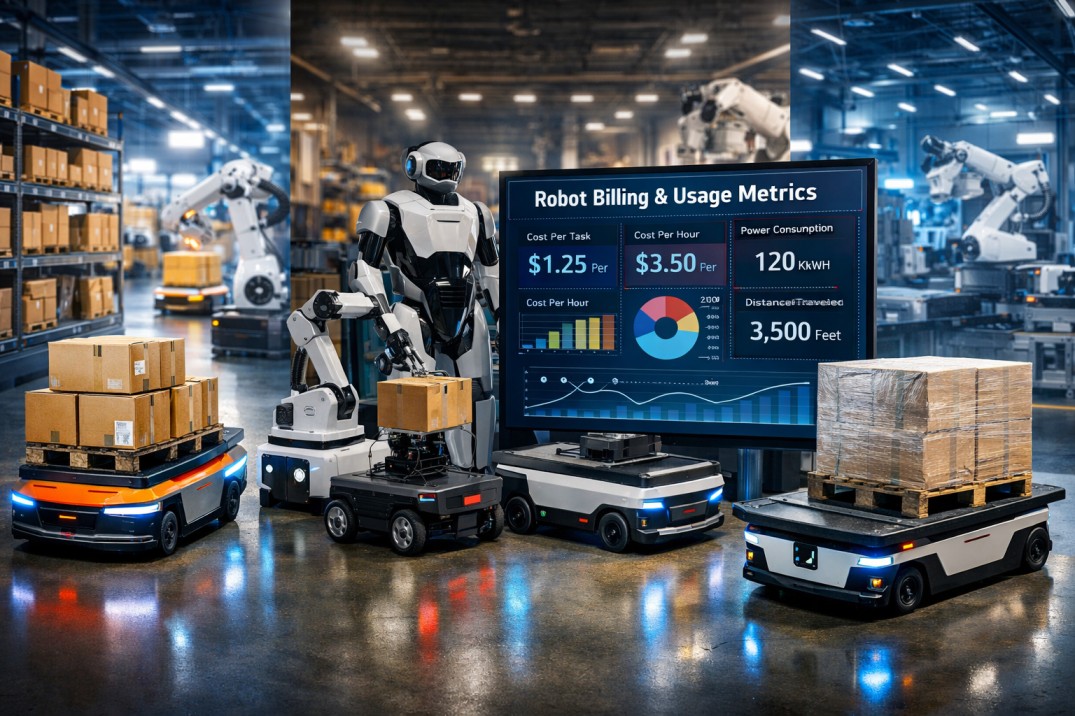
The initial scope of the API will support the collection of standardized usage data, including metrics such as Cost-Per-Task, Cost-Per-Traveled-Time, Cost-Per-Linear-Feet, and Cost for Power Consumed. These metrics are designed to reflect how robots are actually used in real-world operations, where value is typically tied directly to revenue-generating or productivity-enhancing tasks.
Crickets Continuum, a membership organization of thought-leaders in the office equipment market, emphasized the importance of starting with practical, revenue-aligned capabilities based on direct member feedback.
Based on feedback from our Crickets Continuum membership, billing metrics were consistently identified as one of the highest immediate-value needs in the robotics ecosystem,” said Greg Walters, Co-Founder of Crickets Continuum. “Standardized cost and usage metrics give organizations a way to operationalize robots faster, justify ROI, and scale deployments with confidence.”
While billing metrics represent the first standardized use case, the TWAIN Working Group emphasized that twAIn Robotics is designed as a broader interoperability and orchestration layer for robots, IoT devices, and AI-driven systems.
“At Quasi, we see twAIn Robotics as much more than a billing interface,” said Vlad Lebedev, CEO of Quasi Robotics, “Standardized APIs for robots create a foundation for task orchestration, coordination with other IoT devices, and interaction with AI agents and enterprise systems. This kind of open interoperability will make it easier for the entire ecosystem to build smarter, more connected robotic workflows that go well beyond any single use case.”
The flexible design of the standard will enable Dealers, Systems Integrators, Independent Software Vendors (ISVs), and application providers to offer specialized pricing and billing models tailored to specific robot capabilities and customer use cases. Unlike traditional peripheral devices, robots are typically deployed to perform ongoing operational tasks that directly impact productivity and revenue, making usage-based models a natural fit for organizations that want to clearly see and manage return on investment.
The TWAIN Working Group is inviting additional companies and organizations to participate in the development of the twAIn Robotics Billing Metrics API and the broader twAIn Robotics standards framework. Participants are welcome from across the ecosystem, including robot and hardware manufacturers, dealers, systems integrators, ISVs, and end-user organizations interested in shaping practical, real-world standards.