Global Home Humanoid Robot Market to Reach $8.56 Billion by 2031 Amid Rising Demand for Smart Domestic Automation
Growing adoption of companion, educational, and elderly care robots is accelerating the evolution of humanoid robotics in households worldwide.
Image Courtesy: Public Domain
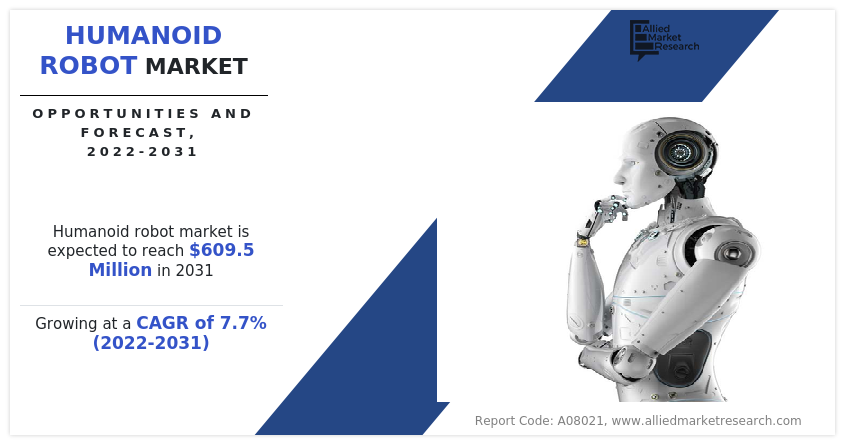
The global market for Home Humanoid Robot was valued at USD 1292 Million in the year 2024 and is projected to reach a revised size of USD 8564 Million by 2031, growing at a CAGR of 31.2% during the forecast period.
What are the key factors driving the growth of the Home Humanoid Robot Market?
The Home Humanoid Robot Market is gaining traction as households seek machines that can support daily routines, reduce repetitive domestic work, assist learning, and provide interactive companionship. Demand is moving beyond novelty because consumers increasingly expect robots to deliver practical value inside the home, especially in care, education, cleaning support, safety monitoring, and family engagement. Suppliers are also positioning home humanoids as lifestyle devices that combine utility with emotional interaction, making them more acceptable in family environments. Growth is further supported by rising comfort with connected devices, higher interest in personal automation, and stronger retail efforts that allow consumers to experience humanoid robots before purchase, creating a clearer path from curiosity to adoption.
TRENDS INFLUENCING THE GROWTH OF THE HOME HUMANOID ROBOT MARKET:
Educational robots are driving the Home Humanoid Robot Market by turning robots into active learning companions for children, students, and skill-building households. These robots support language practice, coding basics, storytelling, guided problem-solving, and interactive lessons in a more engaging format than static learning devices. Parents are showing interest in robots that combine entertainment with structured learning, especially when screen fatigue and passive digital consumption are concerns. This segment also benefits from its ability to make robotics familiar at an early age, creating long-term acceptance of humanoid machines inside domestic spaces. As learning becomes more personalized, educational humanoids strengthen the market's value proposition beyond cleaning and basic assistance.
Companion robots are supporting market growth by addressing emotional engagement, household interaction, and assisted living needs. These robots appeal to families, elderly users, and individuals living alone because they can offer reminders, conversation, presence, and routine-based support. Their value is not limited to entertainment, as they help create a sense of responsiveness within the home environment. The segment is gaining attention as households look for supportive devices that feel more natural than speakers, tablets, or static home assistants. By combining human-like interaction with everyday assistance, companion robots expand the market from task automation into relationship-oriented domestic robotics.
Offline sales are strengthening the Home Humanoid Robot Market because consumers often need physical demonstrations before trusting a humanoid robot for home use. Showrooms, electronics stores, robotics experience centers, and specialty retail formats help buyers understand movement, voice interaction, safety behavior, and practical use cases. This sales route is especially important for premium robots, where purchase decisions depend on confidence, after-sales support, servicing access, and product reliability. Offline channels also allow families to compare models and observe whether robots are suitable for children, seniors, or shared home spaces. As a result, physical retail helps convert interest into serious purchase intent.
Growing demand for household automation is a key factor driving the Home Humanoid Robot Market. Families are looking for devices that can reduce routine workload, support small domestic tasks, and coordinate with other smart home systems. Humanoid robots gain relevance because their form factor allows them to operate in spaces designed for people rather than industrial machines. Consumers increasingly prefer assistance that fits naturally into living rooms, kitchens, study areas, and eldercare settings. This shift is pushing the market toward robots that act as adaptable domestic aides rather than single-purpose gadgets.
Elderly care demand is creating a strong growth path for home humanoid robots. Aging households need support for reminders, mobility prompts, emergency alerts, medication schedules, and social engagement. Humanoid robots can provide a more approachable interface for older users who may not be comfortable with complex apps or screen-based systems. Families also see value in robots that help monitor routines without making the home feel overly clinical. This factor is increasing adoption potential in homes where caregiving pressure is rising and informal family support is limited.
Child-focused interaction is expanding the market by making humanoid robots useful for learning, discipline, storytelling, and creative play. Parents are drawn to robots that can keep children engaged while also adding educational value. Unlike ordinary toys, humanoid robots can respond, guide, and adapt to household routines, making them feel more purposeful. This supports demand for educational and companion formats that combine entertainment with cognitive development. The segment is especially attractive in urban homes where parents seek supervised, interactive, and development-oriented devices.
Emotional wellness is becoming an important factor in the Home Humanoid Robot Market as consumers seek devices that provide presence, interaction, and routine companionship. Robots designed for conversation, reminders, greetings, and expressive behavior can help reduce feelings of isolation in certain households. This is particularly relevant for elderly users, single-person homes, and families managing long work schedules. The humanoid form gives these products a stronger emotional role compared with standard connected devices. This factor supports recurring engagement and improves the perceived value of robots in daily life.
What are the major types in the Home Humanoid Robot Market?
- Companion Robot
- Cleaning Robot
- Educational Robot
- Other
What are the main applications of the Home Humanoid Robot Market?
- Online Sales
- Offline Sales
Key Players in the Home Humanoid Robot Market
- 1X Technologies develops humanoid robots designed for domestic assistance, workplace automation, and human-centered interaction.
- Hangzhou Yushu Science And Technology (Unitree Robotics) manufactures humanoid and quadruped robots featuring advanced mobility and AI-driven control systems.
- SoftBank Robotics develops humanoid and service robots such as Pepper for customer interaction, education, and home-related applications.
- ROBOTIS produces robotic platforms, actuators, and humanoid robot kits widely used in education, research, and personal robotics.
- KAWADA Robotics develops humanoid robots and industrial robotic systems focused on collaborative and service-oriented applications.
- Honda developed the ASIMO humanoid robot platform, advancing mobility, balance control, and human-robot interaction technologies.
- Ubtech Robotics designs humanoid and companion robots for home, educational, and commercial applications using AI and smart interaction systems.
- Hajime Research Institute is known for developing humanoid robots with advanced motion control and robotic interaction capabilities.
- HANSON ROBOTICS creates AI-powered humanoid robots designed for social interaction, education, and research applications.
- HYULIM Robot develops industrial and service robots, including humanoid robotic technologies for automation and interaction applications.
- PAL Robotics designs humanoid service robots used in research, healthcare, hospitality, and domestic assistance applications.
- TOYOTA develops humanoid and assistive robots focused on mobility support, caregiving, and human assistance technologies.
- ROBO GARAGE develops humanoid robots and robotic entertainment platforms featuring advanced motion and interaction technologies.
- Engineered Arts creates humanoid robots with realistic facial expressions and interactive AI systems for entertainment, education, and customer engagement.
Which region dominates the Home Humanoid Robot Market?
Asia Pacific is a strong growth region due to high consumer interest in robotics, compact urban households, eldercare pressure, and active retail demonstration models across major electronics markets.
North America is driven by premium smart home adoption, interest in assisted living, and demand for interactive learning and companion devices.
SUBSCRIPTION
We have introduced a tailor-made subscription for our customers. Please leave a note in the Comment Section to know about our subscription plans.
What are some related markets to the Home Humanoid Robot Market market?
- The global market for 5G Autonomous Mobile Robot was valued at USD 2554 Million in the year 2024 and is projected to reach a revised size of USD 3546 Million by 2031, growing at a CAGR of 4.1% during the forecast period.
- The global market for Smart Home Automation was valued at USD 11210 Million in the year 2024 and is projected to reach a revised size of USD 17290 Million by 2031, growing at a CAGR of 6.5% during the forecast period.
- The global market for Torque Sensor for Robot was valued at USD 6451 Million in the year 2024 and is projected to reach a revised size of USD 11718 Million by 2031, growing at a CAGR of 8.9% during the forecast period.
- The global market for Robotic Datasets was valued at USD 753 Million in the year 2024 and is projected to reach a revised size of USD 6752 Million by 2031, growing at a CAGR of 36.8% during the forecast period.
- The global market for AI Desktop Robot was valued at USD 81 Million in the year 2024 and is projected to reach a revised size of USD 177 Million by 2031, growing at a CAGR of 10.7% during the forecast period.
- The global market for Servo Motor for Robotics was valued at USD 1498 Million in the year 2024 and is projected to reach a revised size of USD 4238 Million by 2031, growing at a CAGR of 17.4% during the forecast period.
- The global market for Humanoid Robot Actuator was valued at USD 150 Million in the year 2024 and is projected to reach a revised size of USD 9864 Million by 2031, growing at a CAGR of 80.0% during the forecast period.