Dr. Kornelis Poelstra Completes 2,000th Robotic-Assisted Spine Surgery Milestone in Las Vegas
The Robotic Spine Institute of Las Vegas marks a major milestone as Dr. Kornelis Poelstra surpasses 2,000 robotic-assisted spine procedures backed by more than 16 years of experience in minimally invasive spinal surgery.
Image Courtesy: Public Domain
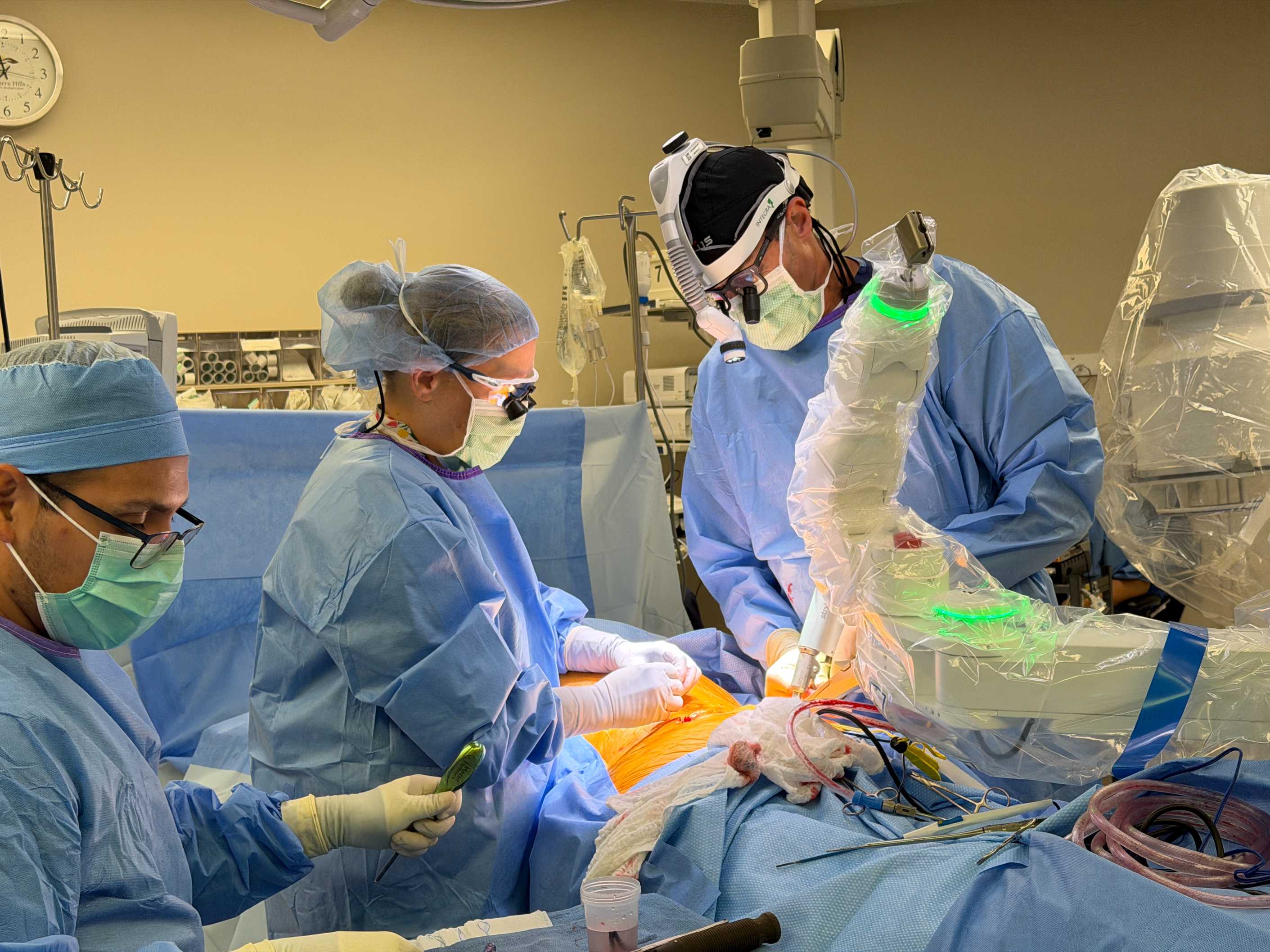
The Robotic Spine Institute of Las Vegas announced that Dr. Kornelis Poelstra, MD, PhD, a spine surgeon fellowship-trained in both orthopedic and neurological surgery, has completed his 2,000th robotic-assisted spine procedure in Las Vegas, Nevada.
The milestone reflects more than 16 years of experience in robotic spinal surgery and minimally invasive spine procedures across multiple robotic spine platforms, including SpineAssist, Renaissance, Mazor X, LEM, and Mako.
Long-Term Experience in Robotic Spine Surgery
Dr. Poelstra has been involved in robotic spine surgery since its early clinical adoption and has participated in the evolution of image-guided and computer-assisted spinal techniques over the past 16 years.
His dual fellowship training in orthopedic and neurological spine surgery, combined with a PhD in Biomedical Engineering, has supported his focus on precision-based spinal procedures and technology-assisted surgical workflows.
Throughout his career, he has performed a wide range of minimally invasive spine procedures supported by robotic guidance systems, contributing to his long-standing clinical experience in this evolving field.
Clinical Perspective on Robotic Surgery Outcomes
Published studies have suggested that robotic-guided spinal procedures may improve accuracy in implant placement compared to conventional freehand techniques, particularly as surgeon experience increases over time.
These systems are also being evaluated for their potential role in improving procedural consistency and supporting minimally invasive approaches in spine surgery.
Dr. Poelstra’s milestone reflects a significant cumulative level of clinical experience in this evolving area of surgical technology.
Evolving Role of Robotics in Spine Surgery
Robotic technologies in spine surgery continue to expand beyond their initial applications, with ongoing research exploring their use in more complex spinal procedures.
According to Dr. Poelstra, continued advancement in this field will depend on the integration of clinical evidence, technological refinement, and regulatory development supporting broader procedural adoption.
“The experience gained across different robotic platforms provides valuable insight into both current capabilities and future potential,” he noted.
Expanding Applications in Minimally Invasive Spine Surgery
Robotic-guided spine procedures are increasingly being studied for their role in improving procedural accuracy and supporting minimally invasive approaches to spinal conditions.
Research continues to evaluate outcomes such as implant positioning accuracy, complication rates, and recovery trajectories, particularly as robotic systems are applied to more complex spinal procedures beyond their initial use cases.
Dr. Poelstra’s milestone adds to the growing clinical experience in this area and reflects long-term engagement with evolving surgical technologies in spine care.