ZAP Surgical to Bring First ZAP-X Radiosurgery Platform to Thailand and Southeast Asia
Vibharam Amatanakorn Specialized Cancer Hospital will install ZAP-X in Chonburi, expanding access to advanced non-invasive stereotactic radiosurgery for brain tumors.
Image Courtesy: Public Domain
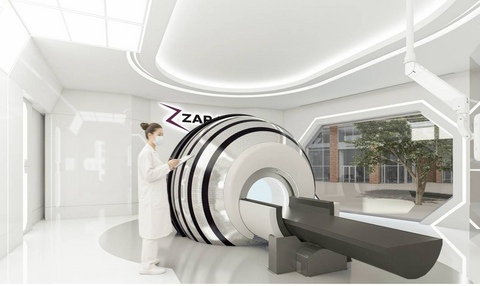
ZAP Surgical Systems, Inc., a global leader in non-invasive robotic brain surgery, announced that Vibharam Amatanakorn Specialized Cancer Hospital in Chonburi Province, Thailand, will install the first ZAP-X® Gyroscopic Radiosurgery® platform in Thailand and Southeast Asia.
Located approximately 90 minutes southeast of Bangkok, Chonburi is a strategic economic hub within Thailand’s Eastern Economic Corridor (EEC) and a major coastal destination on the Gulf of Thailand. Vibharam Amatanakorn Specialized Cancer Hospital, the first dedicated cancer hospital within the Vibharam Hospital Group, is located adjacent to Vibharam Amatanakorn Hospital at the AMATA City Chonburi industrial estate.
The addition of ZAP-X will significantly expand the hospital’s capabilities to now deliver state-of-the-art stereotactic radiosurgery (SRS) for primary and metastatic brain tumors and other intracranial disorders. Neurosurgeons throughout the Vibharam hospital network are expected to refer appropriate patients to the new dedicated SRS center.
“Introducing the first ZAP-X system in Southeast Asia represents an important milestone for both Vibharam and the region,” said Yair Bauer, Vice President of ZAP Surgical APAC & President of ZAP Surgical Japan. “Vibharam’s commitment to bringing advanced radiosurgery to Chonburi demonstrates how forward-thinking healthcare organizations can expand access to world-class brain tumor care closer to where patients live and work.”
Installation of the ZAP-X system is expected to begin in November 2026, with first patient treatments anticipated in early 2027.
Stereotactic radiosurgery is a completely non-invasive outpatient procedure used to treat many primary and metastatic brain tumors, as well as other disorders of the brain, head, and neck. Frequently serving as an alternative to open surgery, SRS can often be completed in a single brief visit - without incisions or anesthesia - and many patients return to normal activities the same day.
“Radiosurgery represents one of the defining advances in contemporary neurosurgery, yet access remains far too limited around the world,” said John R. Adler, MD, Founder and CEO of ZAP Surgical and Professor Emeritus of Neurosurgery and Radiation Oncology at Stanford Medicine. “Bringing ZAP-X to Thailand is another meaningful step toward changing that reality and making gold-standard SRS available to many more patients.”
Renowned for its groundbreaking precision and treatment quality, ZAP-X utilizes unique gyroscopic mobility to direct radiosurgical beams from thousands of potential angles, precisely concentrating radiation on the intended target. This approach is designed to minimize unnecessary radiation exposure to healthy brain tissue and critical structures such as the brainstem, eyes, and optic nerves, with the goal of preserving cognitive function and quality of life.
ZAP-X also stands apart as the first and only vault-free dedicated SRS platform. Its self-shielded design eliminates the need for costly concrete radiation bunkers, providing hospitals with greater siting flexibility while enabling more open and patient-friendly treatment environments. Unlike legacy dedicated radiosurgery technologies that rely on cobalt-60, ZAP-X uses a modern linear accelerator, eliminating radioactive isotope management, source decay, and recurring source replacement.