Comau Develops Flexible Battery Cell Formation and Testing Platform for NIC
Industrialized laboratory solution supports pouch, cylindrical and prismatic cells while bridging battery research and commercial development.
Image Courtesy: Public Domain
- Comau has developed a flexible, industrialized cell formation and testing solution for NIC, bridging the gap between academic research and commercial battery development
- The reconfigurable platform supports pouch, cylindrical and prismatic cells ranging from laboratory prototypes to high-power cells and industrial applications
- Semi-automated processes, remote cell connection and integrated safety features help protect operators while ensuring controlled, repeatable formation and testing
- Ten climatic chambers enable cells to be tested across a wide range of temperatures and real-world operating conditions, fully supporting battery research and development for academic and industrial entities across Europe
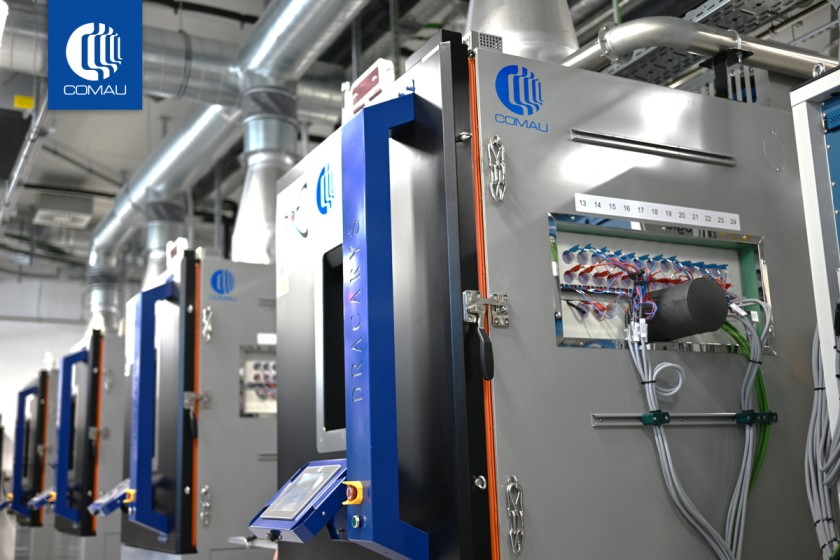
Comau has developed and delivered an industrialized, laboratory-scale cell formation and testing solution for National Institute of Chemistry (NIC) designed to support material validation, product development and cycle life testing. The customized, turnkey system brings industrial processes and standards into the NIC laboratory while maintaining the flexibility required for research and development. Able to manage pouch, cylindrical and prismatic cells on a common platform, Comau’s solution seamlessly accommodates different cell sizes, chemistries, and technologies, giving researchers and industrial entities the freedom to work with a wide range of battery cells for laboratory and industrial applications.
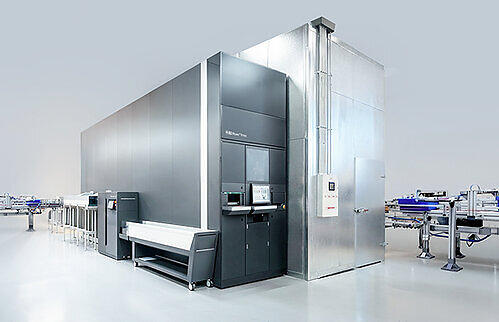
The solution delivered to NIC combines dedicated thermostatic chambers for cell formation and testing covering a wide temperature range (-20 °C to +60°C) with room-temperature walk-in rooms for cell testing. Designed to bring industrial levels of safety, flexibility and reliability to a laboratory-scale environment, the equipment supports different cell formats (cylindrical, pouch and prismatic) while remaining compact, accessible and easy to operate and with the key intent of helping bridge the gap between academic research and commercial battery development.
In the thermostatic chambers standardized cell tray positioning, industrialized cabling and automated remote cell connection minimize manual intervention and help protect operators from electrical risks while the use of easily customizable 3D-printed fittings allows the equipment to be quickly and cost-effectively adapted to different cell formats.. The system also meets stringent safety and security requirements (EUCAR compliant), including a fire suppression system. In the room-temperature controlled environment, on the other hand, flexible fixtures are optimized for long term testing (cycle life) allowing researchers to handle the cells through a single channel independent control.
Overall the delivered technologies give NIC the flexibility to work with different cell sizes, formats and testing requirements within the same industrialized laboratory environment. Moreover, the installation enables NIC to support commercial users in the development and validation of new battery technologies while retaining the flexibility required for research activities.
“Battery innovation increasingly depends on the ability to move promising technologies out of the laboratory and evaluate them using processes and conditions that reflect industrial reality,” said Aldo D’Ambrosio, Battery & Fuel Cells Segment Leader, Comau. “By supporting different cell formats and testing requirements on the same platform, we are helping NIC create an important link between research and the next stages of battery development.”
The NIC facility, which is open to both academic and industrial users, is well positioned to support battery research and cell testing needs from across Europe. The project also reflects Comau’s broader capabilities across the battery manufacturing process. Indeed, the company supports battery manufacturers from early-stage validation through industrial production with flexible, highly tailored solutions and will showcase its end-to-end offer at The Battery Show North America, October 12–15, 2026.