Anupam Bhatnagar on AI, Smart Manufacturing, and the Rise of Industry 5.0
29 June 2026 | Interaction | By Editor Robotics Business NEWS <editor@rbnpress.com>
In an exclusive conversation with Robotics Business News, Anupam Bhatnagar shares how AI, Industrial IoT, robotics, and Physical AI are transforming global manufacturing.
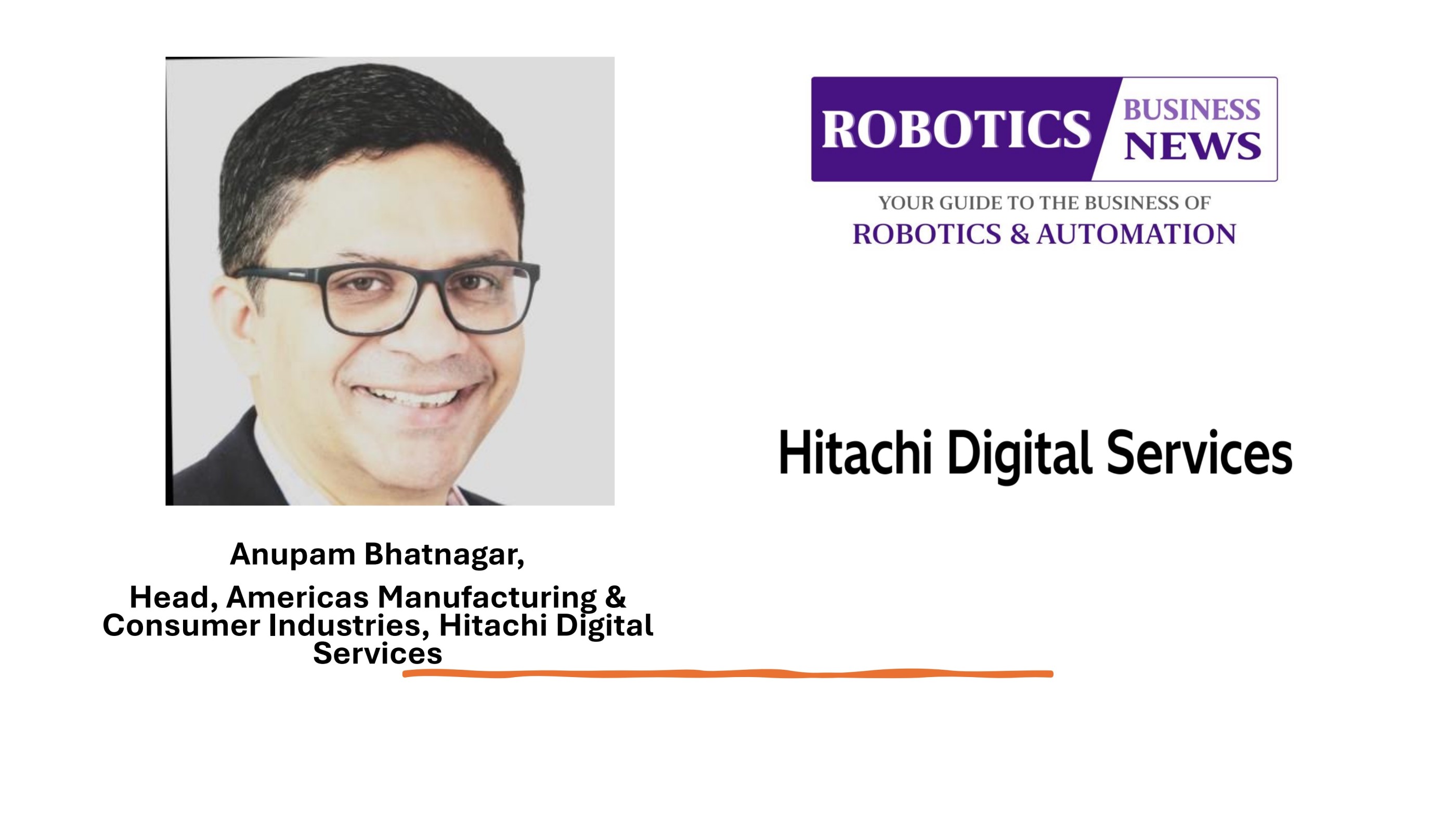
Global manufacturing is evolving beyond automation toward intelligent, resilient, and human-centric operations. In this exclusive interview with Robotics Business News, Anupam Bhatnagar, Head, Americas Manufacturing & Consumer Industries at Hitachi Digital Services, discusses how AI, Industrial IoT, robotics, digital twins, and Industry 5.0 are helping manufacturers strengthen resilience, optimize operations, accelerate sustainability, and build the adaptive factories of the future.
What key trends are currently reshaping the global manufacturing industry?
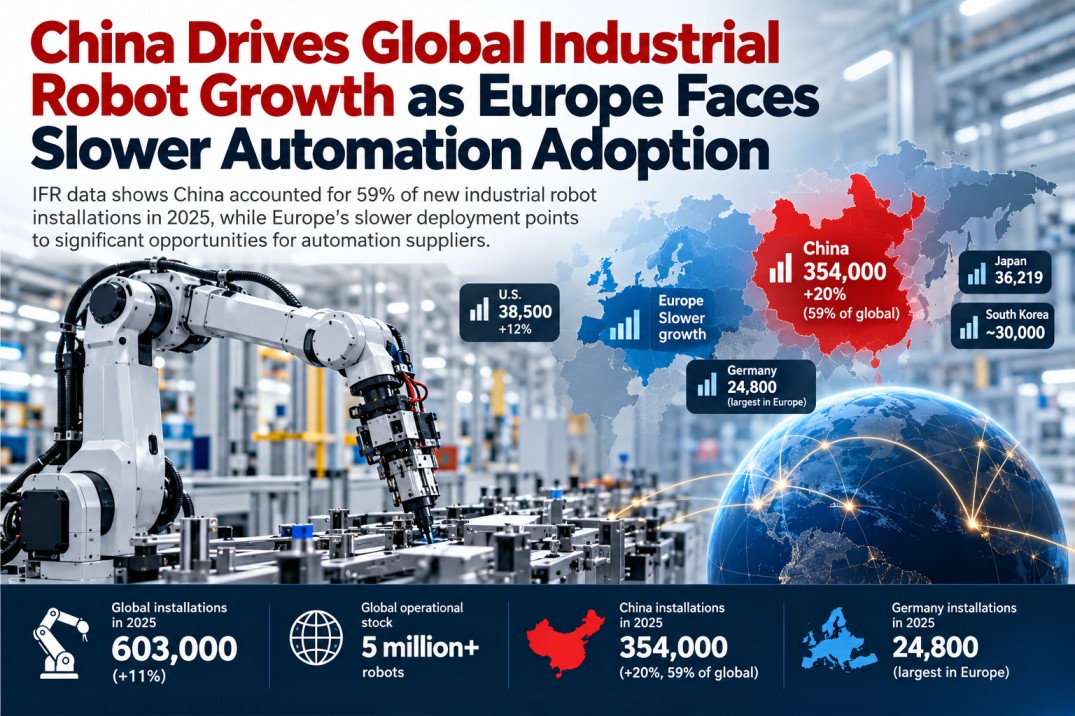
Manufacturing is entering a new era where resilience is becoming as important as efficiency. Regionalization, geopolitical uncertainty, labor shortages, energy costs, and supply chain volatility are forcing manufacturers to rethink decades of operating models. North America is accelerating reshoring and automation. Europe is balancing industrial competitiveness with sustainability mandates. Asia continues to drive scale and innovation, while increasingly moving up the value chain. Across every region, one constant remains: manufacturers are investing in digital capabilities that improve flexibility, productivity, and speed without sacrificing operational stability.
How are AI, Industrial IoT, and robotics redefining manufacturing competitiveness?
Competitive advantage is no longer determined by who has the newest machine. It comes from how intelligently that machine operates within the broader enterprise. AI, Industrial IoT, and robotics are connecting engineering, production, maintenance, quality, and supply chain into a single decision making ecosystem. The factories that will outperform are those where technology helps operators make faster, better decisions, reduces unplanned downtime, and continuously optimizes production. Manufacturing has always been about execution. AI simply raises the standard of execution.
What are the biggest challenges manufacturers face in their digital transformation journeys today?
The technology is rarely the hardest part. Enterprise readiness is. Many manufacturers are still operating with fragmented IT and OT environments, decades of legacy assets, inconsistent data, and disconnected business processes. The challenge is integrating new capabilities without disrupting production. Every hour of downtime carries real financial consequences. Successful transformations respect the realities of the plant floor while modernizing the enterprise around it.
What are the critical success factors for building and scaling smart factory initiatives?
Smart factories are built through operational discipline, not technology alone. The organizations that scale successfully begin with business outcomes such as throughput, quality, safety, or energy efficiency rather than digital ambition. They establish common architectures across sites, standardize data, bring IT and operations together, and ensure every solution can be replicated globally. A pilot that cannot scale is simply an expensive demonstration.
How can manufacturers improve supply chain resilience through digital technologies?
Visibility is the foundation of resilience. Manufacturers need real time insight across suppliers, production, logistics, inventory, and customer demand. AI allows organizations to anticipate disruption before it becomes a crisis, while digital twins and predictive analytics help leaders evaluate alternative scenarios before making operational decisions. The goal is not to eliminate disruption. It is to recover faster than competitors when disruption inevitably occurs.
How are manufacturers leveraging technology to achieve sustainability and ESG goals?
The most successful sustainability programs are driven by operational performance rather than compliance reporting. Manufacturers are using connected assets, AI, and industrial data to reduce energy consumption, minimize waste, improve asset utilization, and extend equipment life. Sustainability becomes far more powerful when it aligns with productivity. Lower emissions, lower costs, and higher efficiency should be achieved together, not treated as competing priorities.
How can manufacturers balance increasing automation with workforce upskilling?
Automation changes jobs far more often than it eliminates them. The most advanced manufacturers understand that technology performs repetitive work, while people solve complex problems, improve processes, and make critical decisions. That requires significant investment in workforce development. Tomorrow’s manufacturing workforce must understand digital systems, data, AI, and automation alongside traditional engineering and operational expertise. Industry 5.0 succeeds when technology elevates people rather than replacing them.
What does the next phase of Industry 4.0 look like for AI driven manufacturing operations?
The next phase is best described as Industry 5.0, where intelligence extends beyond software into the physical world. We are moving from connected factories to adaptive factories that can sense, learn, predict, and increasingly act in real time. Physical AI will connect machines, robots, engineers, and enterprise systems into coordinated operations that continuously optimize performance. The objective is not fully autonomous manufacturing. It is creating operations that are resilient enough to absorb disruption, intelligent enough to improve continuously, and flexible enough to compete in an increasingly unpredictable global economy.