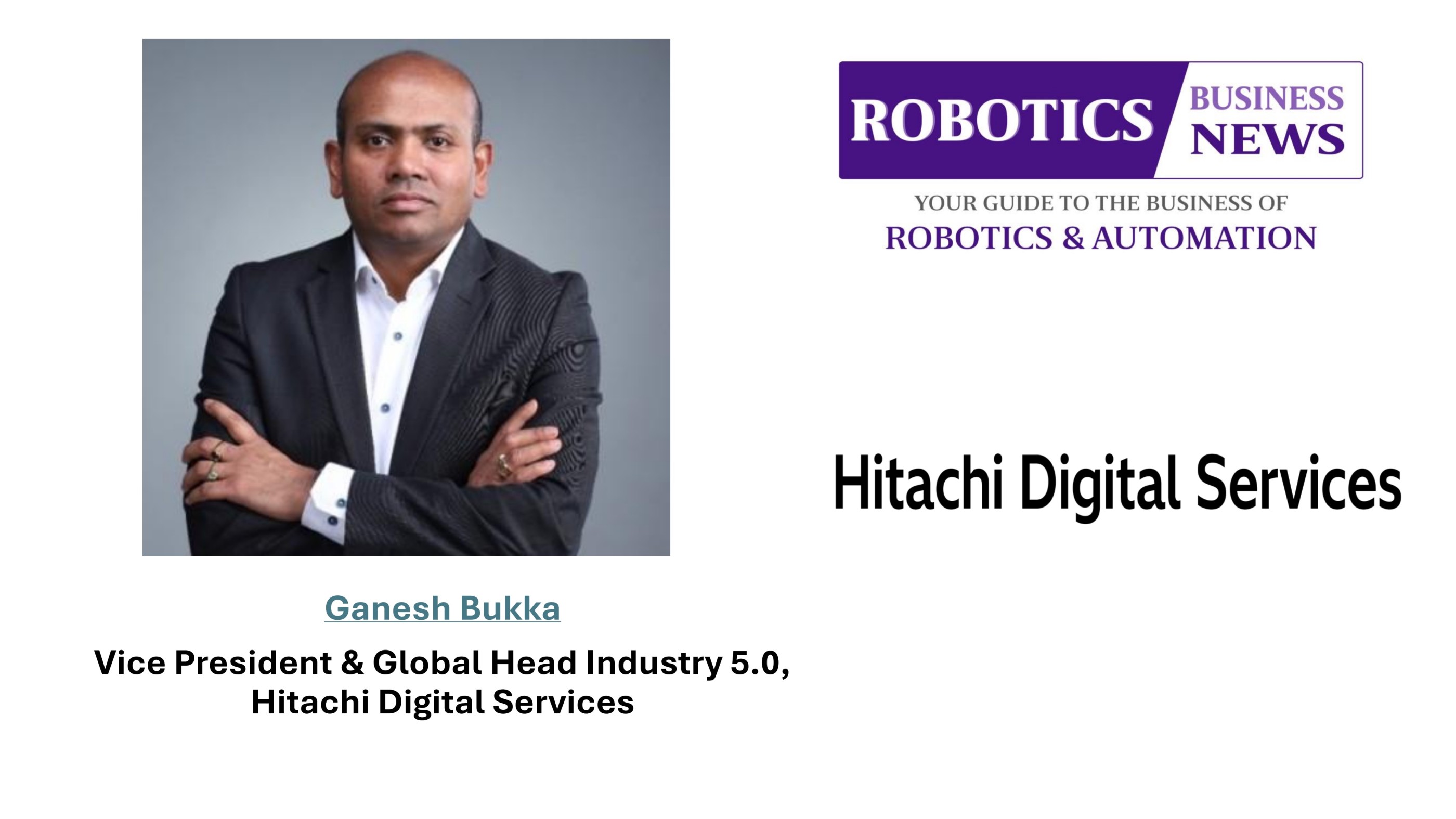
Ganesh Bukka of Hitachi Digital Services on Industry 5.0, Physical AI, and the Future of Connected Enterprises
29 June 2026 | Interaction | By Editor Robotics Business NEWS <editor@rbnpress.com>
In an exclusive conversation with Robotics Business News, Ganesh Bukka discusses Industry 5.0, Industrial IoT, Physical AI, digital twins, edge computing, and the path to autonomous operations.
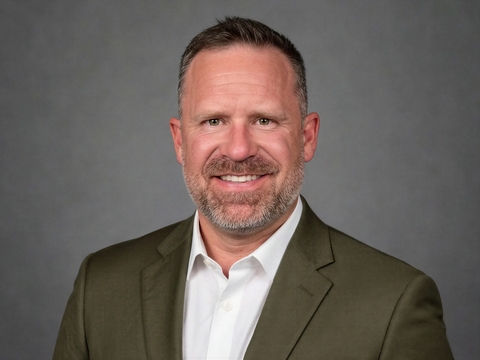
As connected enterprises evolve, AI, IoT, edge computing, and Physical AI are redefining industrial operations. In this exclusive interview with Robotics Business News, Ganesh Bukka, Vice President & Global Head – Industry 5.0 at Hitachi Digital Services, shares how organizations can scale Industrial IoT, harness digital twins, secure connected ecosystems, and accelerate the transition toward intelligent, human-centric autonomous operations.
What key trends will shape connected enterprises over the next five years?
The next five years will be defined by the shift from connected assets to connected intelligence. Enterprises will move beyond dashboards and alerts toward adaptive operations where machines, systems, people, and supply chains respond in near real time. Industry 5.0 will be the frame: human-centric, resilient, sustainable, and AI-augmented. The winners will not be those with the most sensors, but those who can connect IT, OT, engineering, and business outcomes into one operating model.
How is the convergence of IoT, AI, and edge computing transforming business operations?
IoT tells us what is happening. AI tells us why it matters. Edge computing allows us to act before the moment is lost. Together, they are moving enterprises from reactive operations to predictive and increasingly autonomous operations. This is especially powerful in manufacturing, energy, logistics, and industrial environments where milliseconds, safety, and uptime matter. The real transformation is not technical. It is operational: decisions are moving closer to the machine, the worker, and the point of value creation.
What are the critical factors for scaling IoT from pilots to enterprise-wide implementation?
Most IoT pilots fail because they are treated as technology experiments instead of business transformation programs. Scaling requires a clear value case, strong IT OT governance, cybersecurity by design, standard architecture, clean data models, and executive ownership. You also need the plant floor involved from day one. If operators do not trust it, it will not scale. The best programs start with measurable business outcomes, not with devices.
Which Industrial IoT use cases are delivering the greatest business value today?
The strongest value today is coming from predictive maintenance, energy optimization, asset performance management, quality intelligence, worker safety, and connected supply chain visibility. But the more provocative opportunity is in Physical AI, where AI does not just analyze operations, it begins to influence and optimize the physical environment. That is where smart manufacturing becomes intelligent manufacturing.
How can businesses turn massive IoT data into actionable insights and ROI?
The first step is to stop treating all data as equally valuable. Industrial environments create enormous volumes of noise. The goal is not more data. The goal is better decisions. Companies need to connect sensor data with production, maintenance, quality, workforce, and financial data. Once that happens, IoT becomes a business performance engine. ROI comes when insights are tied directly to outcomes like reduced downtime, higher throughput, lower energy use, better quality, and improved safety.
What strategies should organizations adopt to secure complex IoT ecosystems?
Security must be designed into the ecosystem, not bolted on after deployment. Organizations need full asset visibility, network segmentation, zero-trust principles, device identity management, continuous monitoring, and strong IT OT collaboration. The bigger issue is cultural. IT and OT can no longer operate as separate worlds. In connected enterprises, cyber risk is operational risk. A compromised device is not just a data issue. It can become a safety, production, and business continuity issue.
How are digital twins and 5G enhancing modern IoT solutions?
Digital twins allow companies to simulate, predict, and optimize before making physical changes. 5G expands what is possible by enabling faster, more reliable, and more flexible connectivity across plants, warehouses, field operations, and remote assets. Together, they make industrial systems more responsive. When combined with AI and edge computing, digital twins become more than models. They become decision systems for the enterprise.
What opportunities and challenges do you foresee as businesses move toward autonomous operations?
Autonomous operations offer enormous potential: higher productivity, safer work environments, improved resilience, and faster decision-making. But autonomy must be earned. Companies need trusted data, explainable AI, secure infrastructure, strong governance, and a workforce that understands how to work alongside intelligent systems. The future is not lights-out factories everywhere. It is human-led, AI-enabled operations where people focus on judgment, creativity, and exception management while intelligent systems handle speed, scale, and complexity.