Shifters on Building AI-Native Robotic Teams for the Future of Autonomous Ground Operations
23 June 2026 | Interaction | By Editor Robotics Business NEWS <editor@rbnpress.com>
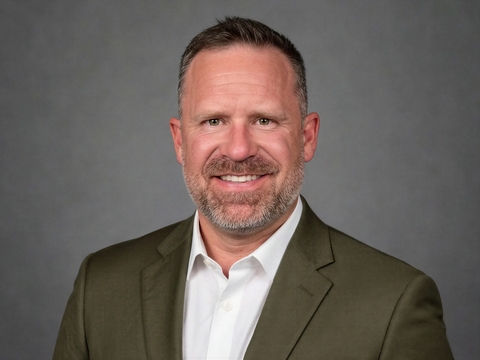
Ofer Ballin, Co-Founder and CEO, and Assaf Chaprak, Co-Founder and CTO, discuss AI-native robotic teams, human-machine collaboration, and the future of autonomous missions.
Shifters' mission is built around the idea that "robots go first" in dangerous environments. What inspired this vision, and how do you see AI-native robotic teams fundamentally changing the way organizations approach high-risk operations?
OFER BALLIN, CO-FOUNDER & CEO:
The idea behind Shifters is simple: when an environment on the ground is dangerous, uncertain, or difficult to access, robots should go first so a person does not have to.
That belief came from looking at how many critical missions still begin the same way they always have – by sending people into the unknown. A collapsed structure, a tunnel, a contested area, a chemical site, a remote industrial facility. In each case, the first question should be: can we send a robotic team first to understand the environment, reduce uncertainty and give people better options?
AI-native robotic teams change the risk calculus. They give organizations more reach, more awareness and more time to make better decisions before people are placed in harm’s way. That is the shift we are building toward.
Unlike many robotics companies focused on individual autonomous platforms, Shifters is developing coordinated robotic teams supervised by a single operator. What are the key technological challenges in enabling multiple robots to operate collaboratively in complex environments?
ASSAF CHAPRAK, CO-FOUNDER & CTO:
Getting one robot to move is difficult. Getting multiple robots to understand the mission, coordinate with each other and remain intuitive for one operator is the harder problem.
The challenge is systems integration. The robots need to perceive the environment, share mission data, adapt as conditions change and act within the operator’s intent. The operator should not have to manually drive every robot or manage every movement. The system has to translate intent into coordinated action.
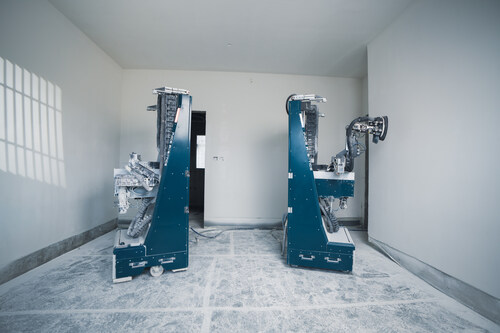
At Shifters, we address this through three tightly integrated layers: TRUST, our AI-native robotic platforms operating in the physical world; RITA, the command layer that translates human intent into robotic tasking; and ARENA, our mission orchestration architecture that coordinates robotic teams and synchronizes their actions across dynamic environments. Together, they enable supervised autonomous robotic teams rather than isolated autonomous machines.
You have described ground robotics as both a hardware and software challenge. How does Shifters combine rugged robotic platforms with AI motion control to create systems that can adapt to unpredictable real-world conditions?
ASSAF CHAPRAK, CO-FOUNDER & CTO:
Ground autonomy is unforgiving because the real world is messy. Terrain changes. Connectivity drops. Payloads vary. Power matters. A robot may need to move through rubble, mud, stairs, tunnels or industrial structures — and still remain useful to the operator.
That is why hardware and software have to be designed together. TRUST is not a robot with software added afterward. It is an integrated architecture that brings together mobility, perception, payloads, autonomy and operator control.
Our focus is on building systems that can keep moving, sensing and coordinating under human supervision when conditions are imperfect. That is what makes ground autonomy different from a controlled lab demo — and it is where we believe Shifters can lead.
The company operates at the intersection of autonomy, defense, and dual-use technologies. How do you balance military applications with opportunities in critical infrastructure, industrial operations, and public safety?
OFER BALLIN, CO-FOUNDER & CEO:
We start with the mission, not the market label. The mission is reducing human exposure in dangerous environments.
That applies to defense and national security, but it also applies to disaster response, critical infrastructure, ports, energy facilities, mines, tunnels and industrial sites. The operating environments are different, but the core problem is the same: people need better information and more distance before they enter risk.
Our approach is platform-based because the world does not need a different robot for every dangerous job. It needs adaptable robotic teams that can be configured around the mission.
One of Shifters' goals is to allow a single operator to supervise multiple autonomous systems. How does AI reduce cognitive burden while ensuring humans remain in control of mission-critical decisions?
ASSAF CHAPRAK, CO-FOUNDER & CTO:
The goal is not to give the operator more screens, more controls or more workload. The goal is to let the operator command the mission, not babysit every robot.
AI can handle the continuous work of navigation, mapping, coordination and task execution within defined mission parameters. That allows the human to stay focused on intent, priorities and decisions.
For us, human control is not about manually driving every movement. It is about keeping the human responsible for mission direction while the robotic team handles the complexity underneath. That is how AI reduces cognitive burden without reducing accountability.
The latest funding round will support AI development, manufacturing readiness, and global expansion. What are the company's top priorities as you transition from technology development to large-scale deployment?
OFER BALLIN, CO-FOUNDER & CEO:
Our priority is disciplined execution. We are advancing the autonomy platform, strengthening manufacturing readiness, expanding partner and customer engagement, and moving the platform from public demonstration and field testing toward operational deployment. Actually, we marked a major milestone with the debut of our AI-native ground autonomy product ecosystem to thousands at Eurosatory 2026, the world's largest international land and air-land defense and security exhibition. .
The market does not need more impressive prototypes that cannot scale. It needs robotic teams that are affordable, resilient, mission-configurable and built for real-world conditions.
The funding helps us accelerate that transition. Our north star remains the same: the first asset into a dangerous environment should increasingly be a robot, not a person.
As autonomous ground systems become more capable, what role do you see AI-native robotics playing in future defense and security operations, particularly in contested or hazardous environments?
OFER BALLIN, CO-FOUNDER & CEO:
Over the past decade, unmanned systems have already changed the air and maritime domains. The ground is the next hard frontier.
Ground environments are more constrained, more physical and often more unpredictable. Buildings, rubble, tunnels, borders, industrial sites and contested terrain create risks that aerial systems alone cannot solve.
As threats evolve and human movement becomes increasingly exposed, we believe autonomous robotic teams will become the first layer of awareness and action, helping organizations understand the environment, reduce uncertainty, and make better decisions before sending people forward.
In the future, organizations will not send a person forward first if a robotic team can scout, sense, map, carry or inspect ahead of them. That is not just a technology shift. It is an operational shift.
Looking ahead, what is your long-term vision for autonomous robotic teams, and how close are we to a future where coordinated fleets of intelligent robots become standard tools across defense, security, and industrial and industrial sectors?
OFER BALLIN, CO-FOUNDER & CEO:
We believe coordinated robotic teams will become a standard part of ground operations, the way drones have become standard in the air.
The technology is already reaching the point where multiple autonomous systems can work together under human supervision, and the next challenge is scaling that capability reliably across real-world missions.
Our long-term vision is a future where intelligent robotic teams become a standard tool for organizations operating in dangerous, complex, or physically demanding environments—allowing people to stay safer while making better decisions. Some robots may scout. Some may carry payloads. Some may inspect, sense, map or secure an area. The power is not one robot doing everything; it is the team working together under human command.
We are not at the finish line yet, but the shift is underway. The next phase is about reliability, scale and real-world deployment. That is where Shifters is focused.