Open Standards Set to Transform Robotics: Industry Leaders Discuss twAIn Robotics Initiative and the Future of RaaS
27 February 2026 | Interaction | By Editor Robotics Business NEWS <editor@rbnpress.com>
Kevin Neal of the TWAIN Working Group and Vlad Lebedev of Quasi Robotics explain how open interoperability, standardized billing APIs, and vendor-neutral communication frameworks will accelerate global robotics adoption.
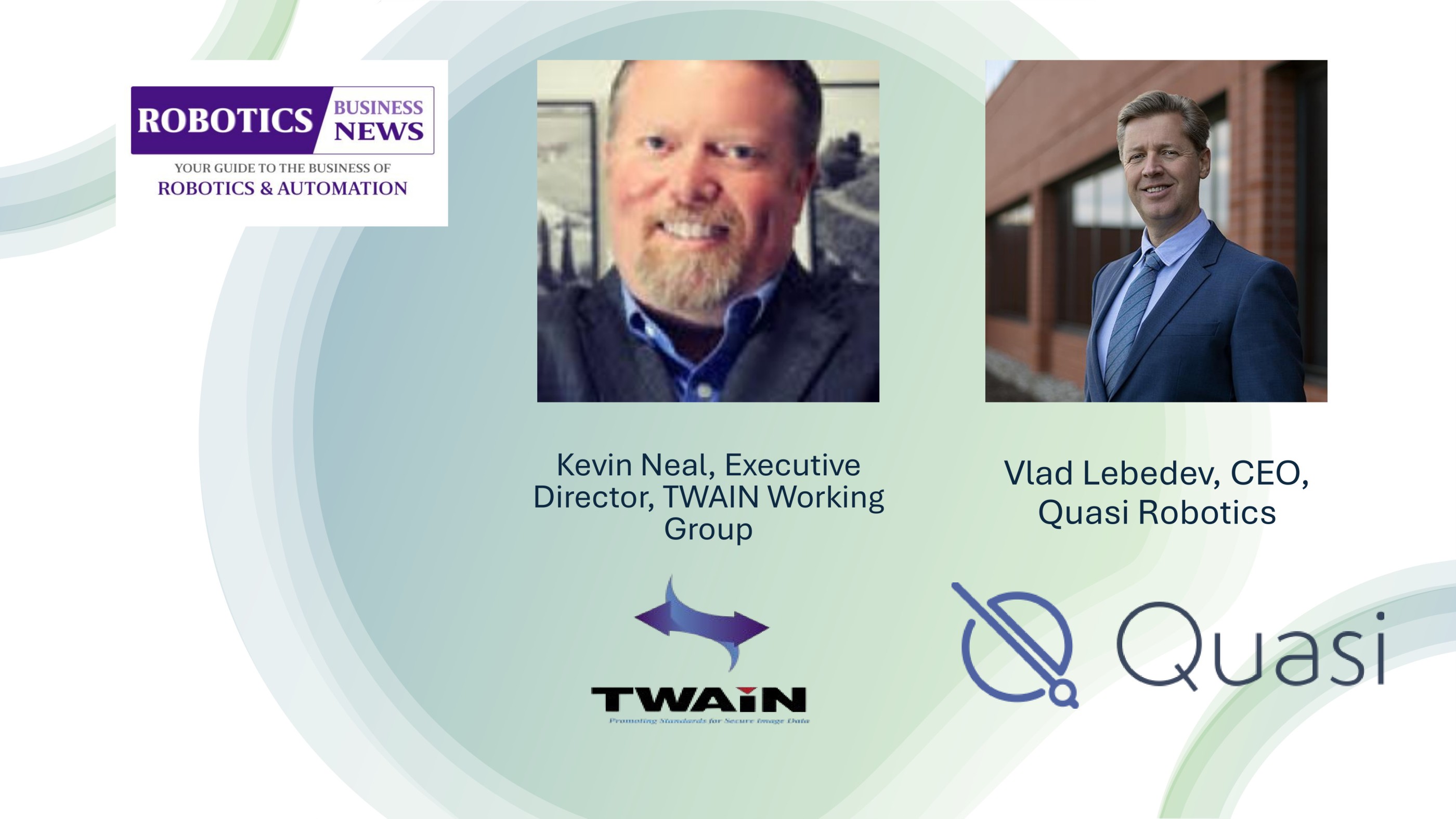
As robotics adoption accelerates worldwide, industry leaders are increasingly calling for standardized communication frameworks to reduce integration complexity and unlock scalable automation. In this exclusive Robotics Business News interview, Kevin Neal, Executive Director of the TWAIN Working Group, and Vlad Lebedev, CEO of Quasi Robotics, discuss the launch of twAIn Robotics — an initiative designed to bring open, vendor-neutral standards to autonomous mobile robots and intelligent automation systems. From billing APIs powering Robot-as-a-Service models to interoperability across multi-vendor fleets, the discussion highlights how standardization could become the next major catalyst for global robotics growth.
Interview with Kevin Neal, Executive Director, TWAIN Working Group
What inspired the TWAIN Working Group to expand its legacy of imaging standards into the robotics industry through twAIn Robotics?
For more than three decades, the TWAIN Working Group has focused on solving one fundamental problem: eliminating proprietary barriers between hardware and software. In the 1990s, document imaging was fragmented—each scanner manufacturer had its own driver model, creating friction for software developers and end users. TWAIN changed that dynamic by creating a universal interface layer that enabled interoperability at scale.
When we began evaluating the robotics industry, particularly in autonomous mobile robots (AMRs) and intelligent automation systems, we saw a strikingly similar pattern. Robotics platforms are advancing rapidly in hardware capabilities, AI perception, and mobility, but the integration layer remains highly fragmented. APIs are proprietary. Telemetry formats are inconsistent. Billing logic is often embedded in vendor-specific platforms. That fragmentation slows enterprise adoption and increases integration cost.
twAIn Robotics emerged from the realization that robotics has reached the same inflection point imaging faced decades ago. The industry is ready for standardization—not to limit innovation, but to accelerate it. Our expansion into robotics is a natural evolution of our mission: enabling open, vendor-neutral communication standards that reduce friction, increase trust, and unlock scalable ecosystems.
How does twAIn Robotics build upon the success of the original TWAIN standard in eliminating proprietary barriers and enabling interoperability?
The original TWAIN standard created a simple but powerful abstraction layer between imaging hardware and software applications. Developers no longer had to write unique integrations for each device; they could rely on a consistent interface. That unlocked exponential growth in document management, capture software, and enterprise imaging workflows.
twAIn Robotics applies the same architectural philosophy to robots. Instead of focusing on imaging commands, we are standardizing telemetry reporting, task execution data, status signaling, and billing event structures. The goal is not to dictate how a robot navigates or performs tasks—that remains the domain of innovation—but to standardize how robots communicate performance and usage data to external systems.
In practical terms, this means a standardized API framework that allows robots from different manufacturers to report uptime, task completion metrics, utilization rates, and performance data in a consistent format. It also means finance platforms, fleet management software, and enterprise IT systems can integrate once and scale across vendors.
We are building on proven governance models, specification documentation processes, and certification programs that TWAIN has refined over decades. That continuity gives the robotics industry something valuable: a standards body with a track record of longevity, neutrality, and real-world adoption.
What are the biggest technical and commercial challenges currently preventing robotics standardization, and how does twAIn Robotics aim to solve them?
Technically, the biggest challenge is API fragmentation. Every robotics OEM has its own telemetry structure, authentication model, and data reporting cadence. Even simple metrics—such as task completion or uptime—can be defined differently across platforms. That inconsistency creates integration overhead and limits interoperability between fleet management tools and financial systems.
Commercially, proprietary lock-in creates risk. Enterprises investing in robotics want long-term flexibility. Financial institutions underwriting Robot-as-a-Service (RaaS) models require standardized, auditable data. Without common reporting standards, financing becomes more complex and costly.
twAIn Robotics addresses these challenges through open specification development and vendor collaboration. We are defining common data schemas, secure authentication frameworks, and billing event standards that reduce ambiguity. Importantly, we are doing this in partnership with implementation leaders such as Quasi Robotics, ensuring that our specifications are grounded in operational reality rather than theoretical constructs.
Standardization reduces integration cost, improves auditability, and lowers perceived investment risk. Those three factors together directly accelerate market maturity.
How will the twAIn Robotics Billing API help create a more scalable and transparent ecosystem for Robot-as-a-Service (RaaS) business models?
Robot-as-a-Service depends on accurate, transparent, and trusted usage data. Whether billing is based on uptime, task completion, area coverage, or productivity metrics, the data must be consistent and auditable. Today, that data is often siloed within proprietary dashboards.
The twAIn Robotics Billing API standardizes how usage events are defined, recorded, and transmitted. It ensures that billing-relevant telemetry—such as operational hours, completed tasks, error states, or performance thresholds—is captured in a uniform format that external financial platforms can rely upon.
This creates multiple benefits. First, it increases trust between robotics providers and customers. Second, it enables third-party financing partners to confidently structure RaaS agreements. Third, it supports multi-vendor fleet environments, where enterprises can aggregate usage data across platforms without building custom integrations for each manufacturer.
Transparency drives scalability. Once billing data becomes standardized and verifiable, RaaS transitions from a bespoke model to an investable asset class. That shift is critical for long-term industry growth.
What strategies is the TWAIN Working Group using to encourage participation from robotics OEMs, software providers, and system integrators worldwide?
Our strategy is implementation-first. Rather than publishing a static specification and hoping for adoption, we are launching with real-world integration partnerships. By collaborating with companies actively deploying robots, we ensure immediate relevance and proof of value.
We are also leveraging TWAIN’s established governance framework. Membership is open and vendor-neutral. Working groups are collaborative and consensus-driven. We encourage OEMs, software developers, system integrators, and financial stakeholders to participate in shaping the specifications.
Education is another pillar. Through webinars, developer documentation, and industry events, we aim to demystify standardization and demonstrate how it reduces cost and accelerates enterprise sales cycles. Standards should not be seen as constraints; they are accelerators of ecosystem growth.
Finally, certification will provide market visibility. Vendors that adopt twAIn Robotics standards will be able to demonstrate compliance and interoperability, giving customers greater purchasing confidence.
How do open communication standards contribute to faster enterprise adoption of autonomous mobile robots and intelligent automation systems?
Enterprise IT environments prioritize stability, security, and integration predictability. When robotics platforms require custom APIs or proprietary middleware, procurement cycles lengthen and risk assessments intensify.
Open communication standards reduce that uncertainty. They enable IT departments to integrate robotics platforms into ERP systems, asset management tools, and financial reporting environments using documented, secure interfaces. That lowers both technical and organizational resistance.
Additionally, interoperability protects long-term investment. Enterprises can adopt robotics knowing they are not locked into a single vendor’s ecosystem. That flexibility directly influences executive decision-making.
Historically, industries that embrace open standards experience faster innovation cycles and broader ecosystem participation. Robotics is now positioned to follow that trajectory.
What governance or certification processes will be introduced to ensure compliance and consistency across companies adopting twAIn Robotics standards?
We will introduce formal technical specifications, reference implementations, and compliance testing frameworks. Vendors seeking certification will validate their APIs and telemetry outputs against defined schemas and interoperability requirements.
Certification marks will signal compliance to the market, similar to how TWAIN Direct established trust in driverless scanning environments. Governance will remain transparent and collaborative, with versioned updates and community input.
Security will also be central. Authentication protocols, encryption standards, and data integrity requirements will be embedded within the specification to ensure enterprise-grade reliability.
Consistency builds trust. Trust builds adoption. Governance ensures both.
Looking ahead, what milestones should the robotics industry expect from the TWAIN Working Group and twAIn Robotics over the next 12–24 months?
Over the next year, the industry can expect production deployments of the Billing API, expanded OEM participation, and the formal launch of certification programs. We will also release additional specifications focused on telemetry normalization and cross-platform fleet interoperability.
Within 24 months, our objective is broader ecosystem integration—connecting robotics platforms with financial services, leasing providers, enterprise asset management systems, and cloud-based analytics environments.
The long-term vision is clear: a robotics industry where interoperability is assumed, integration is streamlined, and innovation thrives on top of open communication standards. That is the transformation twAIn Robotics is designed to support.
Interview with Vlad Lebedev, CEO, Quasi Robotics
What strategic considerations led Quasi Robotics to join twAIn Robotics as its first founding board member?
We strongly believe that open standards are essential for the long-term growth of the robotics industry. Proprietary integrations and closed ecosystems slow adoption and increase deployment costs for both customers and vendors. As a manufacturer of autonomous mobile robotic carts designed for real-world operational environments, we see firsthand how interoperability challenges affect customers. By participating at the founding level, we want to help shape practical standards that reflect real deployment needs and accelerate industry-wide adoption of robotics.
Why was the Model C2 AMR platform selected as the launch platform for implementing the twAIn Robotics Billing API?
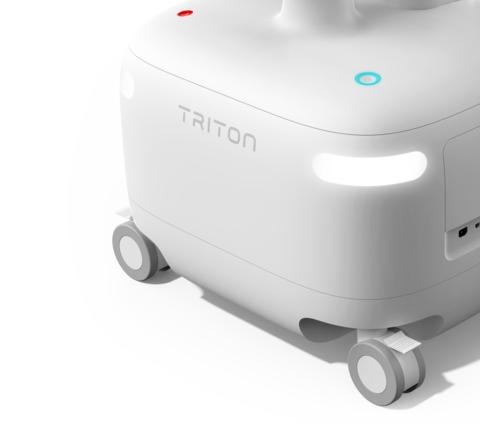
Model C2 is our most successful and widely deployed AMR platform, making it the natural choice for the initial twAIn Robotics Billing API implementation.
Futhermore, C2 robots are available under a Robot-as-a-Service (RaaS) model, where billing and usage tracking are core operational requirements. In addition, we are expanding into new markets through established dealer networks, and those markets are traditionally service- and billing-driven. Implementing standardized billing APIs directly supports this expansion and simplifies integration for partners and customers.
How will standardized telemetry and billing capabilities improve operational efficiency and fleet management for your customers?
Quasi Robotics already provides extensive telemetry, ROI tracking, and operational analytics through our cloud-based fleet management platform, Cloud Connect.
Standardized APIs will make this data more accessible across partner platforms and enterprise systems. Customers will be able to integrate robot performance data,
utilization metrics, and billing information into their existing operational workflows, reducing manual processes and improving transparency.
Ultimately, standardization allows customers to manage robotic fleets more efficiently and scale deployments with greater confidence.
From your perspective, how have proprietary APIs slowed robotics adoption, and how will open standards change this dynamic?
Proprietary APIs have historically forced customers and integrators to build custom integrations for each robotics vendor. This increases costs, lengthens deployment timelines, and creates long-term vendor lock-in concerns. Open standards reduce these barriers by allowing robots, software platforms, and service providers to work together more seamlessly. Customers gain flexibility in choosing vendors, and integrators can deploy solutions faster and at lower cost.
We believe open standards will play a key role in moving robotics from pilot projects to large-scale deployments.
What technical or operational challenges do you anticipate during the March 2026 rollout of the Billing API integration?
The APIs proposed by twAIn Robotics are designed to be straightforward and practical to implement, so we do not anticipate major technical challenges.
As with any new standard, the primary effort will involve validation and real-world testing across different deployment scenarios. Our goal is to ensure that the implementation works reliably in production environments and provides measurable value to customers.
How will adopting twAIn Robotics standards strengthen Quasi Robotics’ partnerships with financial platforms, leasing companies, and enterprise users?
Standardized billing and telemetry interfaces make it easier for financial partners and leasing companies to integrate with robotic deployments. Robot-as-a-Service models depend on reliable usage data and predictable billing structures. By adopting open standards, we simplify integration with financing platforms and reduce friction for enterprise customers. This ultimately enables more flexible deployment models and accelerates adoption.
In what ways do you expect open interoperability to influence customer trust and long-term investment in AMR deployments?
The availability of open standards reassures customers that their robotic investments will remain compatible with future systems and partners.
Customers want confidence that they are not locked into a single vendor ecosystem. Open interoperability reduces risk and makes long-term planning easier.
This increased confidence encourages customers to move beyond pilot programs and invest in larger-scale deployments.
Beyond the Billing API, how does Quasi Robotics plan to contribute to shaping future industry standards within the twAIn Robotics initiative?
As a manufacturer of autonomous mobile robotic carts that perform interfacility deliveries, we see several areas where standardization is needed to support large-scale deployment.
One important example is elevator integration. To enable true multi-floor robotic deliveries, robots must interact reliably with elevators. This requires standardized Elevator APIs that elevator manufacturers and robotics companies can implement consistently.
We look forward to contributing practical deployment experience to help define future standards that enable mass adoption of autonomous robotic solutions.