How Trexo Robotics Is Bringing Pediatric Mobility Robotics Into Everyday Clinical Care
06 February 2026 | Interaction | By editor@rbnpress.com
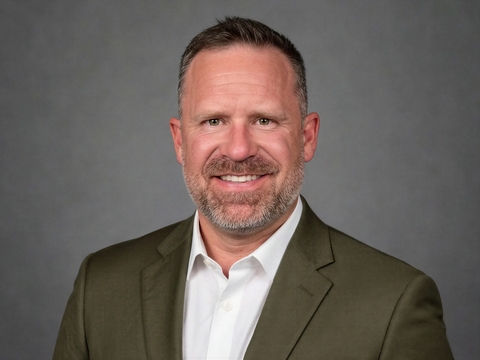
Manmeet Maggu, CEO & Co-founder of Trexo Robotics, discusses the company’s collaboration with OBIO and McMaster Children’s Hospital and how robotic mobility is reshaping pediatric rehabilitation.
As robotic technology continues to move from innovation to everyday clinical care, Trexo Robotics is at the forefront of transforming pediatric mobility. In this interview with Robotics Business News, Manmeet Maggu, CEO & Co-founder of Trexo Robotics, shares how collaboration with OBIO and McMaster Children’s Hospital marks a critical step in expanding access to early, consistent mobility for children with neurological and mobility challenges—and how robotics is changing what’s possible for families, clinicians, and young patients worldwide.
What does this collaboration with OBIO and McMaster Children’s Hospital represent for Trexo Robotics and your mission to improve pediatric mobility?
The collaboration represents an important milestone for Trexo Robotics, both practically and philosophically. A leading pediatric centre like McMaster Children’s Hospital adopting Trexo for everyday clinical use is deeply meaningful to us. It signals trust in the technology itself. It also demonstrates an alignment related to the adoption of technology to improve processes and to meet the goals of therapists, families, and children. When a hospital integrates a system into regular care, it means the technology is proving to be safe, adaptable, and valuable in day-to-day practice.
OBIO’s role in supporting innovation and technology like ours, bridges the gap between promising technology and the impact children see and feel. Helping Trexo scale within the healthcare system significantly increases the number of families who can access a device.
This collaboration also shows a shift towards expanding access to assistive and rehab technology for children. For Trexo, it’s a reminder that while R&D continues and new features will be pushed out, at this stage in our mission, our focus has to shift to ensure more kids have access to a technology that allows them to move, explore, and participate more fully in their world.
How does the Trexo Plus system differ from traditional pediatric rehabilitation tools in terms of outcomes and patient engagement?
Traditional pediatric rehabilitation has played an important role for decades, but they come with limitations. Many rely on passive range of motion or hands on, therapist-assisted stepping. While valuable, these approaches are limited by clinician time, strain or fatigue, and consistency from one appointment to the other is almost impossible. That makes it difficult for children to take the intentional steps, with consistency at the right intensity. From an outcomes perspective, consistency matters. Repetitive, high-intent stepping is where neuroplasticity is most likely to occur, and Trexo helps make that type of practice feasible within real-world clinical and home settings.
Our device allows children who need only minimal support to actively initiate and control movement, while children with little or no ability to initiate steps can still experience upright, rhythmic walking in a way that would otherwise be impossible.
Early clinical findings and emerging research have reported outcomes such as reductions in spasticity, improvements in bowel function, and gains in head control, with additional studies underway.
Patient engagement is another key difference. Children tend to be more engaged when they are actively involved in movement rather than being guided entirely by a therapist. Trexo allows kids to experience cause and effect, I move, and my body steps, which often parents indicate leads to higher motivation, longer participation, and a growing sense of autonomy.
Why is early mobility intervention so critical for children with neurological or mobility challenges, and how does robotics change that equation?
Early mobility intervention allows the developing brain and body, which are responsive to movement, to get consistent movement in those early years of life. During this time, the brain is forming and refining billions of neural connections based on experience. When movement-related pathways aren’t used, they can start to die off.
When children experience either delays in mobility or a total lack of mobility, the impact is more than just neurological. When weight-bearing and movement are limited or not possible for a child, that can contribute to secondary complications such as contractures, reduced bone density, hip subluxation, and more. This makes future mobility and comfort more difficult and often requires surgeries in the future.
Robotics changes this equation by making early, consistent movement more achievable. Robotic systems can support the body safely while enabling repetitive, task-specific practice like stepping and standing, even when a child cannot do so on their own.
Children get to experience what movement feels like, how shifting weight, initiating steps, and staying upright all connect. That combination of early exposure, repetition, and active participation can impact not only physical development, but also confidence, curiosity, and engagement with the world around them.
What role did clinical validation and real-world feedback play in bringing Trexo Plus into a hospital setting like McMaster Children’s Hospital?
Clinical validation and real-world feedback were foundational to bringing a Trexo into a hospital environment like McMaster Children’s Hospital.
From the start, Trexo focused on generating real-world evidence. Today, that includes data from thousands of users and more than 130 million steps, providing insight into how children actually use the device across clinical and home settings. Just as importantly, Trexo has always operated with tight feedback loops. That process began with the very first device built for Manmeet’s nephew and continued as early-adopting families came into the office week after week to trial the system and share direct, unfiltered feedback. Iteration based on lived experience, what worked, what didn’t, what could be simpler or safer, has remained central to how Trexo evolves.
Clinical research has proven safety and efficacy in many areas.
Walking speed, walking endurance & gross motor skills are all positively impacted (Current Neurology and Neuroscience Reports, 2020).
A Trexo study found that children with cerebral palsy who used the device experienced meaningful improvements in one month. Families reported a significant reduction in sleep disturbances. Trexo use may help relieve constipation. The device provides a secure frame for upright walking, allowing children to experience movement and independence in a supported way (Study: Robot-Assisted Gait Training with Trexo Home: Users, Usage & Initial Impacts, Diot et al.).
Additional research further strengthened the clinical case.
Another study shows that consistent use of Trexo led to measurable gains in head control (Quantifying Changes in Postural Control Related to Robotic Gait Trainer Use from Home Video Data, presented at the International Society of Kinesiology and Electrophysiology conference by researchers from the University of Calgary).
We also did an evaluation through the EAHN program at Alberta Health Services (AHS) helped build a case for broader clinical adoption.
Together, this combination of large-scale real-world evidence, continuous user feedback, and peer-reviewed clinical research helped demonstrate that Trexo Plus is practical, safe, and clinically meaningful.
That body of evidence facilitates integration into hospital settings like McMaster, where consistency, outcomes, and real-world usability matter every day.
How does the support from OBIO and the Early Adopter Health Network help accelerate adoption of robotic rehabilitation technologies in Canada’s healthcare system?
Support from OBIO and the Early Adopter Health Network (EAHN) plays an important role in accelerating the adoption of medical technology across Canada’s healthcare system.
One of the biggest challenges hospitals face when considering new technology isn’t interest, it’s navigating the path from interest to implementation. Programs like OBIO and EAHN help reduce those barriers by providing commercialization support, along with clear and structured routes that allow hospitals to explore innovation with less risk. This is important when a technology is promising but still relatively new to clinical environments.
By supporting evaluations, and early adoption, these programs help hospitals assess value, usability, and outcomes without taking on the full burden alone. This shortens decision timelines and gives clinical teams the confidence to move forward,
For Trexo, this support helps bridge the gap between innovation and access. It allows more hospitals to bring robotic rehabilitation into everyday care sooner.
Ultimately, that means more devices in use, more clinicians gaining experience with technology, and what matters most is that more children benefit from access to mobility-focused rehab on a consistent basis.
OBIO and EAHN don’t just support individual companies or hospitals, they help move the entire system forward by making it easier for innovation to reach the children and families who need it.
What kind of impact have clinicians and families seen so far when children begin using Trexo Plus regularly?
Clinicians and families have reported a range of meaningful impact and outcomes when children begin using Trexo regularly.
Families and clinicians rated Trexo 4.8 out of 5 for comfort during sessions, which is important because sustained use depends on a child being comfortable and willing to engage. Without comfort, frequency drops, and frequency matters for progress.
Clinically, several measurable outcomes have been observed. Every participant in one study improved their 6-Minute Walk Test distance after Trexo use. Four out of six children showed measurable improvements in their walking pattern using the Edinburgh Visual Gait Score, and four out of six experienced a reduction in resting heart rate, an indicator of improved cardiovascular conditioning. (Preliminary assessment of a robotic system for overground gait in children with cerebral palsy. Kolakowsky-Hayner et al.) This is particularly relevant given that cardiovascular health is a leading cause of mortality in this population .
Data indicates that regular use of the Trexo Home had positive effects on both the frequency and quality of bowel movements, as well as knee flexor spasticity (Robotic lower extremity exoskeleton use in a non-ambulatory child with cerebral palsy: a case study. Diot et al.).
Families frequently share functional and quality-of-life changes they notice at home. Parents have reported that their children are more engaged after Trexo sessions, appear stronger, and eat better. One mother shared that her daughter’s respiratory health improved to the point that she was able to blow out a birthday candle for the first time in her life. Another parent described using Trexo, with their physician’s permission and supervision, to help rebuild strength following surgery.
It’s important to note that the parent-reported experiences reflect individual experiences and are not indicative of results established through formal research studies.
The studies cited above are clearly identified by study name and authors.
Both the clinical findings and real-world family feedback give great insight into how consistent Trexo use can impact mobility, endurance, and everyday participation in activities in ways that matter to children and those who care for them.
From a technology perspective, how does Trexo balance safety, adaptability, and ease of use for young patients with varying mobility needs?
From a technology perspective, Trexo Robotics is designed with the knowledge that children grow, their abilities change, and technology needs to adapt alongside them.
Safety is the foundation. Trexo uses controlled, repeatable movement patterns with clearly defined limits to help protect joints and support proper alignment during upright movement. The system includes adjustable supports, secure strapping, and settings that are customized to each child. This ensures every session stays within safe, appropriate boundaries based on the child’s size, strength, and mobility needs.
No two children move the same way. Trexo’s technology allows support to be adjusted, whether a child needs significant assistance to initiate or only light support as they build strength and control. As a child’s endurance, coordination, or confidence changes over time, the settings can be updated to match those changes in the child.
The system is designed to be intuitive and practical in real-world settings, whether in a clinic or at home. Straightforward setup, clear adjustments help reduce complexity for therapists, parents, and caregivers, allowing them to focus on the child rather than the equipment.
By combining built-in safety, flexible adaptability, and everyday usability, Trexo enables children with a wide range of mobility needs to experience upright movement in a way that is supportive and sustainable over time.
Looking ahead, how does this deployment fit into Trexo Robotics’ broader vision for expanding access to pediatric mobility and rehabilitation robotics globally?
Trexo hits all of the “F words” on the F word framework:
-
Fitness. Supporting movement and activity in everyday life.
-
Function. Creating more opportunities to participate and explore independence.
-
Friends. Building connection, inclusion, and shared experiences.
-
Family. Making space for confidence, joy, and meaningful moments together.
-
Fun. Because movement should feel motivating and joyful.
-
Future: because through this giveaway, we want to be part of the future we want to see
When Trexo is available in a clinical environment, more children across a wider range of diagnoses, ages, and functional levels can experience the framework and its potential benefits.
From a research perspective, hospital deployment creates valuable opportunities for new studies. Each study adds to a growing body of evidence around safety, usability, and outcomes, and strengthens the clinical side of the feedback loop.
Research conducted in hospital settings also supports broader access. Published studies and formal evaluations are often prerequisites for funding pathways, such as grants, private insurance reimbursement, and government-supported programs. As evidence accumulates, it becomes easier for healthcare systems and payers to justify coverage, which in turn reduces barriers for families.
For Trexo Robotics, this cycle: clinical use, research, feedback, and coverage, creates a pathway toward access at scale. The more data that exists, the more confidence stakeholders have, and the more children can ultimately benefit from early and consistent access to robotic mobility technology.