How Physical AI Is Transforming Industrial Robotics, Accelerating Workcell Optimization and Unlocking the Future of Flexible Manufacturing
11 September 2026 | Interaction | By Editor Robotics Business NEWS <editor@rbnpress.com>
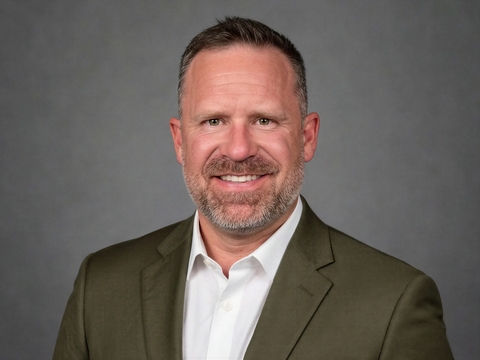
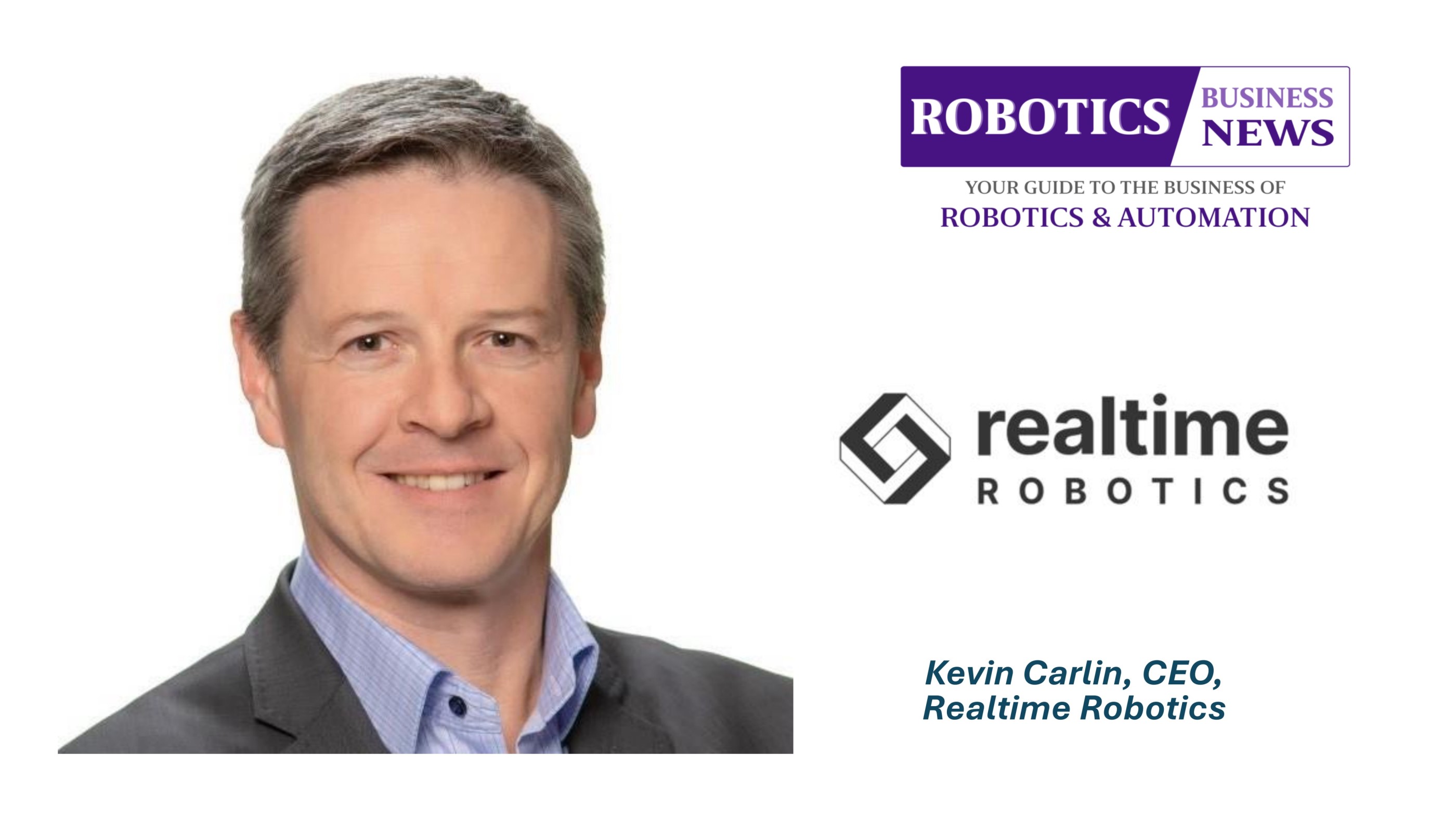
Kevin Carlin, CEO of Realtime Robotics, discusses how physical AI, advanced robot motion planning and workcell optimization are transforming industrial manufacturing.
As manufacturers face growing pressure to optimize complex robotic workcells, increase production flexibility, and respond faster to changing vehicle programs, traditional robot programming and planning approaches are increasingly reaching their limits. Realtime Robotics is addressing this challenge through its Resolver platform, which uses cloud-scale processing and deterministic physical AI to simultaneously optimize robot motion, deconflict complex workcells, and evaluate multiple manufacturing scenarios.
In this Robotics Business News interview, Kevin Carlin, CEO of Realtime Robotics, discusses the growing demand for AI-driven robotic workcell design, how Resolver can reduce programming and deployment time, and why physical AI needs to combine foundational intelligence with deterministic robot control. He also explores the challenges automotive manufacturers face in greenfield and brownfield environments, opportunities beyond automotive—including aerospace, defense, electronics and CNC machine tooling—and Realtime Robotics’ vision for software-driven, flexible manufacturing.
What motivated your decision to take on the CEO role at Realtime Robotics at this important stage of the company’s growth?
"This wasn’t a short-term decision. I joined the company nearly five years ago as part of a longer-term succession plan, with timing aligned to specific milestones. The industries we are focused on move relatively slowly, and it takes time to establish clear evidence of product-market fit. Now that we have that foundation—both technically and commercially—it is the right moment to transition from founding CEO Peter Howard to me. Peter has deep entrepreneurial expertise—this is his fifth startup—and that is the skill set we’ve needed in our early, formative stages. My background is different: large corporate experience, including time building a software startup within a major semiconductor company. That is what we will need as we graduate out of startup phase into growth mode and build the organization and infrastructure to scale our business."
Realtime Robotics is seeing growing adoption of its Resolver platform among global automakers. What is driving this increased demand for AI-driven robotic workcell design and optimization?
"The timing for Realtime Robotics could not be better. What we’re unlocking is something the industry hasn’t seen before: manufacturing workflows, processes, and standards that have long been limited by the human brain’s capacity to make decisions and implement change. That is the ceiling we’re removing.
The urgency comes from real pressure on OEMs—largely outside China, though not exclusively—to rethink how they manufacture. Car OEM executives describe it consistently: reshoring, consolidating models across plants, maximizing variants within existing footprints, better utilizing robots already on the floor, and re-engineering manufacturing depending on whether they are building traditional ICE or EV models. Geopolitical shifts are forcing these decisions now.
Had we brought Resolver to market in its current form even a few years ago, we likely would have seen interest, but not this level of urgency. Today, we are meeting a market that already recognizes it needs to change. What OEMs are responding to is not just the technology itself, but that physical AI, as Realtime Robotics delivers it, actually works at the operational level of their business. It’s the convergence of all of this."
How does Resolver help manufacturers reduce robot programming and deployment time while improving production efficiency and flexibility?
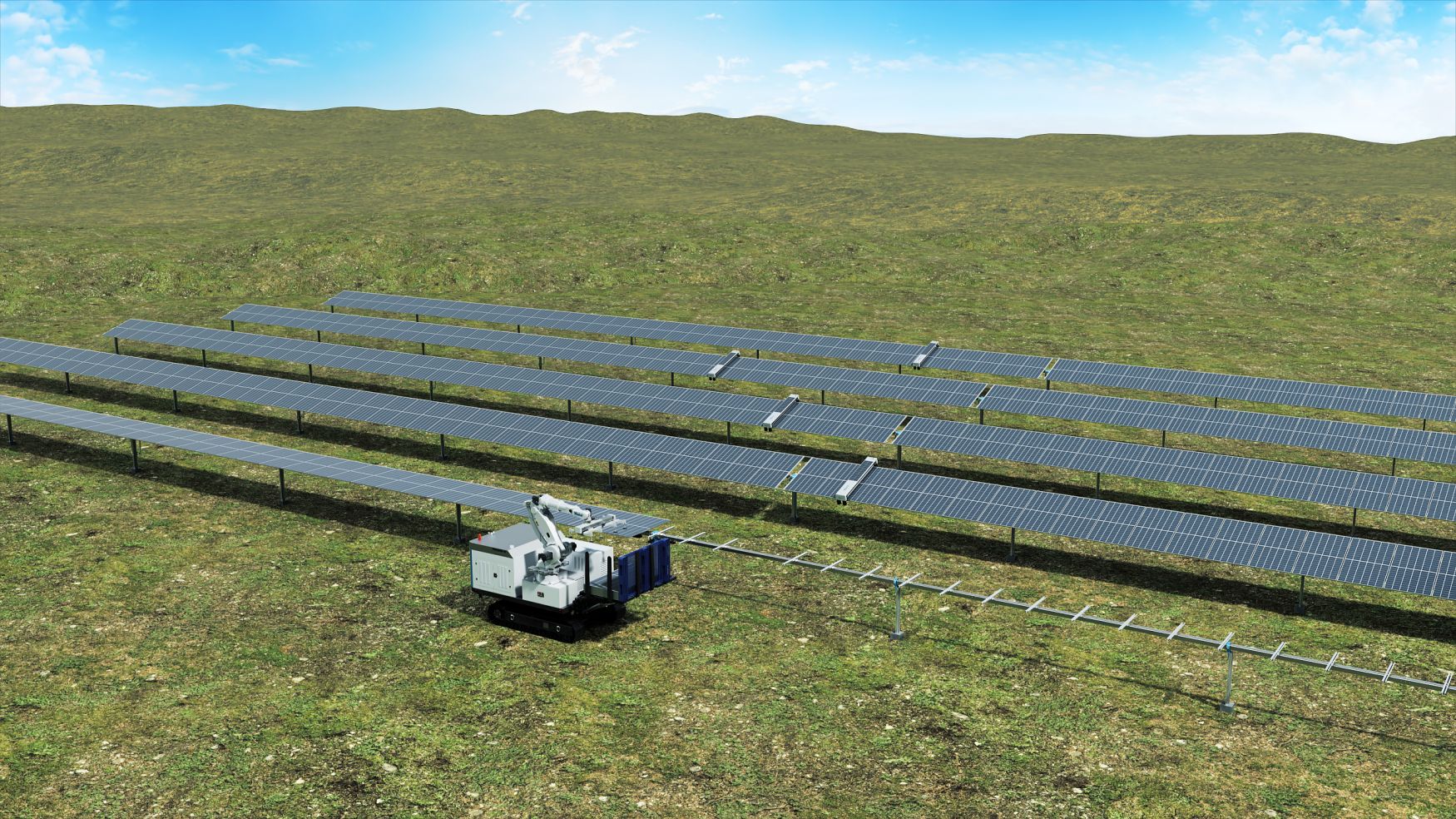
"There’s a lot to unpack, but at its most basic level: using cloud-scale processing, Resolver takes complex robot stations—say, multiple robots working in a body shop framing cell—and deconflicts all those robot motions simultaneously in a very short time. The result is collision-free robot motion optimized for cycle time, far faster and more precisely than a human team could achieve manually. That’s its most fundamental capability. But that speed and precision are what unlock everything else.
Because Resolver can run these calculations so quickly, it can run through many scenarios, not just one. For example, if 14 robots achieve a cycle time better than what is required, can the same job be done with fewer robots while still hitting that target? This can be useful for greenfield applications and brownfield optimization.
In greenfield, the factory isn’t built yet so Resolver lets manufacturers explore critical decisions upfront: How should workload be balanced across robots on the line? Where should robots be positioned for optimal efficiency? Which end-of-arm tools and weld guns from an existing library are the right fit? Can cycle time be guaranteed? What happens if multiple vehicle variants are introduced?
Because all of this can be modeled at high speed in the cloud, manufacturers can explore these decisions at the planning stage, then cascade them down through actual workflows and processes to get to production. That means better-informed decisions and greater upfront confidence that a line will work as designed. It also directly affects budgeting, supply chain planning, the number of robots required, equipment placement, and even the factory floor space needed.
Traditionally, this kind of planning takes years, and manufacturers often only learn after the fact whether a line performs as expected, sometimes needing to add robots to compensate for gaps discovered later. Resolver shifts that timeline. At the micro level, it’s optimization. At the macro level, it’s fast, confident decision-making. The result is that manufacturers can bring vehicles to market potentially years earlier than normal."
What are the biggest challenges automotive manufacturers face when designing complex robotic workcells, and how is Realtime Robotics addressing them?
"Much of this connects to what I touched on already, but to flip the script and look at how manufacturers typically approach this today: many OEMs outsource to line builders. Line builders operate under specific incentive structures, and there is heavy reliance on reuse. “What did we do at the last plant, or for the previous model? Let’s reuse that and modify where necessary.”
The tools and software available have been built around a human approach to programming robots for car manufacturing, and the human brain is limited in its capacity to evaluate more than one or two scenarios at a time. That leads to redundancy, and it takes a long time to determine whether something actually works. Without the ability to fully explore alternatives, manufacturers rarely capture the maximum possible efficiency gains. In practice, that means budgeting for more time, more robots to compensate for inefficient cycle times, more floor space, and more complexity. Because these are fixed processes on fixed discrete manufacturing platforms, adapting to change is difficult. Compounding that, different teams, companies, and organizations are often responsible for different pieces of the workflow.
Another big challenge is the digital twin. Simulation work can look great in the virtual environment, but as robots are physically installed and bolted to the shop floor, adjustments happen—sometimes 10 centimeters in one direction, 5 millimeters in another. At that point, the digital twin no longer reflects reality. Everything has been fine-tuned manually by people on the shop floor during commissioning. If a change is then made in the virtual model, it no longer matches the physical floor. That creates a compounding disconnect between the original model and reality, making further changes increasingly difficult to execute."
How do you see industrial AI transforming robot motion planning, collision avoidance, path optimization, and overall factory automation?
"'Industrial AI' is a broad umbrella term, and it means different things to different people. Many associate it with generative, foundational-model-based AI—the kind most people are familiar with today. What we bring to the table is different: a highly deterministic form of physical AI that fully understands robot characteristics and kinematics, and can generate precise, mathematically grounded motion as a result.
I think the greatest value will come from combining both flavors of AI. Here’s an example of why: foundational-model AIs require large datasets to generate useful models, and historically they have relied on information available on the internet. Now they are trying to add sensors to robots to map out their real physical environments and make sense of them as a source of data—using the term “physical AI.” That type of AI will be very useful for understanding what is happening in the world and determining what needs to be done.
What they will completely fail to do is be able to move robots physically—deterministically—so that they can operate efficiently, safely, and without deviation from the plan. For that, these systems will need to rely on tools like Resolver. Industrial AI is a broad category, but by understanding the distinct strengths and weaknesses of each type of AI within it, you can pull the best together to get the best outcome."
Beyond automotive manufacturing, which industries do you believe could benefit most from Realtime Robotics’ technology, and why?
"Realtime Robotics’s core technology comes in two forms. First, RapidPlan, our on-premise path-planning technology, can be used in runtime and in dynamic applications. That’s our origin story and our name, Realtime: to be able to adapt in real time to a changing environment, making it well-suited for things like logistics. Second, Resolver, where we are primarily focused today, is built for highly optimized pre-planning. It’s less suited to dynamic environments and instead excels in high-volume, repetitive manufacturing.
Because of that distinction, RapidPlan can apply broadly across industries, while Resolver is better suited to offline, pre-programming efficiency use cases. That opens up a range of possibilities: aerospace and defense applications; welding, manufacturing, and inspection systems; and intralogistics, both within and beyond automotive. High-volume electronics assembly is a strong candidate for both Resolver and RapidPlan.
One particularly interesting sector is machine tooling, such as CNC machines. The obvious use is optimizing how a robot feeds parts into a CNC machine: picking up a part, timing the machine’s door opening, and placing the part correctly. But if you look more closely at a CNC machine itself, it’s essentially a multi-axis, complex machine, much like a robot. That means our technology could orchestrate not just the robot, but the interaction between the robot and the machine itself, which is an area where we think we can really excel. These are just a few examples, but there’s a lot of room to take these technologies in different directions. Right now, these are the ones that stand out to us as most promising."
As CEO, what are your priorities for expanding Realtime Robotics’ customer base, technology partnerships, and global market presence over the next 12–24 months?
"12 to 24 months is a relatively short window, but our priorities are clear. We have major engagements underway with car OEMs, and our pipeline continues to expand as more automakers recognize the value of Resolver today, along with our product roadmap and the pace at which we release new features.
Given that momentum, our top priority is building the infrastructure, capacity, and capability to scale alongside these large customers. Even within a single global OEM, there’s a broad spectrum of departments and opportunities to address, and we also need to work with their suppliers and the broader toolchain they rely on.
That means investing in our own organization—bringing in new talent and capability—as well as developing the right partnerships, including go-to-market and technology partners, to support the interdependencies required for this to work at scale."
Looking further ahead, what is your vision for Realtime Robotics, and what milestones would you like the company to achieve during this next phase of growth?
"Looking five years out, our ambition has grown well beyond where we were even a year or two ago, when we were seen primarily as an automated, collision-free path-planning tool provider. I don’t use this term lightly, but we are now positioned to unlock something transformational: the full capability of software-driven, software-first flexible manufacturing.
Our ambition is to become the platform that unlocks this shift—one that is easily accessible not just through a finite set of existing tools, but also usable across the full range of people, departments, and companies involved in these workflows, from planning and CAD design through simulation, offline programming, and commissioning. Today, those groups rely on different methodologies, file types, and software tools. We intend to make sure all those communities can access Realtime Robotics’s tools simply and consistently.
That includes the data arbitration and contextual understanding required—not just of machines, but of processes, workflows, standards, and supply chains—so that the infrastructure is in place for customers to get the most value out of it."